
Find a mistake?
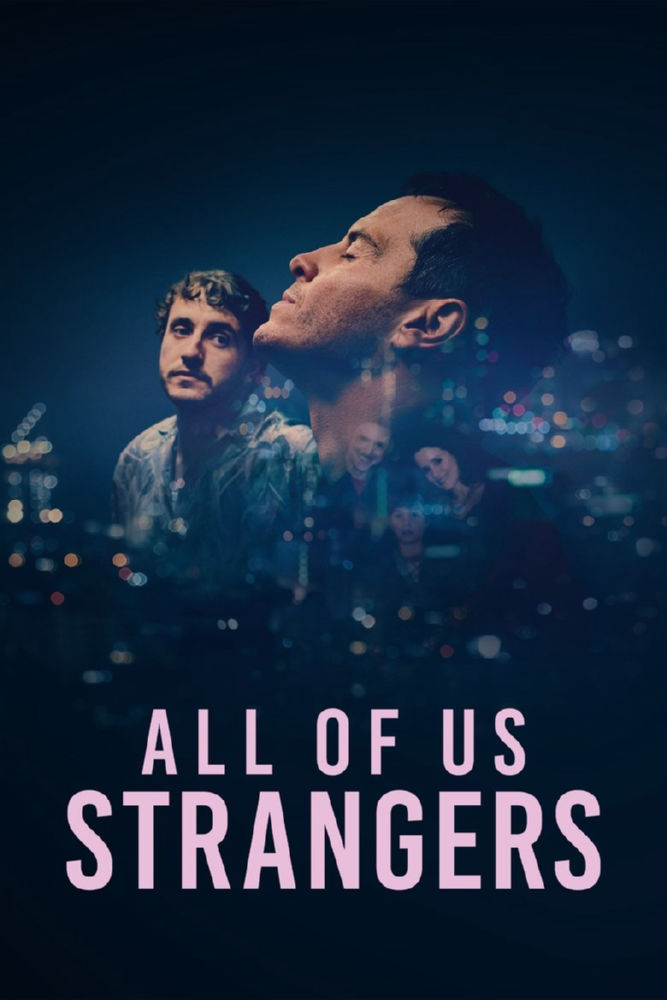


 MOVIE · 2023
All Of Us Strangers IS WOKE
–
Not ratedCommunity rating
Label it
IS WOKE
No summary on file yet. Know this one? Tell us.
WHAT CRITERIA MAKES IT WOKE?

Oops! Is this show WOKE?
Only an account holder or member can file. Cite a scene, a line, or a pattern. Other account holders +1 or −1 that argument, once each. The show is not WOKE until enough of them have given a +1. Enough −1s remove the write-up, and it is no longer shown.
Sign in to file a woke label. One of each criterion per member.
Comments and reviews
Report a mistake
Same rule as woke labels: one report, a written reason, and the community +1 or −1 it — once per member. A net +5 applies the change. Editors can hold it for review, or apply it immediately.
No mistake reports yet.
Sign in to report a mistake. One report per field, per member.
Member review
Ray Okonkwo Member
Oct 7, 2026
★★★★★★★★★★All Of Us Strangers sat with me longer than most quiet dramas do. I went in knowing it was about a lonely screenwriter named Adam who starts seeing the guy across the hall and also somehow ends up spending evenings with his parents who died years ago. That setup is simple on paper, but the way it plays out feels specific and a little raw. I didn’t need a full plot dump to stay interested; a handful of moments carried most of the weight for me.
One thing I noticed right away is that the entire story really does orbit the developing romantic and sexual relationship between Adam and Harry. Everything else—the visits home, the conversations about the past, the slow thawing of Adam’s isolation—gets filtered through that central pairing. It’s not a side thread or a subplot that supports something broader. The film treats their connection as the main engine. Andrew Scott and Paul Mescal make that choice land; the tentative first nightcap, the later physical closeness, the way they talk around old wounds without turning every line into a speech. I believed them. Still, when a movie decides the whole narrative will follow two men falling into intimacy like this, it sets a clear tone. On a site like this I flag that kind of focus because it shapes what the film is ultimately about. It didn’t ruin the experience for me, but it is what it is.
The parents sequences are the other half that stuck. Adam keeps going back to the old house and finds them exactly as they were the night they died. Meals, small talk, the awkwardness of finally telling them who he became. Those scenes are quiet and sometimes uncomfortable in a good way. You watch him try to get the conversations he never got to have, and the film doesn’t rush the awkward silences or the half-answers. I sat with the kitchen table stuff longer than the more charged moments upstairs with Harry, partly because it felt less like a thesis and more like someone working something out in real time. There’s a stretch where he just watches old music shows on tape in his empty building, and that loneliness is sketched cleanly without over-explaining it. A fire alarm empties the place and he spots the only other resident who didn’t bother leaving; that little beat sets up the knock on the door later. Simple mechanics, but they work.
Emilie Levienaise-Farrouch’s score sits under a lot of this and gives the heavier stretches a melancholic pull without turning every scene into a wallow. The needle-drops later lean harder into emotion; some of those choices land, a couple feel a touch pointed, but the overall atmosphere holds. I never felt the movie was trying to lecture me. It just stays inside Adam’s head and lets the relationships do the talking. That said, because the Adam-Harry thread is so thoroughly the center of gravity, the film’s emotional payoff is tied almost completely to how you respond to that romance and the way it intersects with the grief. If that central relationship doesn’t click for you, large stretches will feel thin. I can see why someone would call it slow or not worth the time; there are patches where the pacing drifts and you might want to skip ahead. I didn’t rush it, but I also didn’t need every quiet hallway shot.
What kept me at four stars is the performances and the honesty of the quieter beats. Scott carries a lot of internal weather without big speeches. Mescal matches him with a mix of forwardness and vulnerability that never turns cartoonish. The parents feel lived-in rather than symbolic. I left thinking about how grief and wanting connection can sit in the same room without one canceling the other. The movie is gentle with that idea. It doesn’t pretend the past can be fixed; it just lets Adam spend time there and then return to the nearly empty building and the man who knocked. That final stretch hits harder because the film earned the closeness rather than announcing it.
I wouldn’t call it perfect. Some of the dialogue in the heavier parent scenes edges toward the writerly, and the almost deserted tower block can feel a little too convenient as a metaphor. But the core of sitting with someone who is both reaching backward and carefully reaching sideways worked for me. The fact that the romantic and sexual relationship between the two men is the spine of the whole thing is noticeable and, for the way this site talks about these things, relevant. I still rated it highly because the craft and the feeling are there. It’s a film that stays mostly in small rooms and small gestures, and those were enough to hold my attention and leave a mark. If you want something louder or more plot-driven you’ll bounce off it. If you’re willing to sit with the pace and the focus it keeps, it rewards that patience without demanding you pretend every choice is invisible.