



 TV · 2020
ZeroZeroZero
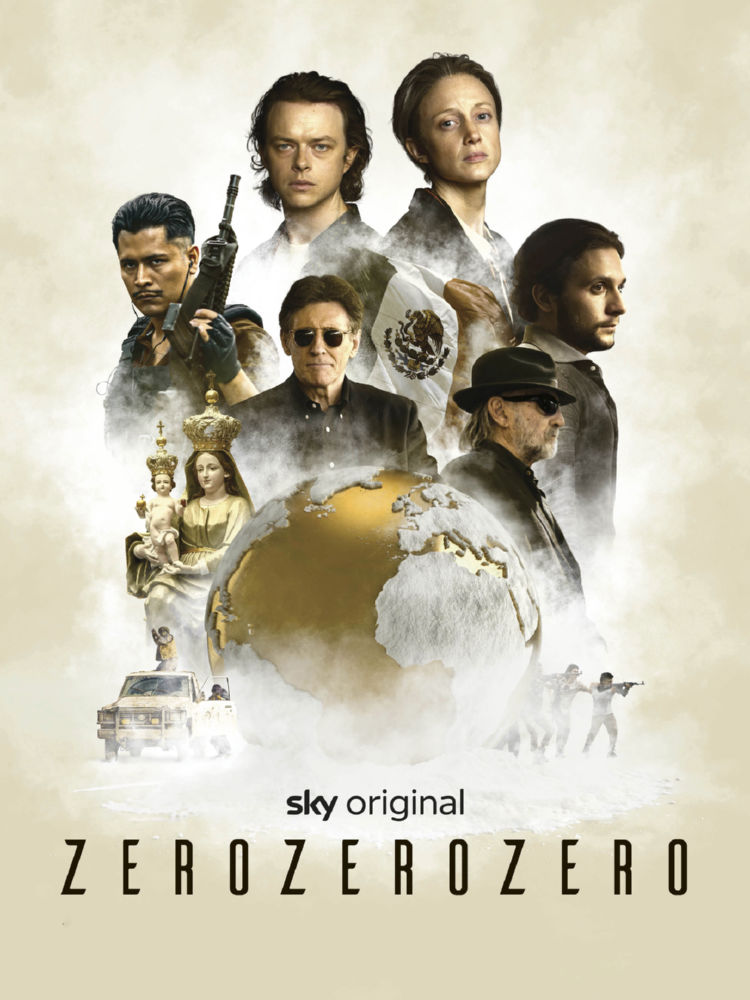
ZeroZeroZero follows a single cocaine shipment from Mexican cartels through an American shipping family to Italian organized crime, mapping the violence and corruption that keep the global trade running.
ZeroZeroZero follows Emma Lynwood as she is pulled deeper into the family shipping firm after her father falls ill and her brother Chris locks in a high-risk deal to move a massive cocaine load. The Lynwoods’ vessels become the bridge between a Mexican cartel desperate to export product and the La Piana clan in Calabria, who need the drugs to hold power. Emma discovers how thoroughly the company has already been compromised by dirty money and police pressure. Parallel threads track cartel enforcer Manuel Contreras and the aging Don Minu La Piana as each side tries to control the same cargo. Betrayals, seizures, and killings begin the moment the shipment leaves port, forcing every player to choose between profit and survival.
As the cocaine moves, Chris Lynwood tries to keep the paperwork clean while Emma confronts the human cost of the contracts she once treated as ordinary freight. Stefano La Piana maneuvers against rivals inside his own family while Don Minu’s health and authority slip. Mexican operators face ambushes, corrupt officials, and the constant risk that the Americans or Italians will cut them out. Law-enforcement pressure tightens on all three continents, turning allies into liabilities. The series stays locked on the logistics of the deal, the body count it produces, and the way each family destroys itself to keep the pipeline open.
Click any of the following icons below to rent or stream it!
Oops! Is this show WOKE?
Only an account holder or member can file. Cite a scene, a line, or a pattern. Other account holders +1 or −1 that argument, once each. The show is not WOKE until enough of them have given a +1. Enough −1s remove the write-up, and it is no longer shown.
Sign in to file a woke label. One of each criterion per member.
Comments and reviews
Report a mistake
Same rule as woke labels: one report, a written reason, and the community +1 or −1 it — once per member. A net +5 applies the change. Editors can hold it for review, or apply it immediately.
No mistake reports yet.
Sign in to report a mistake. One report per field, per member.
Member review
Toni Briggs Member
Oct 20, 2026
★★★★★★★★★★ZeroZeroZero sat with me in a way most crime shows don’t. It isn’t trying to make you root for anyone, and that choice is both its strength and the reason I landed at three stars instead of higher. You follow one cocaine shipment and the people who touch it—an American shipping family getting deeper into dirty money after the father gets sick, a Mexican cartel enforcer who treats violence like routine paperwork, and an aging Calabrian don trying to keep his clan relevant. The series maps how the product moves and how everyone involved ends up compromised, but it never pretends the system has heroes waiting in the wings.
What worked for me was the patience. Scenes breathe. You watch Emma Lynwood step into the family firm and slowly realize the company has already been hollowed out by the very deals her brother is locking in. There is no sudden “I must save the day” speech. She just keeps making choices that pull her further under, and the show lets you sit with the cost. Parallel to that, Manuel Contreras and Don Minu La Piana operate in their own worlds with their own rules, and the series cuts between them without forcing cheap connections. When the shipment finally leaves port, the betrayals and seizures feel inevitable rather than manufactured for episode climaxes. That grounded pace is rare.
At the same time, the show sometimes mistakes length for depth. Certain stretches of negotiation or travel drag past the point where tension still holds. I found myself checking the clock during a few of the quieter Italian sequences and some of the cartel downtime. The violence is blunt and often effective, yet after a while the bodies start to blur together because the writing doesn’t always give the secondary players enough distinct weight. You understand why people die; you just don’t always feel the specific loss. That sameness kept me from fully locking in.
The Lynwood family thread is the one I cared about most. Emma discovering how thoroughly the shipping business has already been bought and sold carries real weight. Chris locking in the high-risk load feels like the kind of desperate move a person makes when he thinks he can still control the outcome. Their father fading in the background adds pressure without turning into melodrama. I appreciated that the series doesn’t soft-pedal the American side as somehow cleaner than the cartel or the Calabrians. Money and police pressure corrupt everyone in the chain, and the show is honest about that. No one gets a free pass for being “just the transporter.”
Where it loses me a bit is the emotional distance it keeps from almost every character. Detachment can be a style choice, and sometimes it lands. Other times it left me observing rather than invested. I wanted a sharper sense of what any of them still hoped to protect once the deal started collapsing. Manuel’s cold efficiency is memorable, yet the writing rarely cracks open what drives him beyond the job. Don Minu’s aging power play has texture, but a few more grounded moments with the people around him would have helped. The series is strong on systems and weaker on the private stakes inside those systems.
Production-wise the look is clean and the locations feel lived-in rather than touristy. The ships, the ports, the dusty roads, the Italian interiors—they all serve the story without calling attention to themselves. Performances are solid across the board. No one is chewing scenery. Emma’s arc in particular stays controlled even as the walls close in. That restraint matches the tone, though I occasionally wished for one or two scenes where someone just broke under the pressure in a messier, more human way.
I keep coming back to the central idea: one shipment as a map of how the trade actually runs. That concept is smart and mostly well executed. The show understands that corruption is ordinary, that deals survive on silence and threats, and that every side believes it can still manage the risk until it can’t. Those observations stuck with me after the credits. What didn’t stick as hard was a lasting attachment to the people carrying them out. I respected the work more than I felt it.
Three stars feels right. It is better than most glossy cartel shows that turn everything into stylish set pieces. It has a clear point of view and the discipline to stay with the process instead of jumping to the next explosion. It also has slow patches and a coolness that sometimes works against its own material. I finished it, thought about the machinery it depicts, and didn’t feel the need to rewatch anytime soon. For a series that aims this high, that mix of admiration and distance is exactly where I land. If you want a crime story that treats the global drug trade as a business with blood on the ledger rather than a vehicle for antiheroes, this one delivers enough to be worth the time—just don’t expect it to pull you all the way in.