
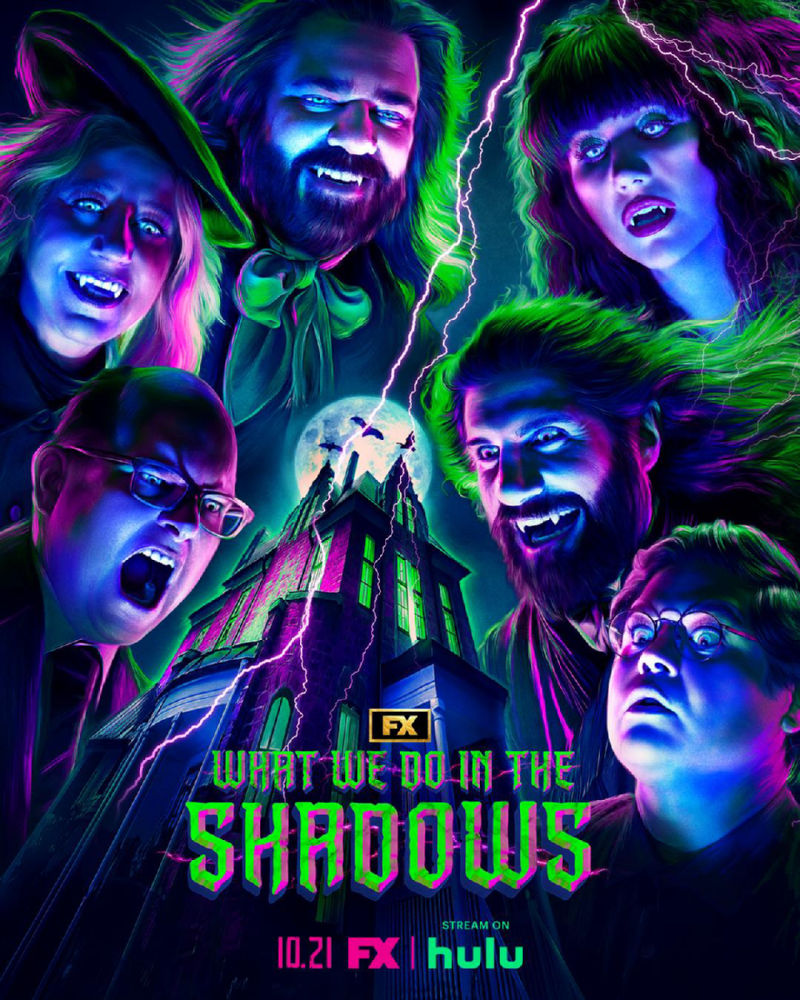




 TV · 2019
What We Do in the Shadows IS WOKE
Viago, Deacon, and Vladislav are vampires who are finding that modern life has them struggling with the mundane - like paying rent, keeping up with the chore wheel, trying to get into nightclubs, and overcoming flatmate conflicts.
WHAT CRITERIA MAKES IT WOKE?

Oops! Is this show WOKE?
Only an account holder or member can file. Cite a scene, a line, or a pattern. Other account holders +1 or −1 that argument, once each. The show is not WOKE until enough of them have given a +1. Enough −1s remove the write-up, and it is no longer shown.
Sign in to file a woke label. One of each criterion per member.
Comments and reviews
Report a mistake
Same rule as woke labels: one report, a written reason, and the community +1 or −1 it — once per member. A net +5 applies the change. Editors can hold it for review, or apply it immediately.
No mistake reports yet.
Sign in to report a mistake. One report per field, per member.
Member review
Becky Soto Member
Oct 19, 2026
★★★★★★★★★★What We Do in the Shadows settled into my evenings pretty easily once I gave it a fair shot. It is the series take on that eccentric 2014 movie of the same name, and this time they moved everything from New Zealand over to Staten Island in the USA, no doubt hoping to catch a bigger American audience. The cast is still mostly English and they kept Kiwi talent involved in the production from the original film, which actually helps the whole thing keep its particular rhythm. I like comedy that sits a little off-beat and deadpan, and while I honestly struggled to find the first two episodes all that funny, something about the house dynamic started clicking for me after that. The mockumentary style just lets the petty squabbles and failed schemes breathe without forcing big punch lines every thirty seconds.
Nandor, Laszlo, Nadja, and Colin Robinson bouncing off each other in that Staten Island house feels lived-in. Guillermo handling the daylight chores and quietly wanting more for himself gives the whole setup a center of gravity. One beat that stuck with me is the way the cameras catch Guillermo’s face when the vampires are mid-argument about something completely ridiculous, like whose turn it is to deal with the neighbor or how to handle a council invitation. He is right there in the frame doing the real work while they posture, and the silence around him does more than most dialogue would. Those little observational stretches are where the show feels sharpest to me. I also kept thinking about the night they try to assert themselves in the neighborhood and everything collapses into pure confusion; the documentary crew just stays rolling and the vampires never quite recover their dignity. That kind of slow deflation makes me laugh more than loud gags ever do.
I rated it 4.5 because the tone stays consistent and the performances never tip into mugging. You can tell everyone understands the assignment. Laszlo and Nadja’s marriage is its own long-running farce, Colin Robinson’s energy-vampirism creates perfect low-stakes chaos, and Nandor’s old-world pride keeps bumping into modern Staten Island in ways that stay fresh across episodes. The familiar’s arc gives the series an emotional through-line without turning syrupy. I found myself caring about whether Guillermo would ever get what he wants even while the vampires were busy arguing over furniture or botching another attempt at local domination. That balance is harder than it looks.
At the same time I could not help noticing how much narrative weight lands on Guillermo de la Cruz’s gay identity and his same-sex attractions. He is one of the five people the cameras follow most closely, and his feelings for Nandor plus the later male relationships are not tossed off as a quick joke. They drive storylines, shape decisions, and keep returning across seasons as real material rather than background flavor. In a small main cast that choice stands out; it is baked into the ongoing plot instead of sitting on the edges. I still enjoyed the show a great deal, but that recurring focus is simply there on screen and it colors how the familiar’s whole journey plays out.
The vampire council threads and the occasional rival factions give the later stretches new problems to bump against without losing the household mess that made me stick around in the first place. Household chores, territorial nonsense, and supernatural etiquette all crash into each other in the same living room, and the crew keeps filming like none of it is extraordinary. That deadpan commitment is what won me over after the slower start. I never needed the jokes underlined. When Nadja or Laszlo launches into another grandiose speech and Guillermo just sighs and starts cleaning up the latest disaster, the show is doing exactly what it does best. It feels like hanging out with extremely old, extremely dysfunctional roommates who happen to drink blood and occasionally remember they were supposed to conquer something.
I keep coming back to small moments more than big set pieces. Colin Robinson draining a room simply by talking about his day still makes me smile. Nandor trying to learn a modern skill and failing with total sincerity lands every time. The way the house itself becomes a character, full of coffins and weird relics and unanswered mail, gives the documentary frame somewhere concrete to sit. None of it feels like it is chasing trends or raising its voice. It just keeps returning to these people and their ridiculous nightly routines. That steadiness is why the 4.5 felt right when I finished the episodes I watched. The humor either pulls you in or it does not, and after those first couple of installments it pulled me in completely. I laughed, I winced for Guillermo more than once, and I never felt the show was embarrassed by its own weirdness. That is rare enough that I am happy to give it the rating I did and leave it at that.