



 TV · 2020
Van der Valk
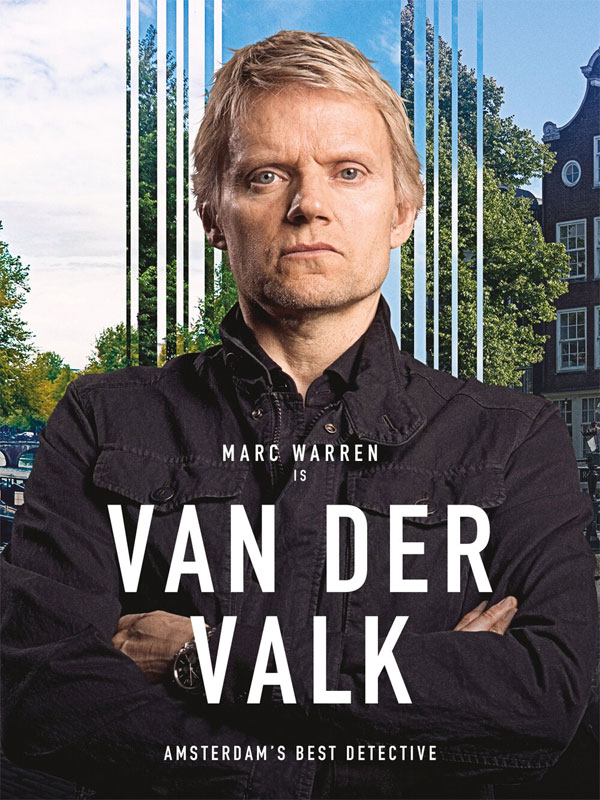
Amsterdam detective Piet Van der Valk and his squad hunt killers whose crimes cut through the city’s art scene, politics, fashion world, and underworld. Each case turns on secrets buried in the canals and elite circles of the Netherlands capital.
Van der Valk follows Piet Van der Valk, a sharp commissaris who works the streets and boardrooms of modern Amsterdam. Partnered with Inspecteur Lucienne Hassell, he opens investigations into murders that surface among artists, politicians, addicts, and fashion insiders. The unit leans on colleagues such as Job Cloovers and Brad de Vries for forensics, surveillance, and local knowledge while bodies and alibis multiply. Early cases pull the team from gallery openings to back-room deals, forcing Van der Valk to read both evidence and the city’s social codes. Motives tangle with money, status, and private vices that the victims tried to hide. The work stays grounded in procedure even as the settings grow more glamorous and dangerous.
As the series continues, Van der Valk and Hassell chase leads that cross from mysticism and high culture into addiction networks and political pressure. Fresh killings reopen old wounds inside the squad and test how far the commissaris will bend rules to protect witnesses or corner a suspect. Relationships among the detectives matter as much as the next crime scene: trust, friction, and loyalty shape who gets believed and who gets cut out. Suspects from the fashion houses and city hall keep shifting stories while the team races to stop another death. Later turns tighten the personal stakes for Van der Valk without abandoning the case-of-the-week structure. The canals keep giving up secrets, and the unit keeps closing ranks to finish the job.
Oops! Is this show WOKE?
Only an account holder or member can file. Cite a scene, a line, or a pattern. Other account holders +1 or −1 that argument, once each. The show is not WOKE until enough of them have given a +1. Enough −1s remove the write-up, and it is no longer shown.
Sign in to file a woke label. One of each criterion per member.
Comments and reviews
Report a mistake
Same rule as woke labels: one report, a written reason, and the community +1 or −1 it — once per member. A net +5 applies the change. Editors can hold it for review, or apply it immediately.
No mistake reports yet.
Sign in to report a mistake. One report per field, per member.
Member review
Dan Reilly Member
Oct 20, 2026
★★★★★★★★★★Van der Valk never quite finds a gear that feels necessary. The cases open with crime scenes staged like lifestyle spreads—art openings gone wrong, fashion people with secrets, political types whose private lives leak into the canals—and then the investigation spends too long circling the same pretty locations without tightening the screws. Piet is written as a sharp commissaris who can read both evidence and the city’s social codes, yet half the time he just absorbs atmosphere while the plot does the work for him. You wait for the moment he cuts through the noise, and it keeps getting deferred. Lucienne Hassell has real screen presence and should feel like a true partner; instead the scripts keep her in a lane that underuses her, handing her reactions more often than initiative. The rest of the unit—Job on forensics, Brad on the street-level stuff—exists mainly to feed information or move the body count along. They never settle into a squad you actually care about beyond the job description.
Amsterdam itself becomes both the best and worst element. The show leans hard on the city’s look: bridges, galleries, back rooms, the contrast between elite circles and the underworld. It photographs well, but the camera keeps reminding you how photogenic everything is, which starts to feel like padding once the motives repeat. Money, status, private vices the victims tried to hide—those are solid crime-story ingredients. Here they often land soft because the series is reluctant to get ugly. Secrets buried in the canals sound promising on paper; in practice they stay curated. You get the sense the production wanted a prestige European procedural with modern gloss more than it wanted the mess of actual detection. Early cases pull from gallery openings to back-room deals, and that local color is there, yet it rarely turns into pressure. Bodies and alibis multiply, sure, but the tension stays polite.
I still gave it 3.5 because it is not a write-off. Marc Warren brings a lived-in weariness that keeps the lead honest even when the writing is coasting. There are stretches where the procedural mechanics click—an interrogation that actually probes instead of just filling time, a forensic beat that feels grounded rather than flashy, a moment when Van der Valk has to navigate both the streets and the boardrooms and you believe he belongs in both. When the show stops posing as chic travel crime and just lets the team chase a lead, it works better than the glossy packaging suggests. Guest turns in the art and fashion worlds occasionally land with enough specificity that you remember a face or a lie. The unit’s reliance on local knowledge and surveillance can feel functional rather than forced, and that is something. It knows its way around a murder scene and does not insult your intelligence with cartoon villains.
The problem is consistency. One episode will flirt with real moral grit—addicts, politicians, people whose vices actually cost them—then the next will retreat into scenery and mild intrigue. The show wants credit for cutting through Amsterdam’s layers without ever risking the kind of character depth or narrative mess that would make those layers matter. Ordinary manhood is not framed as the root of all harm here, and identity is not doing the heavy lifting that plot should; the series mostly just fails to dig. Motives tangle with status and hidden lives, but the tangle stays neat. You finish an episode knowing what happened and rarely caring why it had to happen that way.
It sits in that middle zone of television I actually finish and then forget by Thursday. Serviceable on a quiet night, competent direction, solid enough craft that you do not feel robbed of the hour. What keeps it from climbing higher is the absence of risk. It could have trusted its detective more and its postcard framing less. It could have let Lucienne push harder or let the supporting players become people instead of functions. Instead it delivers watchable cases that surface among artists and insiders, then drift toward resolution without leaving much residue. I have sat through worse procedurals that tried harder to lecture and failed more loudly. This one mostly just settles for atmosphere and competence. That earns the 3.5—neither a waste nor something I would go out of my way to revisit. If you like your crime stories with canals and a certain northern European cool, it scratches the itch. If you want the investigation to hurt a little, you will keep waiting for a gear that never fully arrives.