



 TV · 2021
Undercover Underage
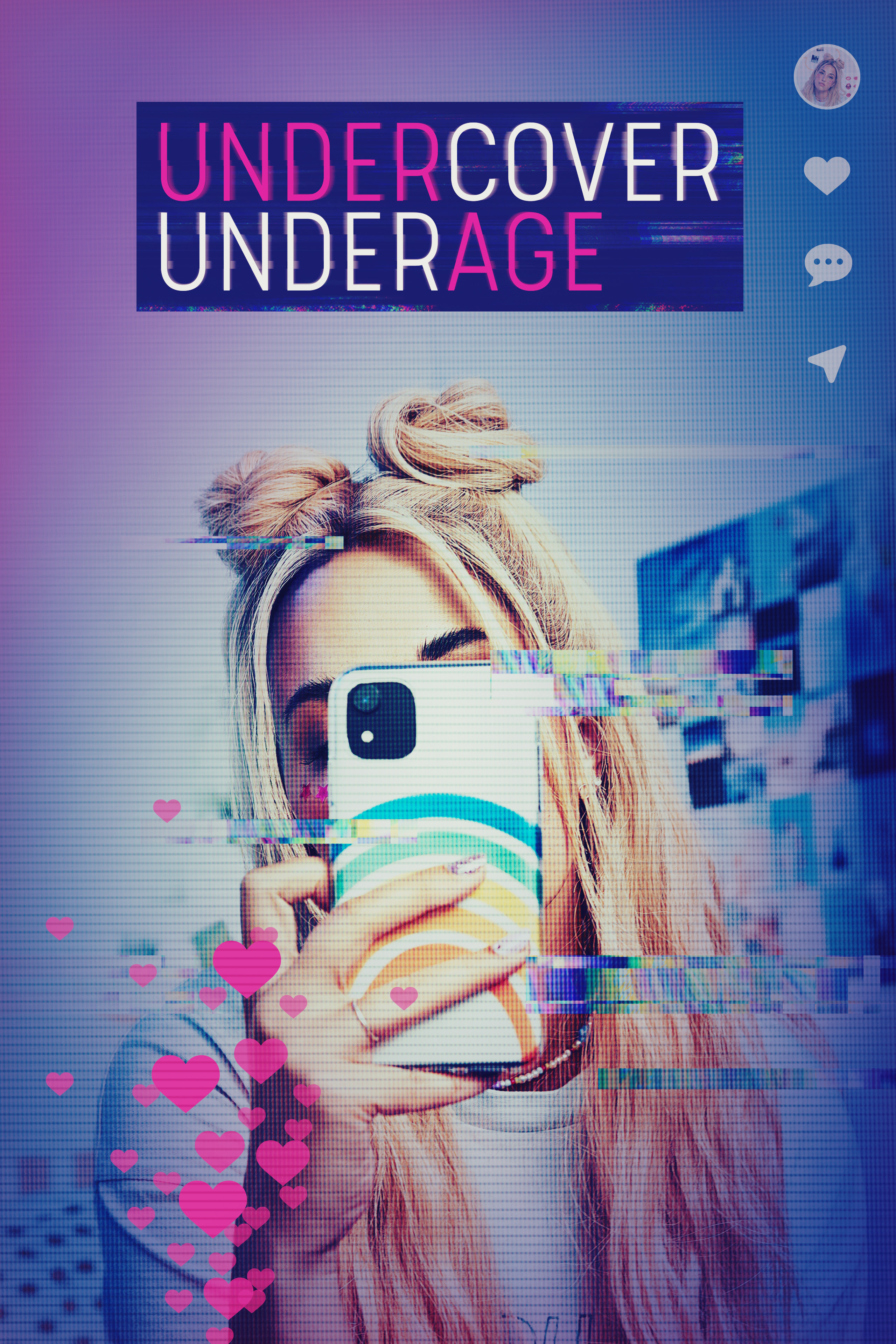
Roo Powell and her SOSA team pose online as underage girls to lure and expose child predators before they can harm real kids. The unscripted series follows the stings, the evidence handoff, and the effort to keep vulnerable children safer.
Undercover Underage follows Roo Powell, founder of the nonprofit SOSA, as she builds fake underage profiles and chats with adults who seek sexual contact with minors. She and her small team stage the conversations, preserve logs and location details, and coordinate with law enforcement when a suspect agrees to meet. Episodes track how Powell ages down her appearance and voice on camera and in messages so predators believe they are grooming a child. The show stays close to the Oklahoma-based operations, the waiting rooms before confrontations, and the moment a target realizes the “teen” was an adult investigator. Viewers see the emotional toll on Powell as she reads graphic messages meant for kids and still has to keep the persona going long enough to lock in proof.
Later stretches of the series push beyond single chats into multi-target cases, travel for meet-ups, and the paperwork that turns a sting into an arrest file. Powell’s colleagues handle tech, safety, and victim-support angles while she remains the public face of the undercover work. Families of at-risk teens and survivors appear in segments that underline why the group treats online grooming as an urgent crime rather than abstract policy. The narrative returns to Powell’s decision to keep doing the work after especially disturbing exchanges, and to the practical limits of a small nonprofit chasing offenders across platforms. Closings tend to land on the handoff to police and the reminder that real children were the intended targets of the men she caught.
Click any of the following icons below to rent or stream it!
Oops! Is this show WOKE?
Only an account holder or member can file. Cite a scene, a line, or a pattern. Other account holders +1 or −1 that argument, once each. The show is not WOKE until enough of them have given a +1. Enough −1s remove the write-up, and it is no longer shown.
Sign in to file a woke label. One of each criterion per member.
Comments and reviews
Report a mistake
Same rule as woke labels: one report, a written reason, and the community +1 or −1 it — once per member. A net +5 applies the change. Editors can hold it for review, or apply it immediately.
No mistake reports yet.
Sign in to report a mistake. One report per field, per member.
Member review
Becky Soto Member
Oct 20, 2026
★★★★★★★★★★I came across Undercover Underage almost by accident while looking for something that felt more grounded than the usual true-crime rotation, and it stayed with me longer than I expected. Roo Powell and her small team at SOSA do this careful, relentless work of building online personas that look and sound like teenage girls, then sitting in those chats long enough for the wrong adults to show their hand. What hit me first was how little glamour there is in any of it. It is hours of verifying profiles, juggling multiple decoy accounts, and deciding whether a conversation has crossed from creepy into something investigators can actually use. That grind is the part that stuck. You watch them steer a chat just enough to get an age admission or a meeting plan without breaking cover, and you feel the weight of every keystroke.
One beat that still sits with me is a stretch where the team is managing several conversations at once and you can see the quiet calculation on their faces. They are not performing for the camera. They are trying to keep the fiction alive long enough to lock down details that might stop a real kid from ever entering that same chat. The show does not turn it into a victory lap. It just lets you sit with the tension of knowing these exchanges are happening every day, mostly unseen. I found myself thinking about how ordinary the predators often sound at the start. That normalcy is what makes the later turns so unsettling. Roo’s approach feels practical rather than theatrical. She is not out to lecture. She is out to document and hand the package off before anyone gets hurt.
I rated it a four because the work itself is solid and the intent is clear, yet the series sometimes settles into a rhythm that can feel repetitive if you watch several episodes back to back. The verification process and the long waits are necessary, but they do not always translate into the tightest television. Still, that same patience is what makes the stronger cases land. When they finally have enough—claimed ages, explicit requests, location talk—and decide the file is ready for law enforcement, there is a quiet satisfaction that feels earned rather than manufactured. I appreciated that the show keeps the focus on prevention. Real minors stay out of the conversation. The decoys absorb the risk so that actual kids do not have to.
There is a personal edge to watching this. I have nieces who are starting to live more of their lives online, and the idea that someone like Roo’s team is already sitting in those spaces, drawing out the people who would target them, gives me a strange mix of relief and frustration. Relief that someone is doing the unglamorous part. Frustration that it is still necessary at this scale. The series does not pretend the problem is solved. It just shows one method that seems to work when the details are gathered carefully and passed along. You see the team debate whether a case is strong enough, and those conversations feel honest. They are not chasing drama. They are chasing usable evidence.
What I kept coming back to was the discipline of the cover. Maintaining an underage persona across platforms without slipping takes a kind of steady attention most people would find exhausting. The show lets you feel that fatigue without turning it into a character arc about burnout. Roo and the others just keep going, adjusting language, checking timestamps, making sure the trail is clean enough for someone else to pick up. That steadiness is what sold me. It is not flashy. It is useful. I walked away thinking more about the volume of these interactions than about any single dramatic confrontation. The quieter episodes, the ones that just track the slow build of a case, ended up meaning more to me than the moments that might look better in a trailer.
I am glad the series exists. It treats the subject with the seriousness it deserves and still manages to feel like television you can actually sit through without needing a shower afterward. The framing stays on the side of keeping kids safe rather than wallowing in the ugliness. That choice matters. A few stretches drag, and not every case resolves with the clarity you might want, which is why I landed at four instead of higher. But the core of it—the careful posing, the documentation, the handoff—holds up. It left me more aware of how these predators operate and more grateful that someone is willing to sit in those chats so real teenagers do not have to. That is enough to keep me recommending it to people who can handle the subject matter and want something that feels like it is doing real work instead of just recounting horror after the fact.