



 TV · 2020
Trash Truck
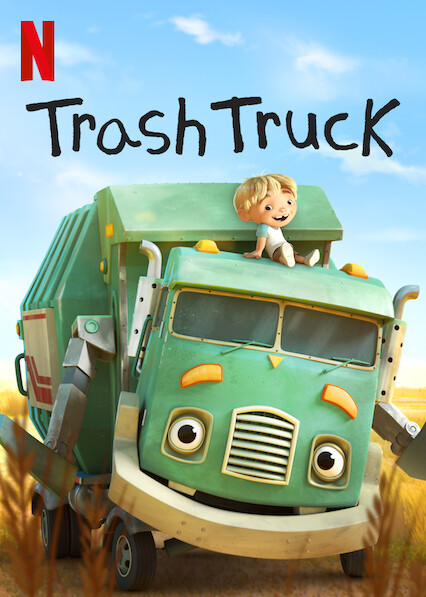
Six-year-old Hank and his best friend, a giant living trash truck, turn ordinary neighborhood days into gentle fantastical adventures with their animal pals.
Trash Truck follows Hank, a six-year-old boy whose closest companion is a towering, friendly trash truck that rolls into his life ready for play. Hank lives in a quiet neighborhood with his parents and treats every outing as a chance to explore. The truck becomes more than a vehicle; it is a loyal pal who joins Hank on walks, clean-ups, and imaginative games. Together they meet animal friends who tag along for the ride, turning simple errands into small quests. Hank’s curiosity leads them through parks, streets, and backyard spaces where ordinary objects spark big pretend adventures. The stories stay light, focusing on kindness, sharing, and the fun of looking at the world with a child’s eyes.
As the days continue, Hank and the trash truck deepen their bond through repeated outings that mix real chores with make-believe. Animal friends join them for picnics, races, and problem-solving moments that never grow darker than a mild mix-up. Hank learns to notice the people and creatures around him while the truck offers steady, wordless support. Parents appear as warm background figures who wave them off and welcome them home. Each short episode ends with the pair returning safely, ready for the next small discovery. The series keeps its focus on friendship, optimism, and the everyday magic a child finds in a reliable best friend on wheels.
Oops! Is this show WOKE?
Only an account holder or member can file. Cite a scene, a line, or a pattern. Other account holders +1 or −1 that argument, once each. The show is not IS WOKE until enough of them have given a +1. Enough −1s remove the write-up, and it is no longer shown.
Sign in to file a woke label. One of each criterion per member.
Comments and reviews
Report a mistake
Same rule as woke labels: one report, a written reason, and the community +1 or −1 it — once per member. A net +5 applies the change. Editors can hold it for review, or apply it immediately.
No mistake reports yet.
Sign in to report a mistake. One report per field, per member.
Member review
Becky Soto Member
Oct 20, 2026
★★★★★★★★★★Trash Truck settled into our house on a quiet Saturday when my nephew was over, and I figured it would just be background noise while the adults talked. Instead I kept glancing over and finding myself drawn into these little neighborhood days that Hank shares with his enormous friend. There is something instantly comforting about a six-year-old who treats a giant living trash truck like the most natural companion in the world. The truck does not talk in some clever adult way; it simply shows up, ready, and that quiet loyalty stuck with me more than I expected.
One beat I keep coming back to is an ordinary afternoon walk that turns into a gentle clean-up game. Hank notices a few scattered bits along the sidewalk, nothing dramatic, and the truck rolls along beside him as if this is the most important job they will ever do together. The animal pals tag along without fanfare, and suddenly the whole group is turning a simple errand into this soft little quest. No one is lecturing anyone. It just feels like the way kids actually play when nobody is watching or correcting them. I sat there thinking about how rare that tone has become. Most shows for this age either amp everything up with loud jokes or load the story with lessons that feel pasted on. Here the kindness and sharing sit inside the play itself.
I rated it 4.5 because the show trusts its own simplicity. Hank’s curiosity never feels manufactured. He looks at a park bench or a backyard fence and sees the start of an adventure, and the truck matches that energy without ever becoming the star that steals the scene. The parents stay in the background in a way that feels right for a kid’s world; they are present and steady, not hovering or disappearing for plot reasons. That balance made the whole thing feel like it belonged to Hank rather than to some writing room trying to prove a point.
What surprised me most was how the ordinary objects keep sparking bigger pretend moments without needing big set pieces. A cardboard box becomes a fort one day, a pile of leaves turns into a path the next. The truck is always there as the steady friend who can carry the weight, literally and otherwise. I found myself remembering afternoons from my own childhood when a big piece of equipment or an empty lot felt magical simply because a friend was willing to explore it with you. The show captures that feeling without dressing it up in nostalgia or irony.
There is a stretch where Hank and the truck help a smaller animal friend who has gotten separated from the group. Nothing is rushed. They take their time, look carefully, and the resolution comes through patience more than clever tricks. That scene stayed with me because it treated the worry as real for a six-year-old without turning it into melodrama. The truck’s presence makes the whole thing feel safe, yet the story never pretends danger does not exist in a child’s mind. It just shows how friendship can hold the space until things settle again.
I also appreciated how the neighborhood itself becomes a character without any forced quirks. Streets, parks, and yards feel lived-in. You can almost smell the grass after a light rain or hear the distant sound of someone mowing a lawn two blocks over. Those details keep the fantastical elements grounded. The truck is giant and living, yes, but it still has to navigate regular driveways and wait at the same corners. That mix keeps everything from floating off into pure fantasy. It stays close enough to real life that a kid can imagine the same truck rolling down their own street tomorrow.
Watching with my nephew, I noticed how little he needed explained. He understood the friendship right away and laughed at the small physical comedy of the truck trying to fit into spaces made for smaller things. Those moments never felt mean-spirited. They felt like the gentle clumsiness of a big friend who is always trying. I found myself smiling at the same beats, which is rarer than I care to admit with kids’ television these days.
The show never overstays any single adventure. Episodes move at a child’s pace rather than an adult’s need for constant escalation. That restraint is part of why I landed at 4.5 instead of something lower. It knows what it is and stays there. Hank’s world is full of small wonders that do not require saving the planet or solving adult problems. Looking at ordinary days through his eyes turns out to be enough. The animal pals add color without turning into sidekicks who demand equal screen time or speeches. Everyone simply belongs in the circle.
I have gone back to a couple of episodes on my own since that first afternoon, which I did not expect. Sometimes I just want the feeling of that quiet loyalty between a boy and his unlikely best friend. There is warmth in the way the truck always seems glad to see Hank, and Hank always seems glad the truck showed up again. In a media landscape that often confuses noise with energy, Trash Truck reminded me that gentle can still feel full. It left me with the simple wish that more stories for this age would trust kids enough to let curiosity and kindness do the heavy lifting. That is the part that stuck, and the reason the rating felt honest when I cast it.