



 MOVIE · 1986
Top Gun (1986)
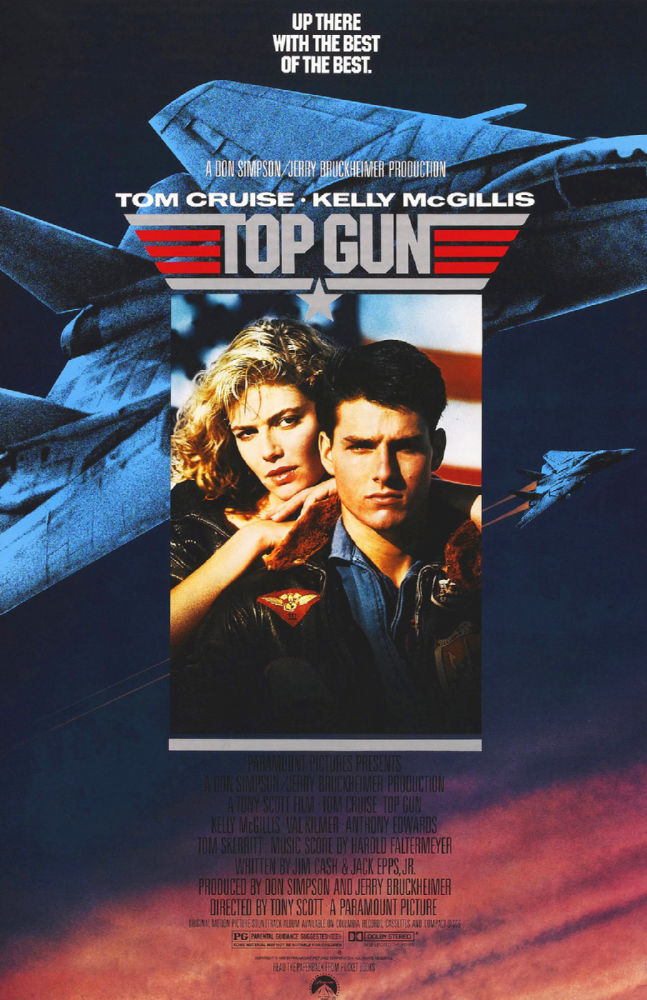
As students at the United States Navy's elite fighter weapons school compete to be best in the class, one daring young pilot learns a few things from a civilian instructor that are not taught in the classroom.
A heart-pounding combination of action, music and incredible aerial photography helped make Top Gun the blockbuster hit of 1986. Top Gun takes a look at the danger and excitement that awaits every pilot at the Navy's prestigious fighter weapons school.
Tom Cruise is superb as Lt. Pete "Maverick" Mitchell, a daring young flyer who's out to become the best. And Kelly McGillis sizzles as the civilian instructor who teaches Maverick a few things you can't learn in a classroom.
Oops! Is this show WOKE?
Only an account holder or member can file. Cite a scene, a line, or a pattern. Other account holders +1 or −1 that argument, once each. The show is not WOKE until enough of them have given a +1. Enough −1s remove the write-up, and it is no longer shown.
Sign in to file a woke label. One of each criterion per member.
Comments and reviews
Report a mistake
Same rule as woke labels: one report, a written reason, and the community +1 or −1 it — once per member. A net +5 applies the change. Editors can hold it for review, or apply it immediately.
No mistake reports yet.
Sign in to report a mistake. One report per field, per member.
Member review
Wes Calder Member
Oct 16, 2026
★★★★★★★★★★I put Top Gun back on the other night mostly so the sequel would make more sense, and it is still the same glossy, loud machine it was in 1986. You will struggle to find a cheesier mainstream hit from that stretch of the decade, and somehow the thing keeps its shape anyway. The plot does not carry much weight. A hotshot pilot lands at the Navy’s fighter weapons school, rubs the wrong people the wrong way, takes a hard loss, and has to decide whether he belongs there. That is roughly the whole skeleton. What holds interest is the way the men bounce off each other and the simple, unapologetic pleasure of watching Tom Cruise grin through another cocky call that should have gotten him grounded.
The aerial photography was the big selling point then, and the real jets still look expensive. No digital mud, just metal and sky. I do find some of the dogfights hard to track once the cameras start whipping around. You get the idea that someone is winning or losing, but the geography of the fight disappears for stretches. I ended up enjoying the ground scenes more than I expected, the locker-room needling and the quieter stretches after a bad day. The male camaraderie produces a handful of lines that stick longer than the story itself. Iceman remains the perfect foil, all precision and suppressed irritation. Goose is the one who keeps Maverick from floating off into pure myth. Their partnership has more texture than the thin rivalry plot really earns, and that imbalance is part of why the movie still works at all.
Charlie, the civilian instructor, is where the picture shows its age most clearly. The romance is pure 1980s wish fulfillment, and the way her professional expertise gets folded into the love story has not improved with time. Kelly McGillis plays it straight and never winks at the camera, which helps, but the film does not pretend the relationship is more complicated than it needs to be for the runtime. I still had fun with those scenes even while noticing the shortcuts. The score does a lot of the heavy lifting, and “Take My Breath Away” was unavoidable that year. It turns up a little too often here, but the rest of the music keeps the pace from sagging into pure montage.
Tony Scott knew how to shoot heat and chrome. Everything gleams in a way that later imitators never quite matched. The sunglasses became a running joke for a reason, and they still function as shorthand for the whole attitude. Cruise is already fully formed as a star in this one, restless energy and half-apologies stitched together. You can see why the studio kept putting him in cockpits and fast cars afterward. I would not call the movie deep. It is not trying to be. It wants you to feel the catapult launch and the sting of coming in second, then it wants you to carry the theme out of the room with you.
I land at three and a half because the cheese is thick and the story is thin, yet the central characters have enough heart that I do not mind sitting with them for two hours. The action never quite matches the hype once you slow the frames down, but the overall package still entertains on its own terms. Some nights that is enough. The film treats its elite pilots as flawed and competitive rather than noble statues, which keeps it from tipping into pure recruitment poster. Maverick’s need to outrun his father’s shadow is sketched lightly and then left alone, which is probably for the best. Too much psychology would have killed the momentum Scott was after.
Rewatching it before the newer one clarified a few things for me. The original is lighter on plot machinery and heavier on pure attitude. That trade-off works when the music and the faces are doing most of the carrying. I keep thinking about the volleyball sequence, which has no business being as memorable as it is, and the quiet bar talk that somehow feels more lived-in than the missile locks. The movie understands that rivalry and friendship can occupy the same bench without a speech explaining the difference. It just lets the men needle each other until something breaks or something solidifies, and then it moves on.
If you come looking for a tight military procedural you will leave disappointed. If you want a summer picture that knows exactly what kind of crowd-pleaser it is, it still manages that even with the dated edges showing. The iconic look has been parodied half to death, yet the original footage retains a clean confidence that later pastiches rarely capture. Scott keeps the camera moving without turning every shot into a music video, which is a harder balance than it sounds. The editing helps more than it hurts, though a couple of the aerial cuts still leave me unsure who is tailing whom for a beat too long.
I am not going to pretend this changed anything fundamental about how I watch movies. It is a product of its moment, complete with the synth beds, the slow-motion walks across the flight line, and the quiet belief that a good leather jacket solves most interpersonal problems. That said, I do not regret the time. The heart the movie has for its central pair of flyers is genuine enough to cut through some of the gloss. When the story finally asks Maverick to decide what kind of pilot he wants to be, the answer arrives without a monologue. That restraint is rarer in this kind of picture than people remember, and I noticed it more on this pass than I did years ago.
Three and a half feels honest. It is not a hidden masterpiece and it is not empty junk. It is a well-made crowd picture that has held onto its basic charm longer than a lot of the more serious dramas from the same year. The female characters are mostly positioned to reflect the men, which is a real limitation, but the fun of the camaraderie and the sheer mechanical noise of the jets carried me past it without much effort. I will probably watch it again the next time the sequel comes up in conversation. Some movies earn that kind of casual loyalty simply by being clear about what they are selling and then delivering it without apology.