
 TV
 VIDEO GAMES
 PODCASTS
 VIDCASTS
 STAND-UP



 MOVIE · 2023
To Catch A Killer IS WOKE
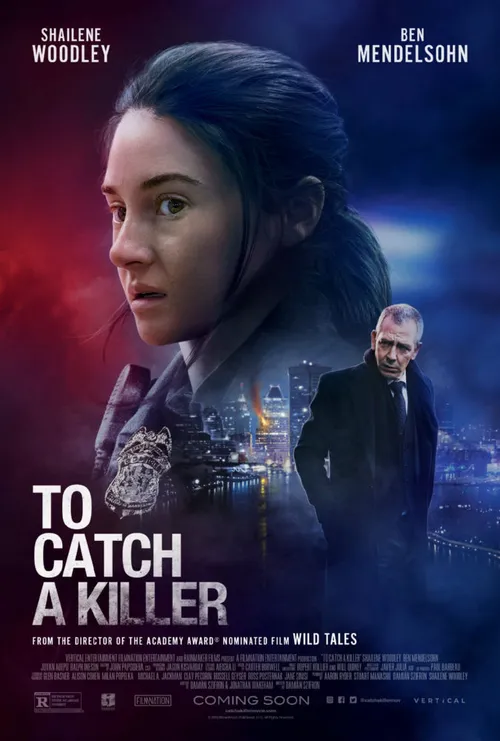
A talented but troubled police officer (Shailene Woodley) is recruited by the FBI's chief investigator (Ben Mendelsohn) to help profile and track down a disturbed individual terrorizing the city.
A modern-day Clarice Starling, Eleanor (Shailene Woodley) is a young police investigator wrestling with the demons of her past when she is recruited by the FBI’s chief investigator (Ben Mendelsohn) to help profile and track the work of a disturbed individual.
As the police and FBI launch a nationwide manhunt, they are thwarted at every turn by the individual’s unprecedented behavior. Given her tortured psyche, Eleanor may be the only person who can understand the mind of their assailant and bring him to justice.
Oops! Is this show WOKE?
Only an account holder or member can file. Cite a scene, a line, or a pattern. Other account holders +1 or −1 that argument, once each. The show is not IS WOKE until enough of them have given a +1. Enough −1s remove the write-up, and it is no longer shown.
Sign in to file a woke label. One of each criterion per member.
Comments and reviews
Report a mistake
Same rule as woke labels: one report, a written reason, and the community +1 or −1 it — once per member. A net +5 applies the change. Editors can hold it for review, or apply it immediately.
No mistake reports yet.
Sign in to report a mistake. One report per field, per member.
Member review
Toni Briggs
Sep 24, 2026
7/10To Catch a Killer sits in that awkward middle ground where the idea is better than the finished product, but the finished product still has enough going for it that you don’t feel cheated when the credits roll. I went in knowing it was going to lean hard on the Silence of the Lambs template—troubled young female investigator, older male mentor figure, a killer whose methods feel personal and theatrical—and it does exactly that. What surprised me is how little it tries to reinvent the wheel and how much it still manages to hold attention anyway. Shailene Woodley plays Eleanor like someone who has already decided the world is a hostile place and is only half-convinced she belongs in it. That tortured-psyche angle could have tipped into pure performance, all trembling lip and haunted stares, but she keeps it contained. You see the damage without getting a full guided tour of every scar. Ben Mendelsohn, as the FBI chief who pulls her in, does what Mendelsohn usually does: he makes competence look slightly exhausted and slightly dangerous. Their scenes together have a dry, professional tension that works better than the louder set pieces. You believe he sees something useful in her that the department does not, and you believe she is equal parts flattered and resentful about being used that way. The killer’s “unprecedented behavior” is the film’s main selling point and also its soft spot. The crimes are staged with a cold, clinical eye that keeps them from feeling like pure gore tourism, yet the movie never quite lands on a psychology that feels freshly observed. We’ve met this kind of disturbed individual before. The script keeps insisting Eleanor is the only one who can truly understand him because of her own broken places, and while Woodley sells that connection, the writing sometimes treats trauma like a decoder ring. It is effective in moments and thin in others. I never fully bought that her private damage gave her special access the rest of the task force lacked; it felt more like a convenient narrative engine than a lived-in truth. What I did buy was the procedural grind. The nationwide manhunt angle is handled with a decent sense of institutional friction—local cops, federal egos, media pressure, the usual gridlock—without turning every meeting into a speech about systems. There is a weary realism to the way leads evaporate and resources get misallocated. That part felt adult. The film is not interested in making anyone look heroic for the sake of the poster. People make bad calls, chase the wrong profile, and pay for it. I appreciated that the story refused to tidy those failures into neat lessons. Visually it stays restrained. A lot of night work, rain-slick streets, fluorescent rooms that look like they smell of burnt coffee. Nothing flashy, which suits the material. The score knows when to shut up. Pacing is the real mixed bag. The first hour builds a steady unease and then the middle stretches in places where another pass at the script might have tightened the noose. By the time the final act arrives you can feel the movie deciding it needs to deliver something decisive, and the decisiveness is only partly earned. I left thinking the last twenty minutes wanted to be colder and more inevitable than they actually were. I keep coming back to the Clarice comparison because the film invites it so openly. Eleanor is clearly cut from that cloth—capable, damaged, underestimated, pulled into a hunt that will cost her something personal. The difference is that this movie never finds a Hannibal figure of equal weight. Mendelsohn’s investigator is sharp and complicated, but he is not a dark mirror; he is a boss with a past. That leaves Eleanor carrying more of the psychological load than the story sometimes knows what to do with. When the film trusts her quiet competence it works. When it leans on her pain as the master key it gets repetitive. Still, I didn’t hate the repetition. There is a stubborn seriousness here that I respect. It is not camp. It is not trying to out-clever the audience with twists that collapse under scrutiny. It just wants to follow a damaged cop and a methodical killer through a city that feels genuinely unsettled by both of them. For long stretches that is enough. Woodley’s performance is the main reason I stayed locked in; she never once plays Eleanor as a mascot for toughness or a walking wound. She plays her as a person who is good at a terrible job and is slowly realizing the job might be the only structure keeping her upright. Three and a half stars feels honest. It is better than the disposable thriller it could have been, and it is not the modern classic some of the marketing implied. I would watch it again on a rainy night when I want something tense without needing it to rearrange my understanding of the genre. It does the work, mostly cleanly, and then it ends. That used to be enough for a lot of these movies, and on most nights it still is for me. The parts that linger are Woodley’s stillness and Mendelsohn’s gravelly patience. The parts that fade are the ones where the script mistakes shared trauma for profound insight. Fair trade, I guess. I walked out neither angry nor dazzled, just quietly satisfied that somebody still knows how to shoot a manhunt without turning it into a sermon or a carnival.