
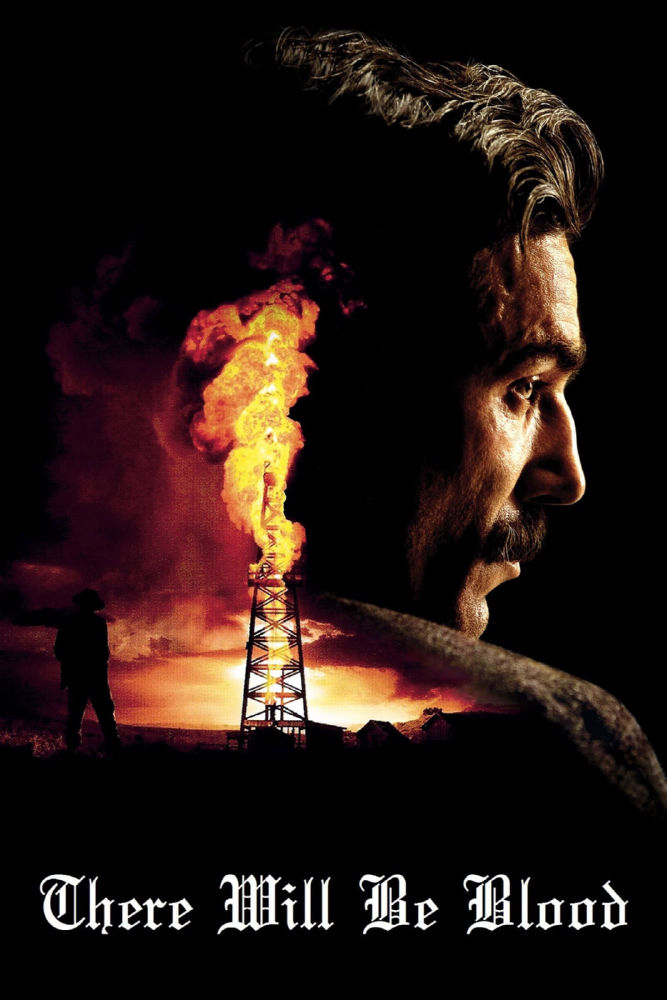



 MOVIE · 2007
There Will Be Blood
A sprawling epic about family, faith, power and oil. The story chronicles the life of Daniel Plainview, who transforms himself from a down-and-out silver miner into a self-made oil tycoon.
Oops! Is this show WOKE?
Only an account holder or member can file. Cite a scene, a line, or a pattern. Other account holders +1 or −1 that argument, once each. The show is not WOKE until enough of them have given a +1. Enough −1s remove the write-up, and it is no longer shown.
Sign in to file a woke label. One of each criterion per member.
Comments and reviews
Report a mistake
Same rule as woke labels: one report, a written reason, and the community +1 or −1 it — once per member. A net +5 applies the change. Editors can hold it for review, or apply it immediately.
No mistake reports yet.
Sign in to report a mistake. One report per field, per member.
Member review
Wes Calder Member
Oct 6, 2026
★★★★★★★★★★There Will Be Blood holds up as a hard look at what happens when a man decides that every relationship is just another lease to be worked until it runs dry. I came to it late, years after the noise around it had settled, and that probably helped. Without the surrounding chatter it just sits there as a long, dry stretch of California dirt and oil and the slow closing off of one man’s world.
Daniel Plainview starts as a silver miner who knows the value of sweat and silence. The moment oil appears he switches without sentiment. That switch is the whole movie. He takes the dead partner’s boy, H.W., not out of sudden warmth but because a man with a child looks safer to the ranchers he needs to buy from. The boy becomes useful the same way a good derrick becomes useful. When the usefulness ends, or turns complicated, Plainview adjusts. There is no big speech about it. He just keeps moving.
The arrival in the Sunday family’s town sets up the only real contest the film allows. Eli Sunday wants the land’s money and the people’s souls in roughly equal measure. Plainview wants the oil and nothing else that cannot be measured in barrels. Their clashes are mostly small and ugly rather than grand. A baptism that is really a business deal. A well that keeps producing while the surrounding ground sinks. The preacher’s hunger for control is plain enough, and the film never softens it into simple hypocrisy. Eli believes what he preaches, or at least needs to believe it. That makes him more dangerous to Plainview than a pure fraud would have been. Plainview understands fraud. He does not understand someone who actually wants the moral high ground along with the cash.
What stays with me is how little the movie explains. It shows the work: the drilling, the hauling, the quiet deals over kitchen tables, the way a handshake can be both genuine and temporary. Plainview underpays, misleads, and isolates himself one transaction at a time. The violence, when it comes, feels like the natural next step rather than a dramatic turn. By the end he has the empire and nothing left that can speak back to him. The final stretch in the bowling alley is not a twist so much as the logical room he has built for himself. No one left to impress. No one left to need.
Day-Lewis does the part without begging for admiration. The voice, the walk, the way he watches people while pretending not to—none of it feels like a performance you are supposed to clap for. It just seems correct for this particular man in this particular dirt. The supporting work stays in scale. No one is trying to steal scenes. The boy’s silence after the accident carries more weight than most speeches would. The land itself does a lot of the talking: dry hills, black mud, the sudden appearance of money where there had only been dust.
I rated it four because it knows exactly how cold it wants to be and never softens the temperature for comfort. It is long, and it asks you to sit with the emptiness rather than fill it with easy psychology. Some nights that feels like the right demand. Other nights you might wish it had found one more human note that was not immediately turned into leverage. I do not mind the spareness. It matches the character. Plainview would not have wanted a warmer movie about himself anyway.
The film also refuses to dress the greed up as something more modern or symbolic. It stays in its period without winking. Early California oil is simply the stage where a certain kind of appetite gets to run without many brakes. The result is isolation that feels earned rather than imposed by the plot. You watch a man choose the narrower path at every fork until the path has no one else on it. That is not a new observation about ambition, but the movie makes it concrete enough that it does not need to announce the theme.
I have gone back to pieces of it more than once—the drilling sequences, the quiet meals, the way Plainview talks to H.W. when he still needs the boy’s face for the business. Those scenes do not change. They just sit there, dry and exact. That is enough for me. It is not a film that invites you to love it. It invites you to watch a man finish what he started and then live with the finished product. Most days that feels like a fair exchange for two and a half hours.