




 MOVIE · 2022
The Whale IS WOKE
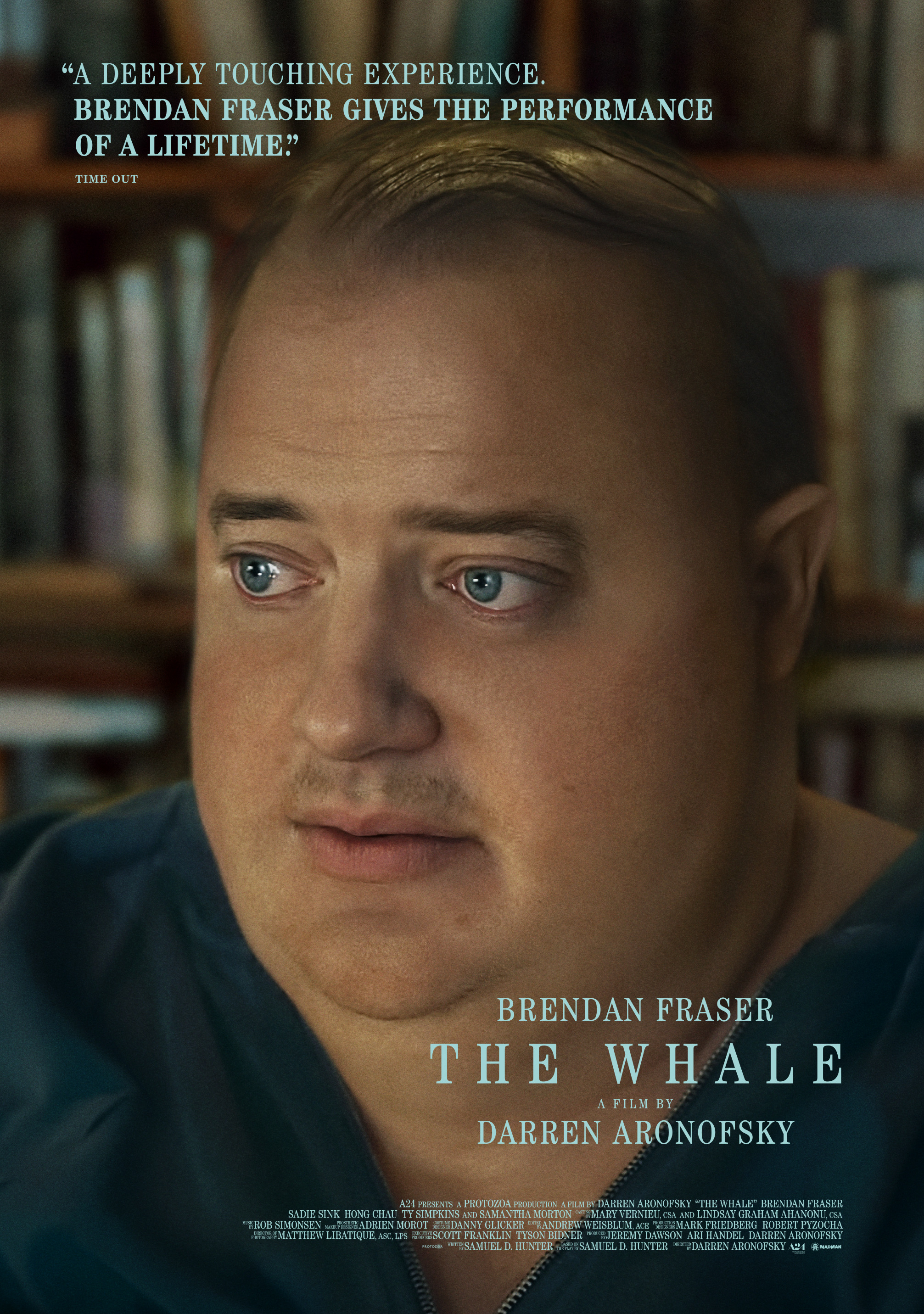
A reclusive morbidly obese English teacher, living alone in the wake of a tragedy, attempts to reconnect with his teenage daughter for one last chance at redemption.
Scarred by the profound wounds of grief and guilt, couchbound Charlie, an online writing instructor living with chronic obesity, now has a crystal-clear view of his secret intentions. And confined to his claustrophobic and musty apartment, the self-destructive shut-in has all the time in the world to contemplate the damaging faults of the past, fatherhood, and reconciliation.
Because, more than anything, flawed Charlie longs for communication and reconnection. After all, he hasn't spoken to his estranged, angry teenage daughter Ellie in years. But everyone knows whales don't live in the shallows. Can love and forgiveness wipe away the tears and the painful mistakes of a lifetime?
Creator: Darren Aronofsky
WHAT CRITERIA MAKES IT WOKE?



Oops! Is this show WOKE?
Only an account holder or member can file. Cite a scene, a line, or a pattern. Other account holders +1 or −1 that argument, once each. The show is not WOKE until enough of them have given a +1. Enough −1s remove the write-up, and it is no longer shown.
Sign in to file a woke label. One of each criterion per member.
Comments and reviews
Report a mistake
Same rule as woke labels: one report, a written reason, and the community +1 or −1 it — once per member. A net +5 applies the change. Editors can hold it for review, or apply it immediately.
No mistake reports yet.
Sign in to report a mistake. One report per field, per member.
Member review
Ray Okonkwo Member
Sep 19, 2026
★★★★★★★★★★The Whale sits with you in a way most movies about guilt don’t bother to. Charlie stays offline on purpose during his English classes, camera dark, voice only, and that choice alone tells you more about the man than any speech could. He is huge, housebound, and running out of time, and he knows it. What he wants from Ellie is not forgiveness in some neat package. He wants her in the room, even if she hates him for leaving, and he is willing to bribe her with money and essay help to make it happen.
Fraser plays the physical reality without turning it into a sideshow. The breathing, the slow movement across the apartment, the way food becomes both comfort and punishment—it all feels lived-in rather than performed for shock. I kept noticing the clutter of the place: papers, takeout containers, the laptop that is his only window out. Liz comes through with the nurse’s mix of care and frustration, checking vitals while arguing that he needs a hospital he will never go to. Their history with the partner he lost hangs over every visit, and the movie lets that silence do work instead of explaining it twice.
Ellie arrives sharp and mean, and that felt right. She is not there to learn a lesson or melt. She needles him about his size, about the years he missed, about the life he chose after the marriage ended. The writing scenes between them are some of the strongest parts. He still believes literature can reach someone, even her, and he pushes her to write honestly while she pushes back with contempt. You watch him try to give her something useful before his body gives out, and it never turns into a clean redemption arc. That restraint kept me in it.
Thomas the missionary shows up uninvited and keeps circling faith and salvation. At first it feels like the movie is setting up an easy clash, but the conversations stay awkward and human. Charlie is not looking for conversion and Thomas is not a cartoon. Their talks sit next to the family mess without resolving either side. I liked that the film did not need to declare a winner on belief. It just let two lonely people talk past each other for a while.
There is a scene late where Charlie finally turns the camera on for his students, and the weight of that decision lands harder than any monologue. He has spent the whole story hiding, and the choice to be seen is tied to everything else collapsing around him. The apartment feels smaller by then. Liz is still fighting him on the hospital. Ellie is still half in, half out. The movie trusts the performances enough to stay in those rooms instead of cutting away for bigger gestures.
I have seen plenty of stories about absent fathers trying to make good at the end. This one stays specific because the body is failing in real time and the daughter is not obligated to care. Charlie’s love of Whitman and the essays he assigns feel like the last tools he has left. He is not noble for staying home and eating himself to death. He is scared and stubborn and still trying to connect. That mix is what made the four-star rating stick for me. It could have gone softer or meaner and lost the thread. Instead it holds the middle of a man who knows the ending and still reaches out.
The runtime never felt padded. Scenes breathe, then move. Humor shows up in dry spots—Charlie’s deadpan replies to Ellie’s cruelty, Liz’s exhausted practicality—without undercutting the stakes. You leave knowing the relationship is unfinished, which is honest. Not every wound closes because the credits roll. Fraser carries the bulk of it, but the supporting turns keep him from floating alone in the frame. I would watch it again for those writing sessions and the quiet dread of the health checks more than for any big speech. It earns its time by staying with the mess instead of cleaning it up.