



 MOVIE · 1929
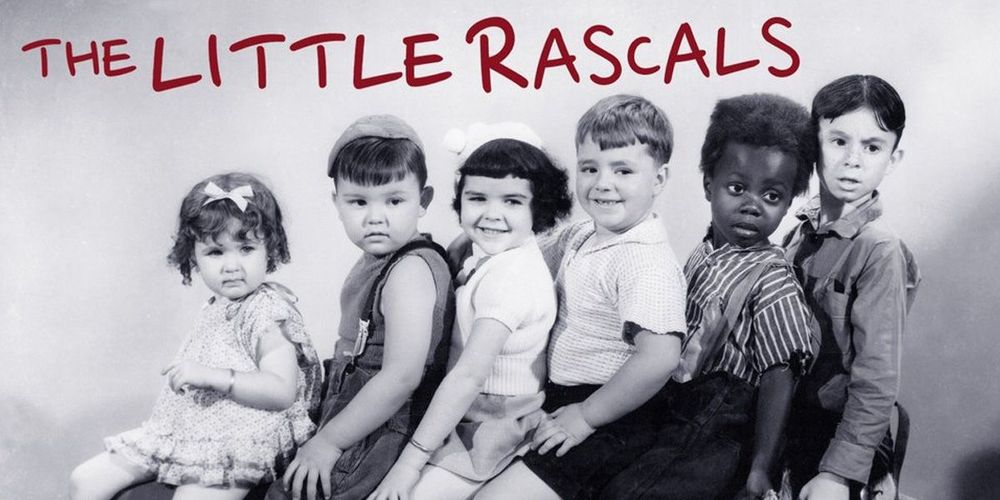
The Little Rascals (1929)
This first volume contains shorts spanning from 1930 to 1938. Although aired on television in the 1950s under the popular Little Rascals brand, these ten comedy classics are presented in their original uncut "Our Gang" theatrical editions. These remastered films are a must-have for fans, both old and new.
Oops! Is this show WOKE?
Only an account holder or member can file. Cite a scene, a line, or a pattern. Other account holders +1 or −1 that argument, once each. The show is not WOKE until enough of them have given a +1. Enough −1s remove the write-up, and it is no longer shown.
Sign in to file a woke label. One of each criterion per member.
Comments and reviews
Report a mistake
Same rule as woke labels: one report, a written reason, and the community +1 or −1 it — once per member. A net +5 applies the change. Editors can hold it for review, or apply it immediately.
No mistake reports yet.
Sign in to report a mistake. One report per field, per member.
Member review
Stu Kline Member
Oct 17, 2026
★★★★★★★★★★The Little Rascals volume covering those early Our Gang shorts from 1930 to 1938 still holds up better than most modern kids’ stuff I sit through. These are the original theatrical cuts, not the chopped-up TV prints that ran later, and the remastering keeps the scratches and grain honest without turning them into some glossy fake. You get the real black-and-white texture and the pacing that belonged to short subjects meant for a theater audience that expected a quick laugh before the feature.
I rated it a 4 because the comedy lands more often than it misses, and the kids feel like actual kids instead of trained performers reading lines off a teleprompter. Spanky runs the show with that little boss energy, Alfalfa tries too hard with the cowlick and the off-key singing, and the rest of the gang just piles on. The plots are thin on purpose—a clubhouse scheme, a race, a talent show gone sideways—and that thinness is the point. Nobody is solving the world’s problems. They’re trying to get out of chores or impress a girl or avoid getting caught by the adults. It works because the performances stay loose. You can tell some of the gags were half-improvised on the lot, and the camera just rolls with it.
What I like most is how little the shorts care about looking clever. A kid falls in a mud puddle, somebody gets a face full of pie, a dog steals the scene, and the whole thing ends before it wears out its welcome. There’s no big message bolted on at the end. The humor comes from the gap between what the kids think they’re doing and what actually happens. That gap still feels fresh. I’ve watched a couple of these with my own nephew and he laughed at the same physical bits I remembered from when they used to run on weekend mornings. The slapstick doesn’t need updating.
The sound is what it is—early talkie era—so the dialogue can be a little tinny and the music cues are basic. That never bothered me. It matches the period and keeps the focus on the faces and the timing. Some of the supporting adults play the straight man role perfectly, getting outsmarted or exasperated without turning mean. The kids stay the center. You see real friendship and rivalry mixed together the way it actually works on a street or in a backyard. No one is delivering speeches about belonging. They just belong because they’re there.
I keep coming back to these because they don’t apologize for being simple. Modern children’s entertainment often feels like it has to justify every joke with a lesson or a demographic checkbox. These shorts just put the gang in a situation and let the chaos happen. The results are uneven from short to short—some gag strings land harder than others—but the average is high enough that the weaker ones still carry you through. The remaster helps; faces are clearer, the outdoor shots have more depth, and you catch small reactions that used to get lost in the soft old prints.
There’s a particular pleasure in watching children who haven’t been coached into perfection. Their timing is off in places and that makes it funnier. Alfalfa’s romantic disasters still get a laugh because he believes every word of his own nonsense. Buckwheat and the others react like real kids would—half delighted, half ready to bolt. The dog Pete with the circle around his eye is pure scene-stealing without ever feeling like a gimmick. All of it sits in a world that looks ordinary: dirt lots, wooden fences, homemade costumes. No CGI polish, no color grading meant to look expensive. Just sunlight and dust and the occasional pie.
I don’t pretend every short is a masterpiece. A few lean too hard on the same chase or the same misunderstanding. But even those have a moment or two that salvage them—an unexpected line, a perfect pratfall, a kid who suddenly looks straight into the camera like he knows the joke. The collection as a whole feels generous. Ten shorts give you enough variety to see the formula and still enjoy it. You can dip in for twenty minutes or run a couple back-to-back without fatigue.
What stays with me is the lack of self-importance. These films were made to fill a bill and entertain, nothing more. That attitude shows. Nobody is trying to build a franchise mythology or set up a streaming universe. The kids age a little across the years covered here and the tone stays consistent: mischief first, consequences second, and everyone still friends by the fade-out. It’s the kind of entertainment that used to be common and now feels almost radical in its straightforwardness.
If you grew up with any version of these, the original cuts restore details the TV edits trimmed. If you didn’t, they still play as tight little comedies that respect a short attention span without talking down. I keep the disc around for exactly those reasons. Four stars feels right—strong enough to recommend, honest enough to admit a couple of the weaker entries drag the average down a notch. The good ones more than make up for it. Put one on when you want something that doesn’t demand you analyze it. Just watch the kids get into trouble and climb back out again. That’s enough.