
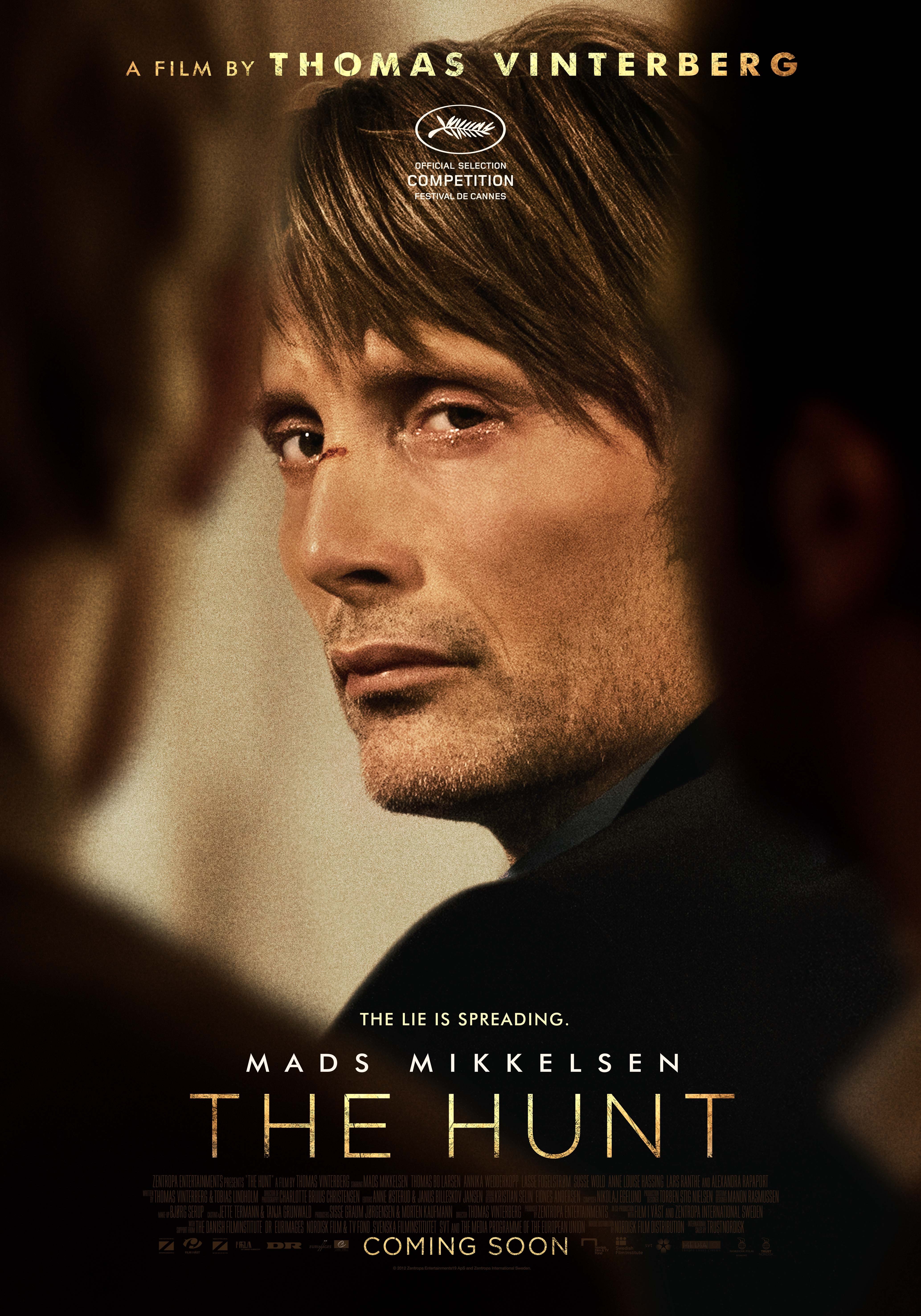




 MOVIE · 2013
The Hunt IS WOKE
Twelve strangers wake up in a clearing.
They don't know where they are—or how they got there. In the shadow of a dark internet conspiracy theory, ruthless elitists gather at a remote location to hunt humans for sport. But their master plan is about to be derailed when one of the hunted turns the tables on her pursuers.
WHAT CRITERIA MAKES IT WOKE?


Oops! Is this show WOKE?
Only an account holder or member can file. Cite a scene, a line, or a pattern. Other account holders +1 or −1 that argument, once each. The show is not WOKE until enough of them have given a +1. Enough −1s remove the write-up, and it is no longer shown.
Sign in to file a woke label. One of each criterion per member.
Comments and reviews
Report a mistake
Same rule as woke labels: one report, a written reason, and the community +1 or −1 it — once per member. A net +5 applies the change. Editors can hold it for review, or apply it immediately.
No mistake reports yet.
Sign in to report a mistake. One report per field, per member.
Member review
Dan Reilly Member
Sep 30, 2026
★★★★★★★★★★The first stretch of The Hunt left me a little restless. The setup settles in carefully, and for a while I kept waiting for the story to lean harder into the mess it was building. Some of the early community scenes feel almost polite about the disaster coming, like the film is holding back on how ugly ordinary people can get when they decide they already know the truth. I wanted a few more minutes in those rooms, more awkward silences, more of the small choices that turn neighbors into a pack. It is well scripted and well performed, but it still feels like it could have used extra breathing room to let the plot dig deeper before everything hardens.
That said, once the accusation takes hold, the movie stops being careful and starts being exact. Mads Mikkelsen plays Lucas as a somewhat lonely single man who has just started to get his life back in order—he finds a relationship, his son is coming to stay—and then one careless remark from a child he knows wrecks the whole thing. He does not overplay the shock or the dignity. You watch him try to keep his footing while the town quietly decides he is finished. That performance is the reason the film works. He never turns Lucas into a saint or a martyr; he just keeps showing you a man who cannot believe how fast the ground under him disappeared.
What stayed with me is how little the story needs grand villains. The people around Lucas are not cartoon monsters. They are friends, parents, shopkeepers, and they close ranks because it feels safer than sitting with doubt. A small lie, or even a confused half-truth from a kid, is enough. The film understands that once the idea is out there, evidence becomes almost secondary. People protect the story they have already told themselves. That part is cold and accurate, and it does not let you off the hook by blaming only one loud idiot. The hostility spreads through ordinary loyalty and ordinary fear.
I do not love every beat of the middle. A couple of confrontations land a little too squarely, and a few supporting characters feel like they exist mainly to deliver the next shove. The pacing can drag in places where the silence should cut harder instead of just sitting there. Still, the film never turns into a lecture. It stays close to Lucas’s face and to the shrinking circle of places he is still allowed to go. The cinematography is plain in the best way—no flashy flourishes, just the gray light of a place that used to feel safe and now does not.
This is not an easy or light watch, and it should not be. The subject is the kind that makes you check your own instincts. How quick are you to believe the worst when it is someone you half-know? How much do you need the comfort of a clear villain? The movie does not answer those questions with speeches. It just keeps showing the cost. By the time the later scenes arrive, the damage feels permanent even when the surface starts to look normal again. That aftertaste is what I respect most about it.
Mikkelsen carries nearly everything, but the supporting work holds up. The people who turn on him are played with enough everyday warmth that their coldness lands. The kid at the center of the trouble is never treated like a tiny villain either; the film is careful about confusion and adult pressure without turning soft. The script and the staging stay controlled. Nothing feels cheap or opportunistic. You get a round, complete piece of filmmaking that trusts the audience to sit with discomfort instead of being told how to feel every five minutes.
I rated it four stars because the core is strong and the lead performance is better than strong, even if I still wish the early sections had more grit and a little more time to let the rot set in at a human pace. Some films about social panic go loud and self-important. This one stays quiet and specific, which is harder and more honest. It left me thinking about how thin the wall is between a peaceable community and something that looks a lot like a hunt. Not because anyone planned it that way, but because a lie is easier to live with than the work of not knowing. That is the part that sticks. You walk away a little less sure of how you would act if the same quiet pressure landed on your street. That unease is earned, not manufactured, and it is why the movie stays with you after the credits.