



 TV · 2022
The Girl from Plainville
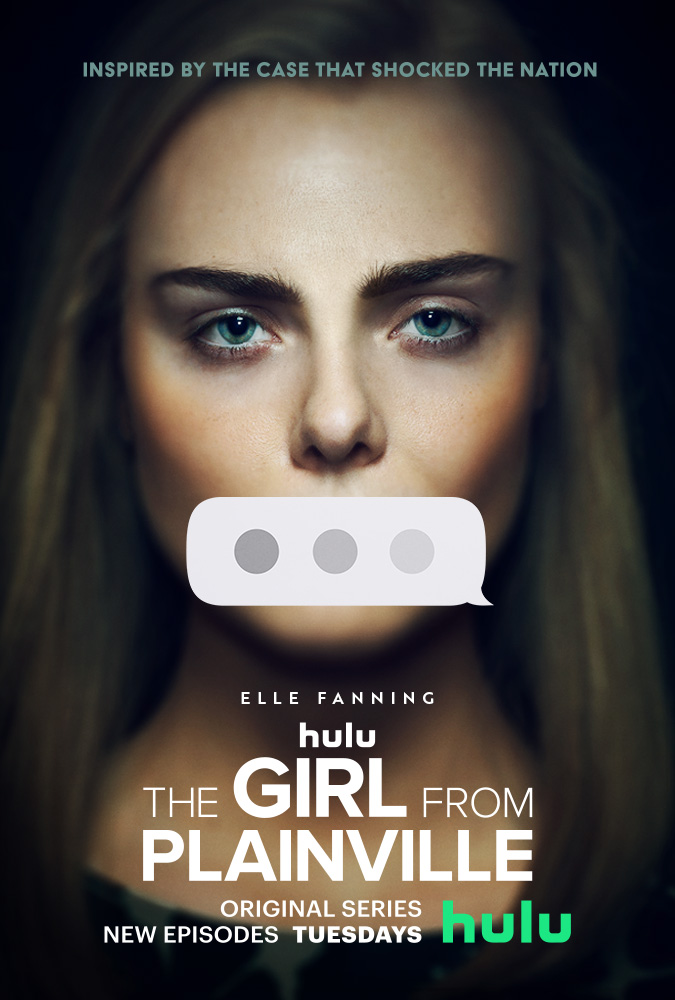
A Massachusetts teen is tried for involuntary manslaughter after relentless texts and calls push her depressed boyfriend to complete suicide. The limited series reconstructs the relationship, the final night, and the courtroom fight over whether words can kill.
The Girl from Plainville follows Michelle Carter, a socially awkward Massachusetts teenager who builds an intense long-distance bond with Conrad Roy III through texts and calls. Conrad battles depression and prior suicide attempts while Michelle, craving connection and control, positions herself as his confidante and eventual coach. As his despair deepens, her messages shift from support to direct pressure, including instructions on method and timing. When Conrad climbs out of his truck mid-attempt, Michelle tells him to get back in. The series intercuts their private exchanges with the aftermath that lands her in court, forcing family, friends, and prosecutors to confront what the digital record actually proves.
After Conrad’s death, investigators recover thousands of messages that become the core of the manslaughter case against Michelle. Her parents and Conrad’s family grapple with grief, denial, and the question of responsibility while Michelle maintains she was only trying to help. Courtroom scenes track the novel legal theory that speech alone can constitute the act of killing, with prosecutors reading the most damning texts aloud. Michelle’s defense argues free speech and Conrad’s preexisting intent, yet the jury must weigh her final phone call and the moment she ordered him back into the vehicle. The series stays close to the documented timeline and the emotional fallout that followed the 2017 conviction.
Click any of the following icons below to rent or stream it!
Oops! Is this show WOKE?
Only an account holder or member can file. Cite a scene, a line, or a pattern. Other account holders +1 or −1 that argument, once each. The show is not IS WOKE until enough of them have given a +1. Enough −1s remove the write-up, and it is no longer shown.
Sign in to file a woke label. One of each criterion per member.
Comments and reviews
Report a mistake
Same rule as woke labels: one report, a written reason, and the community +1 or −1 it — once per member. A net +5 applies the change. Editors can hold it for review, or apply it immediately.
No mistake reports yet.
Sign in to report a mistake. One report per field, per member.
Member review
June Pell Member
Oct 19, 2026
★★★★★★★★★★The Girl from Plainville left me turning over the same question for days after I finished it: how much weight do we actually give to words when the person hearing them is already halfway gone. I rated it three stars because the series sits in that gray zone without forcing a clean verdict, yet it never quite rises above the limits of its own structure. It reconstructs the long-distance bond between Michelle Carter and Conrad Roy through the texts and calls that defined them, then sets that private disaster against the courtroom that tried to decide whether her words crossed into manslaughter. I kept watching because the central unease felt real, not manufactured for shock.
What works best is the way the show lets the relationship breathe before it curdles. Michelle comes across as someone starved for a role that makes her matter, latching onto Conrad’s depression because it gives her purpose and a kind of control she cannot find face to face. Conrad is drowning and looking for an exit, and the series is careful not to turn him into a pure victim or her into a cartoon puppeteer. Their exchanges start as confiding and slide, almost without a clean break, into coaching. When he climbs out of the truck and she tells him to get back in, the moment lands hard precisely because the show has already spent time showing how ordinary their earlier messages could sound. That shift is the part I keep replaying.
I took a short detour while watching into thinking about my own teenage years, when a late-night phone call could feel like the only solid ground available. The difference now is the archive. Every pressure, every reassurance, every cruel instruction sits in a thread that can be read back years later in a courtroom. The series understands that permanence without lecturing about phones. It just shows the messages stacking up and lets the discomfort do the work. That restraint is one reason I landed at three instead of lower. It could have become pure true-crime spectacle and mostly refuses the easy route.
Still, the construction starts to fray. Jumping between the relationship timeline and the trial creates pockets where momentum stalls. Some of the legal scenes feel dutiful rather than revelatory, as if the writers needed to hit certain beats about free speech and culpability without finding a sharper angle on either. I wanted more texture around the families and the town without turning them into stock figures of outrage or denial. A few supporting performances stay thin, which makes the two leads carry more than they should. Elle Fanning finds the right awkward hunger in Michelle, that mix of genuine loneliness and self-dramatizing need, but the script sometimes circles the same emotional notes instead of digging further under them.
There is also the simple fact that watching someone talk another person into dying is exhausting. The show does not soft-pedal the final night, and I respect that, yet the cumulative effect can feel like being stuck in a room with two people who cannot stop hurting each other and themselves. I never felt the series was glamorizing any of it. If anything, it makes the emptiness around both of them almost physical. Michelle’s craving for connection and Conrad’s long battle with despair sit side by side without one canceling the other. That balance is harder to pull off than it looks, and it is probably why I did not drop below three stars even when the pacing lagged.
I keep coming back to the legal core. Can words kill. The series does not answer it for you, which is honest, but it also does not open the question wide enough to feel fully explored. You leave with the same uneasy sense you arrived with, only now it has faces and a stack of text bubbles attached. In a way that is fitting. Real cases rarely deliver tidy moral geometry. What I wanted was a slightly braver formal approach, something that trusted the audience more with silence or with the gaps between messages instead of filling so much with reconstruction. The production itself is clean and competent, never flashy, which suits the material.
By the end I felt I had spent enough time with these two damaged kids to understand the outline of the tragedy without claiming I understood them completely. That partial knowledge is what the show earns. It is not a triumph and it is not a failure. It is a careful, sometimes repetitive, occasionally piercing look at how need and despair can braid together until one person’s exit becomes the other’s performance of care. I would not rush to rewatch it, yet I also would not tell someone to skip it if the question of responsibility in digital intimacy already nags at them. Three stars feels right: solid enough to stick, limited enough that I kept noticing the seams. The texts stay with you longer than the verdict does, and maybe that is the point the series finally makes without needing to shout it.