



 MOVIE · 1986
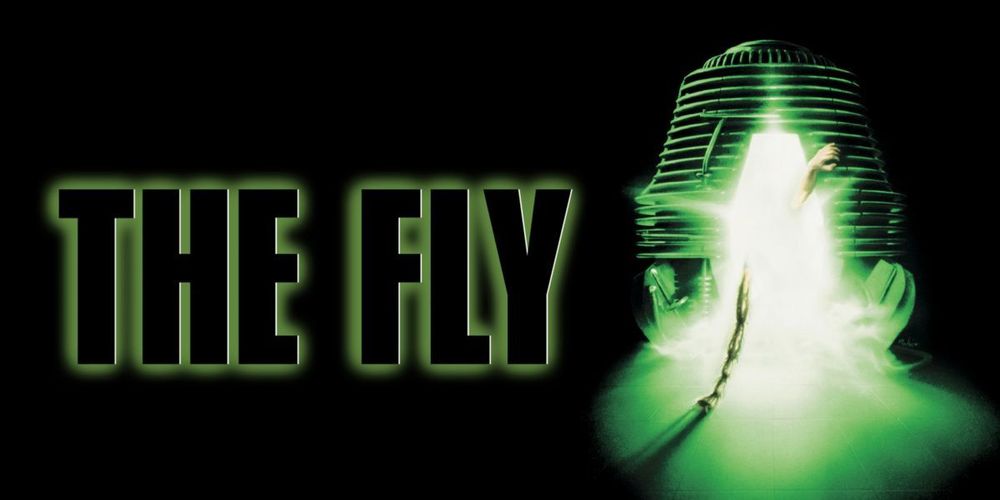
The Fly (1986)
In a remake of the 1958 cult classic, a young scientist transforms himself into a fly in an experiment gone horribly wrong. Seth Brundle, a brilliant but eccentric scientist attempts to woo investigative journalist Veronica Quaife by offering her a scoop on his latest research in the field of matter transportation, which against all the expectations of the scientific establishment have proved successful. Up to a point, Brundle thinks he has ironed out the last problem when he successfully transports a living creature, but when he attempts to teleport himself a fly enters one of the transmission booths, and Brundle finds he is a changed man.
Oops! Is this show WOKE?
Only an account holder or member can file. Cite a scene, a line, or a pattern. Other account holders +1 or −1 that argument, once each. The show is not WOKE until enough of them have given a +1. Enough −1s remove the write-up, and it is no longer shown.
Sign in to file a woke label. One of each criterion per member.
Comments and reviews
Report a mistake
Same rule as woke labels: one report, a written reason, and the community +1 or −1 it — once per member. A net +5 applies the change. Editors can hold it for review, or apply it immediately.
No mistake reports yet.
Sign in to report a mistake. One report per field, per member.
Member review
Dan Reilly Member
Oct 16, 2026
★★★★★★★★★★The Fly is one of those movies people treat like sacred ground, and I went back to it expecting the reputation to do most of the work. It doesn’t. What bugged me first is how thin the early romance feels. Seth and Veronica meet, trade some clever banter, and suddenly they’re a couple living together like the script just decided it was time. I kept waiting for a scene that actually earned the attachment instead of assuming it. That shortcut makes the later emotional punches land a little softer than they should. The middle stretch also drags once the teleportation novelty wears off and we’re stuck watching Brundle spiral without enough variation in the stakes. You get the idea early, then the movie circles it for a while before the real change kicks in hard.
Still, once the transformation starts owning the story, the film finds its footing and keeps it. Jeff Goldblum plays the unraveling with this weird mix of arrogance and genuine panic that never turns cartoonish. You watch a smart guy who thought he had the universe figured out slowly realize he is the experiment now, and he never overplays the pity. Geena Davis matches him by refusing to become pure victim or pure nurse; she stays sharp and a little selfish in ways that feel honest. The practical effects are the real reason this holds up. The makeup and puppets do the heavy lifting without the smooth digital cheating that makes modern body horror feel weightless. When Brundle’s body starts failing him in stages, you believe the weight and the wetness and the wrongness of it. That physicality sells the tragedy better than any monologue could.
I like that the movie never turns the science itself into the villain. Brundle’s hubris is the problem, not the machines. He rushes the test because his ego and his loneliness line up at the wrong moment, and the fly is just the bad luck that makes it irreversible. That keeps the story from lecturing. It stays personal. The horror comes from watching a man lose control of his own flesh and still try to talk his way through it like he can negotiate with biology. Some of those later scenes get genuinely uncomfortable in a way that doesn’t feel cheap. You want him to stop, and you know he can’t, and the movie doesn’t offer easy outs or last-minute miracles.
The one place it still stumbles for me is the final act’s tone. It goes full creature feature right when the human cost is at its peak, and the switch feels abrupt. I get why they did it—the audience paid for the monster—but it undercuts some of the quiet dread that made the middle so effective. A little more restraint there and this would sit closer to perfect in my book. Even so, the core idea remains strong: a man who wanted to improve himself ends up becoming something that can’t love or be loved the same way, and the people around him have to decide how much of him is left worth saving. That question doesn’t need modern dress-up or side lectures. It just sits there, ugly and clear.
Watching it again, I kept noticing how clean the central metaphor stays. No one is redeemed by speeches. No one is punished for the wrong identity. The damage is physical and irreversible and earned by choices, not by some checklist of sins. That alone makes the film feel sturdier than a lot of newer horror that keeps stopping to explain its own importance. Goldblum’s physical commitment sells every stage of the change, from the early sugar cravings and the odd strength to the full breakdown. You never catch him winking at the camera. Davis does the harder job of reacting without turning into a pure reactor; she has her own anger and fear and she uses both. The supporting cast is thin by design, which keeps the focus tight on the two of them and the machine that ruined everything.
I rated it four because the strengths outweigh the pacing soft spots and the slightly rushed emotional setup. The effects still look expensive in the right way, the performances stay committed, and the story never apologizes for being about irreversible consequence. It is not flawless, and I won’t pretend the first half moves with perfect purpose, but when it locks in, it locks in hard. You walk away thinking about the cost of wanting too much control over your own limits. That is rarer than it should be. I’ll revisit it again, flaws and all, because the good parts still cut clean.