



 MOVIE · 2022
The Fabelmans
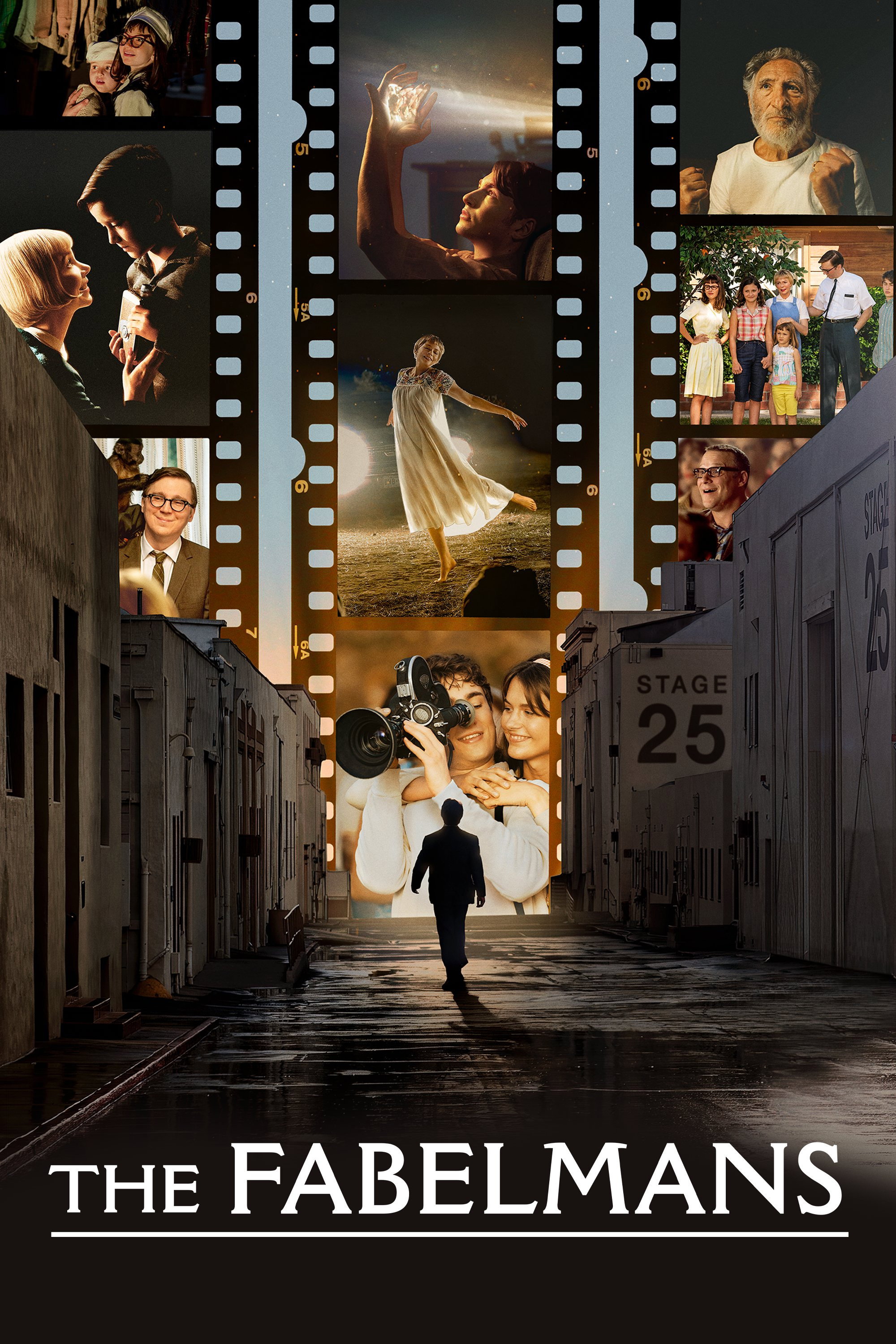
Growing up in post-World War II era Arizona, young Sammy Fabelman aspires to become a filmmaker as he reaches adolescence, but soon discovers a shattering family secret and explores how the power of films can help him see the truth.
Oops! Is this show WOKE?
Only an account holder or member can file. Cite a scene, a line, or a pattern. Other account holders +1 or −1 that argument, once each. The show is not WOKE until enough of them have given a +1. Enough −1s remove the write-up, and it is no longer shown.
Sign in to file a woke label. One of each criterion per member.
Comments and reviews
Report a mistake
Same rule as woke labels: one report, a written reason, and the community +1 or −1 it — once per member. A net +5 applies the change. Editors can hold it for review, or apply it immediately.
No mistake reports yet.
Sign in to report a mistake. One report per field, per member.
Member review
Stu Kline Member
Oct 6, 2026
★★★★★★★★★★The Fabelmans got under my skin in a way most big studio movies don’t bother to try anymore. I went in knowing it was Spielberg looking back at his own childhood, and that can go either way—nostalgia bath or honest reckoning. This one lands closer to honest. Sammy discovers the camera the way some kids discover a bike or a baseball glove, and from that point the film is less about “becoming a director” and more about what happens when the pictures start showing you things you weren’t ready to see at home.
Mitzi and Burt feel like real parents, not movie parents. She’s the one with the spark and the restlessness; he’s the steady engineer who keeps taking better jobs and dragging the family to new towns. You feel the grind of those moves. Arizona looks dry and open, then California starts closing in. The household tension isn’t played for big scenes every ten minutes. It just sits there, getting heavier, until Sammy’s little home movies stop being pure fun and start catching the cracks. That private discovery about his parents is handled without speechifying. He has to decide what the camera is for—control, escape, or something closer to the truth. I respected that the movie doesn’t hand him a clean answer.
Gabriel LaBelle carries the kid years without overdoing the wide-eyed wonder. You believe he loves the mechanics of film as much as the magic. Michelle Williams gives Mitzi real edges; she’s not a saint or a villain, just someone whose needs don’t fit the life she chose. Paul Dano plays Burt as a man who loves his family and still keeps choosing the practical path that slowly costs him pieces of it. Judd Hirsch shows up late and steals his stretch of the movie the old-fashioned way—by knowing exactly how much to say and when to shut up. The supporting kids and the school scenes feel lived-in rather than arranged for lessons.
I don’t need every film about art to be a manifesto. This one mostly stays out of that trap. It lets the family mess breathe. The anti-Semitism Sammy runs into at school is ugly and specific, not turned into a broader lecture. The bullying has weight because it lands on a particular boy who already feels different. Spielberg and Tony Kushner keep the focus on what the kid does with the hurt instead of turning the whole story into a statement. That choice matters. It keeps the movie personal instead of programmatic.
Technically it’s handsome without being showy. The early home-movie sequences have that slightly crude energy that still feels exciting. When Sammy starts cutting and framing with more intention, you see the craft catching up to the feeling. Janusz Kamiński knows how to light a 1950s living room so it feels warm and also a little trapped. The score stays out of the way more than I expected, which helped. Big emotional beats don’t get underscored into submission.
Where it loses a little steam for me is the back half. Once the family secret is out in the open, some of the later scenes lean harder on explanation than they need to. I already understood the cost. A couple of the mentoring conversations with the uncle and later industry figures tip toward the inspirational when the quieter stuff had already done the work. Still, even those moments come from a place of someone trying to make sense of why he kept pointing a camera at people he loved. I can live with a little extra talk if the core stays true.
I rated it four stars because it stuck with me after the credits. Not every scene is perfect, and it runs long in places, but the central idea holds: the camera can be a shield and a scalpel at the same time. Sammy isn’t portrayed as a pure genius destined for greatness. He’s a kid who finds a tool that lets him stand a little outside the chaos long enough to look at it. That felt right. A lot of coming-of-age movies pretend the artist emerges fully formed. This one shows the mess that comes first.
My own family moved a few times when I was young, nothing as dramatic, but I remember the way a house can suddenly feel temporary. Watching Burt pack up another set of belongings hit that note. Mitzi’s piano and her need to keep something of herself alive also felt familiar in a quieter way. The movie doesn’t demand you map your life onto theirs. It just leaves the door open.
I’m glad it exists. Hollywood doesn’t make many films this directly about the early itch to create and the price the family pays while you’re figuring it out. It could have turned soft or self-congratulatory. For the most part it doesn’t. The ending leaves Sammy at the start of something rather than the triumph, which is the honest place to stop. Four stars feels fair—strong work with a few soft patches, but the kind of movie I still think about days later when something small reminds me of a frame or a look between the parents. That’s rarer than it should be.