



 TV · 2022
The Dropout
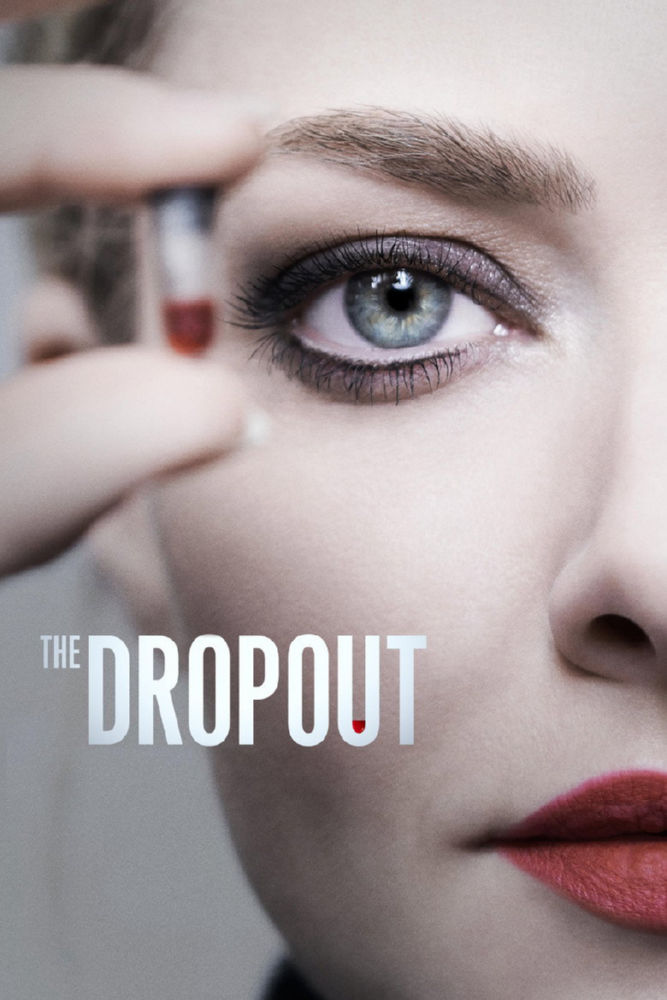
The Dropout traces how Elizabeth Holmes sold a blood-testing miracle that never worked, building Theranos into a Silicon Valley darling before the lies put patients at risk and the company collapsed.
The Dropout follows Elizabeth Holmes, a driven Stanford dropout who founds the medical startup Theranos and claims a tiny drop of blood can run a full battery of accurate tests. She cultivates a deep voice, black turtlenecks, and a Steve Jobs aura while courting investors, board members, and partners who buy the vision of cheap, painless diagnostics. Holmes locks the lab culture into secrecy, pushes aggressive timelines, and pairs with older business partner Sunny Balwani as the company valuation soars into the billions. Early employees and outside scientists begin to notice that the proprietary machines fail basic reliability checks, yet the public story of a young female tech visionary keeps expanding. The series stays close to the real chronology of fundraising pitches, media praise, and the mounting pressure to deliver results the technology cannot produce.
As Theranos moves toward retail partnerships and wider patient use, whistleblowers inside the company document falsified demonstrations and unsafe practices that put real people in medical danger. Holmes and Balwani double down on control, intimidation, and legal threats while reporters and regulators start asking harder questions. The central relationship frays under the weight of the fraud, and the carefully built myth of the next-generation healthcare empire unravels in depositions, exposés, and criminal scrutiny. Holmes faces the consequences of years of overstated claims as the board, investors, and public learn how little of the promised science ever worked. The story closes on the human cost of the deception rather than on any separate social lecture.
Oops! Is this show WOKE?
Only an account holder or member can file. Cite a scene, a line, or a pattern. Other account holders +1 or −1 that argument, once each. The show is not WOKE until enough of them have given a +1. Enough −1s remove the write-up, and it is no longer shown.
Sign in to file a woke label. One of each criterion per member.
Comments and reviews
Report a mistake
Same rule as woke labels: one report, a written reason, and the community +1 or −1 it — once per member. A net +5 applies the change. Editors can hold it for review, or apply it immediately.
No mistake reports yet.
Sign in to report a mistake. One report per field, per member.
Member review
Peg Harlan Member
Oct 19, 2026
★★★★★★★★★★I’ve been through the Theranos story a few times already and still found myself settling in for The Dropout. Read Bad Blood years back, watched The Inventor, and somehow this one still held my attention the whole way. There’s something about watching a con that big play out in real time that keeps drawing people back, and this version handles it clean clean without turning into a lecture.
Amanda Seyfried is the main reason it works. She doesn’t just put on the turtleneck and lower her voice; she builds the whole Elizabeth Holmes package until it starts feeling off in a way that creeps up on you. Early on you can almost buy the drive and the pitch. By the later stretch that fixed stare and the flat delivery get genuinely unsettling. You sit there thinking how many smart people sat across from that and decided the black turtleneck meant genius. She makes the performance look simple, which is harder than it seems.
What stuck with me most was how clearly the show lays out the bravery of the people who finally said something. Tyler Shultz and Erika Cheung aren’t written as superheroes. They’re just employees who saw the machines failing basic checks and couldn’t keep quiet once patient results were on the line. That takes real nerve when the company is worth billions on paper and the founder is still getting magazine covers. The show gives them space without turning their parts into speeches. You feel the pressure they were under and the cost of speaking up.
The rest of the setup is familiar if you’ve followed any of this, but it still lands. Holmes drops out of Stanford, sells the dream of a full lab panel from a finger prick, and wraps herself in the Steve Jobs look. Deep voice, controlled image, big promises about cheap painless testing that would change everything. Investors and board members line up. The valuation climbs into fantasy territory while the actual devices stay locked behind secrecy and aggressive deadlines. Sunny Balwani enters as the older partner who doubles down on the culture of silence and speed. You watch the gap between the public story and the lab reality get wider and wider until it can’t hold.
I liked that the series doesn’t rush the collapse or soften what the lies meant for real people getting tested. Bad blood results, delayed diagnoses, the whole mess of putting unproven hardware between patients and their doctors. It stays focused on how the machinery of hype kept rolling long after the science had failed. No need to dress it up with bigger themes. Ambition plus secrecy plus a willingness to bluff past the breaking point is enough.
Pacing feels steady. It doesn’t linger too long on the early charm or race through the unraveling. You get enough of the board meetings and the press glow to understand why so many people wanted the story to be true. Then you get the internal cracks—engineers who know the numbers don’t add up, the quiet exits, the growing panic when outsiders start asking the right questions. Seyfried carries a lot of the weight, but the surrounding cast keeps it from becoming a one-person show. You see the enablers and the skeptics in roughly equal measure.
They used to make cautionary stories like this without sanding everything down to a message. This one mostly trusts the facts of what happened. Holmes sold a miracle that never worked. The company became a darling on the strength of a vision and a carefully managed image. People got hurt because the product never delivered what was promised. That’s the core, and the show stays close to it. I didn’t need it to invent extra villains or turn every supporting player into a symbol. The real events are strange enough.
By the end I wasn’t looking for neat lessons. I was left thinking about how long the illusion held and how few people inside were willing to break it early. Seyfried’s turn into something colder and more locked-in makes the later episodes hard to look away from. The whistleblowers’ parts give it a backbone that keeps the whole thing from feeling like pure spectacle. Four stars feels right—strong enough that I’d recommend it to anyone who’s still curious about this particular Silicon Valley disaster, polished without being glossy, and honest about the damage. It’s another solid treatment of a story that somehow still has room left to surprise you when the details line up again.