



 MOVIE · 2015
The Cokeville Miracle
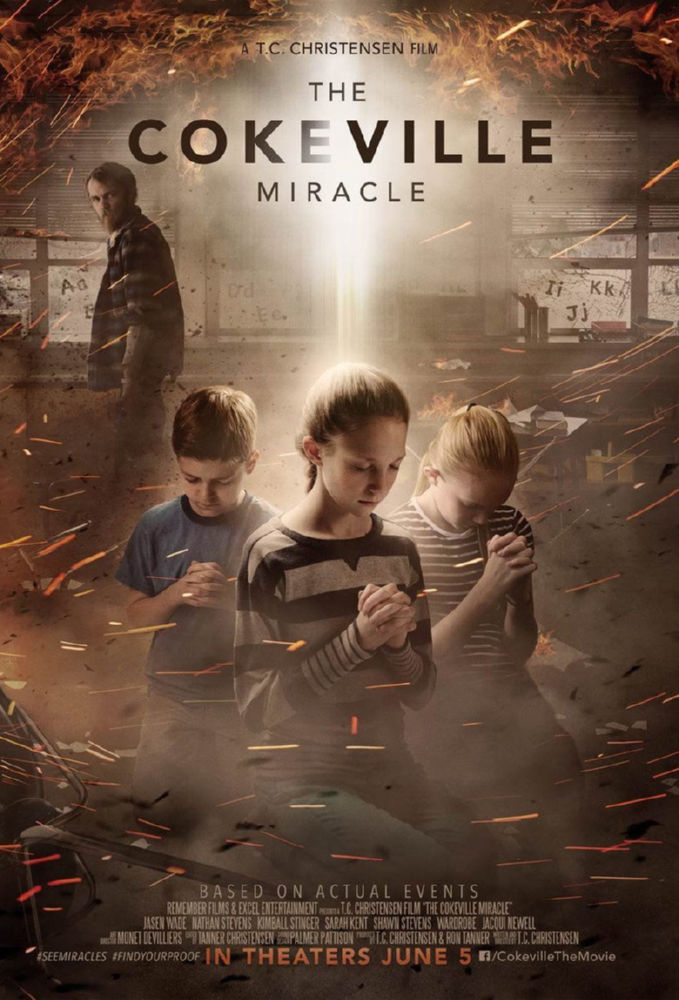
The Cokeville Miracle is an astounding true story about survival in the face of unimaginable terror. On May 16th, 1986, in the small town of Cokeville, Wyoming, David and Doris Young entered the local elementary school with a bomb and held the entire school hostage in one room. In the mayhem that followed the bomb was detonated, but not one hostage was killed and the parents must put their scepticism aside as children start to tell stories of how they survived. How is it possible for a packed building to explode yet leave no casualties?
Oops! Is this show WOKE?
Only an account holder or member can file. Cite a scene, a line, or a pattern. Other account holders +1 or −1 that argument, once each. The show is not WOKE until enough of them have given a +1. Enough −1s remove the write-up, and it is no longer shown.
Sign in to file a woke label. One of each criterion per member.
Comments and reviews
Report a mistake
Same rule as woke labels: one report, a written reason, and the community +1 or −1 it — once per member. A net +5 applies the change. Editors can hold it for review, or apply it immediately.
No mistake reports yet.
Sign in to report a mistake. One report per field, per member.
Member review
Dan Reilly Member
Oct 6, 2026
★★★★★★★★★★The Cokeville Miracle sets out to tell a story that already carries more weight than most movies can handle, and that is part of the problem right from the start. When you base a film on a real hostage situation at an elementary school, with bombs and guns and kids trapped inside, the bar for honesty gets high fast. What didn’t work for me was how often the movie felt like it was managing the audience instead of just letting the events and the people sit there. The father’s search for answers is supposed to be the spine, but it keeps getting interrupted by scenes that underline the point a little too hard. You can feel the filmmakers worrying that someone might miss the faith angle, so they lean on it with music cues and lingering looks that tip into instruction rather than discovery. That undercuts the very mystery the story claims to respect.
I also struggled with the balance between the chaos of the standoff and the quieter aftermath. The crisis itself has real tension—parents stuck outside, law enforcement trying not to make it worse, teachers holding it together inside—but once the smoke clears, the film sometimes drifts into a kind of earnest testimony reel. Kids describing luminous figures and unseen help should feel unsettling and specific. Instead, a few of those moments come across smoothed out, as if the rough edges of memory had been sanded for clarity. Real trauma is messier. People contradict each other. Some cling to the experience; others shut it down. The movie knows that intellectually, yet it still prefers a cleaner line than life usually allows. That left me skeptical even when I wanted to be moved.
Pacing is another soft spot. The first half builds decent pressure, then the second half spends a lot of time circling the same questions without deepening them much. Ron Hartley’s drive to understand what his kids went through is believable, and you get why a parent would keep pushing. But the script doesn’t always trust silence or doubt. It fills space with conversations that restate the stakes rather than reveal new ones. I kept wishing it would sit longer in the discomfort of not knowing, instead of reaching for a shape that feels more resolved than the real accounts probably were.
All that said, credit where it’s due. The core idea is strong enough that the film never fully collapses under its own caution. There is something quietly powerful about children insisting on what they saw while adults hedge and analyze. The movie does capture that gap without turning the kids into mascots or the adults into cartoon skeptics. You feel the weight on the families afterward—the way a public trauma becomes private argument, and how faith under fire doesn’t always look like victory. When it stays close to that friction, it works. A few of the classroom and hallway moments land because they keep the threat simple and immediate. No speeches. Just people trying not to panic while the clock runs.
The performances help more than the writing sometimes does. The father comes across as a regular guy who is equal parts determined and exhausted, not a saint on a mission. That matters. The supporting turns among the teachers and other parents mostly avoid the big emotional telegraphing that could have sunk this. I appreciated that the film doesn’t pretend the miracle settles every argument. Plenty of people walk away unconvinced, and the movie at least nods at that instead of scolding them. In a story this charged, restraint is hard, and it shows some when it could have gone full sermon.
Technically it is competent without being flashy. The production design keeps the school feeling ordinary, which is the right call. Nothing looks over-lit or cinematic in a way that would make the danger feel remote. Sound design during the crisis does its job—muffled chaos, the wrong kind of quiet—then pulls back afterward so the talk can breathe. I just wish the script had trusted that atmosphere more and the explanatory dialogue less.
On the faith side, I came in wary. Movies that put Christianity front and center often either sneer at it or wrap it in plastic. This one mostly avoids both traps. It treats belief as something people actually live with under pressure, not a costume or a punchline. That alone kept me watching past the parts that felt over-managed. Still, it never quite reaches the rawness the true story seems to contain. I left thinking about the kids’ accounts more than the film’s framing of them, which is both a compliment to the source and a knock on the adaptation.
Three stars feels right. It is watchable and sincere, with enough grounded moments to respect the people who lived it. It is also too careful, a little too eager to guide your conclusions, and uneven once the immediate danger ends. I don’t need a movie like this to convert me or to debunk anything. I need it to sit with the strange, stubborn reports and the father who can’t let them go. It gets partway there. The rest stays just out of reach, which is frustrating when the material is this strong. Worth seeing if the subject pulls you in. Just don’t expect it to match the weight of what actually happened.