
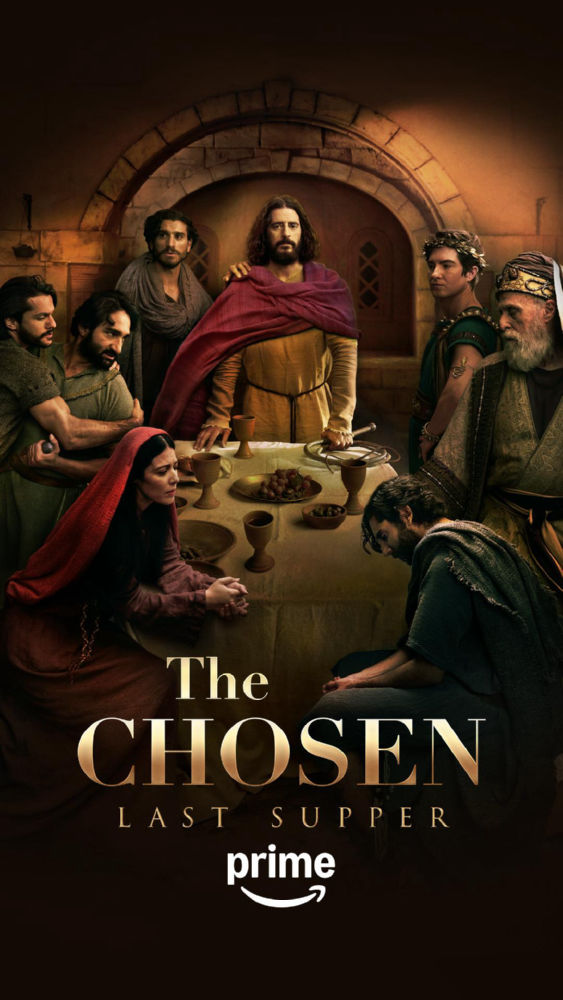



 TV · 2019
The Chosen
The Chosen portrays the ministry of Jesus Christ through the ordinary men and women who encounter him, from fishermen and tax collectors to the outcast and the powerful.
The Chosen follows Jesus of Nazareth as he begins teaching and healing across Galilee and Judea, drawing followers whose lives are already strained by Roman rule, illness, and personal failure. Simon the fisherman struggles with debt and a failing catch until a night on the water changes everything and pulls him into the circle of disciples. Matthew the tax collector, despised by his own people, is called from his booth and must face the cost of leaving that life behind. Mary Magdalene, tormented and isolated, finds deliverance and a place among those who travel with Jesus. Early miracles, including healings of the paralyzed and the leprous, spread word of his authority while religious leaders begin to watch with suspicion. The series stays close to the daily pressures on these first followers as they decide whether to trust the man who claims to bring the kingdom of God.
As the group grows, Jesus continues to teach in parables and confronts both Roman officials and the temple authorities who question his claims. Judas joins the circle with his own ambitions, while Peter’s impulsiveness and Matthew’s careful record-keeping create friction and loyalty inside the band of disciples. Relationships deepen through shared meals, journeys to Jerusalem, and moments of doubt when crowds turn or danger rises. Mary Magdalene and the other women remain central witnesses to the healings and the harder sayings about sacrifice and forgiveness. Later arcs follow the rising tension that will lead toward the cross, the disciples’ fear, and the hope that still holds them together. The story keeps returning to how ordinary people respond when the teacher they follow demands everything.
Click any of the following icons below to rent or stream it!
Oops! Is this show WOKE?
Only an account holder or member can file. Cite a scene, a line, or a pattern. Other account holders +1 or −1 that argument, once each. The show is not WOKE until enough of them have given a +1. Enough −1s remove the write-up, and it is no longer shown.
Sign in to file a woke label. One of each criterion per member.
Comments and reviews
Report a mistake
Same rule as woke labels: one report, a written reason, and the community +1 or −1 it — once per member. A net +5 applies the change. Editors can hold it for review, or apply it immediately.
No mistake reports yet.
Sign in to report a mistake. One report per field, per member.
Member review
Becky Soto Member
Oct 19, 2026
★★★★★★★★★★I keep coming back to The Chosen in quiet stretches of the week, not because I need another faith story on the calendar, but because it treats the people around Jesus like they have actual lives that were already messy before he showed up. That is what landed for me. It is not a stained-glass pageant. You feel the dust, the debt, the side-eye from neighbors, and the way a single conversation can rearrange somebody’s whole week.
There is a stretch early on with Simon that still sits with me. He is worn thin by the catch that will not come and by the pressure of what he owes. You watch him work the problem the way ordinary men do—short tempers, long nights, trying to keep face in front of people who depend on him. When the nets finally fill, it is not staged like a fireworks moment. It is relief first, then confusion, then the slow realization that the man on the shore is not offering a tip for better fishing. That beat stuck because it feels earned. You understand why someone would leave the boat without needing a speech about destiny. The show lets the weight of the choice hang there.
Matthew’s booth scenes do something similar from the other direction. He is precise, a little awkward in company, and fully aware that his own people despise the work that keeps him safe under Roman order. When he is called, the cost is immediate and social. Family disappointment, former colleagues who will never forgive the walk away, the sudden loss of the structure that made him feel useful. I liked that the series does not rush past that. It lets you sit with how lonely competence can be when it is pointed in the wrong direction, and how startling it is when someone sees past the job title.
Mary Magdalene’s early path is handled with a restraint I did not expect. The torment and isolation are clear without turning her into a symbol or a lecture. When deliverance comes, the relief is physical and quiet. She finds a place among the travelers, and the show is careful about what that belonging costs and what it repairs. I am not usually drawn to big emotional resets on screen, but this one felt specific to her rather than generic uplift. You see her learn how to be around people again, how to trust a simple kindness, how to stop flinching at ordinary noise.
What keeps the whole thing from tipping into soft focus is the background pressure of Roman rule and the watchful religious leaders. Illness, failed catches, tax ledgers, and social exile are not window dressing. They are the air everyone breathes. Jesus moves through that air with authority that startles people, and the early healings spread word the way real news spreads—unevenly, with argument attached. Some are grateful. Some are unsettled. Some start calculating what this will mean for their own standing. That texture matters. It keeps the ministry from floating above the ground.
I rated it 4.5 because the craft is steady and the character work is better than most television that tries to handle sacred material. The performances feel lived-in rather than announced. Conversations land like conversations. You get the sense that these followers argue, misunderstand, protect their pride, and still keep walking. That is rarer than it should be. At the same time I am not pretending every hour is perfect. A few transitions lean on familiarity with the source stories in a way that can leave a first-time viewer catching up, and once or twice the music swells a half-step more than the scene needs. Those are small dents. They do not break the trust the show builds.
I also appreciate that ordinary manhood is allowed to be competent and tired and protective without being framed as the problem in the room. Simon’s stubbornness is a real trait, not a setup for a moral scolding. The men around Jesus fail in recognizable ways and grow in recognizable ways. That balance is part of why the circle of disciples feels human instead of curated. The women are written with the same attention to interior life—no one is reduced to a single trait or asked to carry a modern checklist. Identity does not do the storytelling. Character and consequence do.
Watching it, I found myself thinking about how rarely a series lets faith look like daily practice instead of a branding exercise. People pray because they are scared or grateful or out of options. They share food because someone is hungry. They argue about what a teaching means while still walking the same road the next morning. That rhythm feels honest. It also makes the moments of clear authority land harder, because they arrive inside ordinary days rather than as isolated set pieces.
I have recommended it to friends who are wary of anything that smells like church media, and the ones who stuck with the first few episodes usually come back talking about a particular face or a particular silence rather than a thesis. That matches my own experience. A look across a crowded shore. A tax collector packing up his tools. A woman realizing the voices have gone quiet. Those images stay. They do not need me to dress them up.
If you are looking for something that treats the ministry of Jesus through the strained, stubborn, hopeful people who actually met him, this series does that work with care. It is warm without going soft, serious without becoming heavy-handed, and grounded in the kind of detail that makes ancient roads feel walkable. I keep it at 4.5 because it earns the return visits and because the human texture around the central figure is what makes the whole thing hold. I am glad it exists, and I am glad it trusts the audience enough to let quiet moments do their job.