



 TV · 2022
The Calling
Orthodox Jewish NYPD detective Avraham Avraham relies on faith and a stubborn belief in humanity to solve crimes until one investigation shatters his certainties.
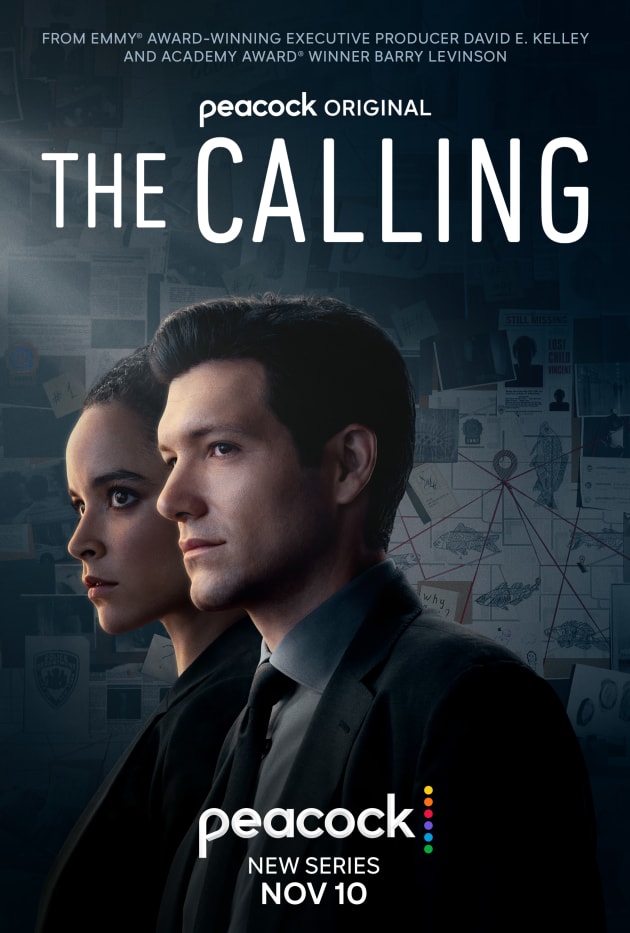
The Calling follows Detective Avraham Avraham, an Orthodox Jewish NYPD investigator whose spirituality and conviction that people are fundamentally good function as his investigative edge. He works cases with quiet intensity, reading suspects and scenes through moral and religious principles rather than cynicism. A seemingly ordinary assignment begins to unravel in ways that contradict his assumptions about guilt, innocence, and human nature. Colleagues and superiors watch as the methodical detective is forced to weigh evidence against the faith that has always guided him. The early episodes establish Avraham’s routines, his community ties, and the friction between his inner code and the realities of police work in New York.
As the central case deepens, Avraham confronts victims, witnesses, and possible perpetrators whose stories challenge the tidy moral order he prefers. Relationships inside the precinct and outside it pull him between duty, doubt, and the religious framework that once felt unshakable. He keeps returning to the same threads of evidence, testing whether his belief in mankind can survive what the investigation reveals. Later turns push him to question not only the crime but his own capacity for judgment and mercy. The season keeps the focus on Avraham’s internal reckoning as the truth of the case comes into view.
Oops! Is this show WOKE?
Only an account holder or member can file. Cite a scene, a line, or a pattern. Other account holders +1 or −1 that argument, once each. The show is not WOKE until enough of them have given a +1. Enough −1s remove the write-up, and it is no longer shown.
Sign in to file a woke label. One of each criterion per member.
Comments and reviews
Report a mistake
Same rule as woke labels: one report, a written reason, and the community +1 or −1 it — once per member. A net +5 applies the change. Editors can hold it for review, or apply it immediately.
No mistake reports yet.
Sign in to report a mistake. One report per field, per member.
Member review
June Pell Member
Oct 19, 2026
★★★★★★★★★★The Calling sat with me longer than I expected a mid-tier detective series to. I gave it 3.5 because the central figure holds the thing together even when the cases around him start to feel assembled rather than discovered. Avraham Avraham is an Orthodox Jewish NYPD detective who treats faith and a stubborn confidence in people’s better natures as practical tools rather than window dressing. That alone is unusual enough to keep you watching. Most crime shows treat belief as either a soft handicap or a punchline; this one lets it shape how he reads a room, how he waits out a suspect, how he decides what counts as evidence worth trusting.
I kept noticing the quiet routines first. The way he moves through his community, the small frictions with colleagues who do not share the same inner map, the sense that police work is something he does inside a larger moral frame instead of the other way around. Those early stretches are the strongest. You get the texture of a man who has already decided what kind of person he intends to be, and the job is constantly testing whether that decision can survive contact with actual New York cases. When a seemingly ordinary investigation begins to pull at the edges of his assumptions about guilt and innocence, the show finally has somewhere to go. It is not a sudden heel-turn. It is slower, more like sand under the foundation.
What works is the refusal to turn him into a cynical hard case or a saint. He remains methodical, a little stubborn, still looking for the human possibility even when the facts are ugly. That tension is the real engine. I found myself more interested in how he weighed a piece of testimony against his own code than in the mechanics of the crime itself. The supporting players mostly orbit him usefully enough; they register the strangeness of his approach without turning every scene into a debate club. There is friction with superiors and with the ordinary noise of the department, and that friction feels earned rather than manufactured for speeches.
Where it loses altitude is in the stretch of middle episodes that start to lean on the same pattern of doubt without deepening it. Once you understand that his faith is both his strength and the thing that can be shaken, the show sometimes circles the same emotional runway instead of landing new planes. A couple of the case turns feel like they exist mainly to force the internal conflict rather than rising naturally from the world he is walking through. I do not need every plot beat to be airtight, but I do need the unraveling to feel specific. A few times it drifted toward the generic “good man meets bad world” template that a dozen other shows have already worn smooth.
Still, the performance at the center keeps pulling it back. There is a patience in how Avraham listens, how he holds silence, how he lets moral principles do investigative work that other detectives would handle with pure cynicism or pure procedure. I caught myself thinking about the difference between optimism and conviction. Optimism is hoping people are decent. Conviction is acting as if the decency is still the default even after you have seen the worst. The series is at its best when it lets him operate from that place and then shows the cost when the evidence refuses to cooperate. It does not mock the faith. It also does not pretend the faith is a magic shield. That balance is rarer than it should be.
I will admit I wandered off for a minute thinking about how rarely television lets religious practice sit in the frame without either romanticizing it into pure wisdom or turning it into the costume of the closed-minded. Here it is simply part of how this particular man solves problems and how he fails to solve them. That felt honest. It also made the moments when his certainties crack land harder, because you have been living inside the code with him for a while.
By the later stretch the show has made its point and starts repeating the pressure without enough new texture. The community ties and the daily discipline remain interesting; the procedural machinery around them becomes a little thinner. I never wanted to quit, but I also never felt the urgency spike the way a great season can. It is solid craft with a distinctive lead idea that does not always get the narrative support it deserves. Three and a half stars feels right: worth finishing, worth remembering the detective more than the individual cases, and honest enough about the collision between inner law and outer evidence that I did not feel talked down to. If it had trusted the quieter scenes a little more and the plot twists a little less, it might have climbed higher. As it stands, it is a thoughtful watch that still leaves a few of its best questions only half-answered.