
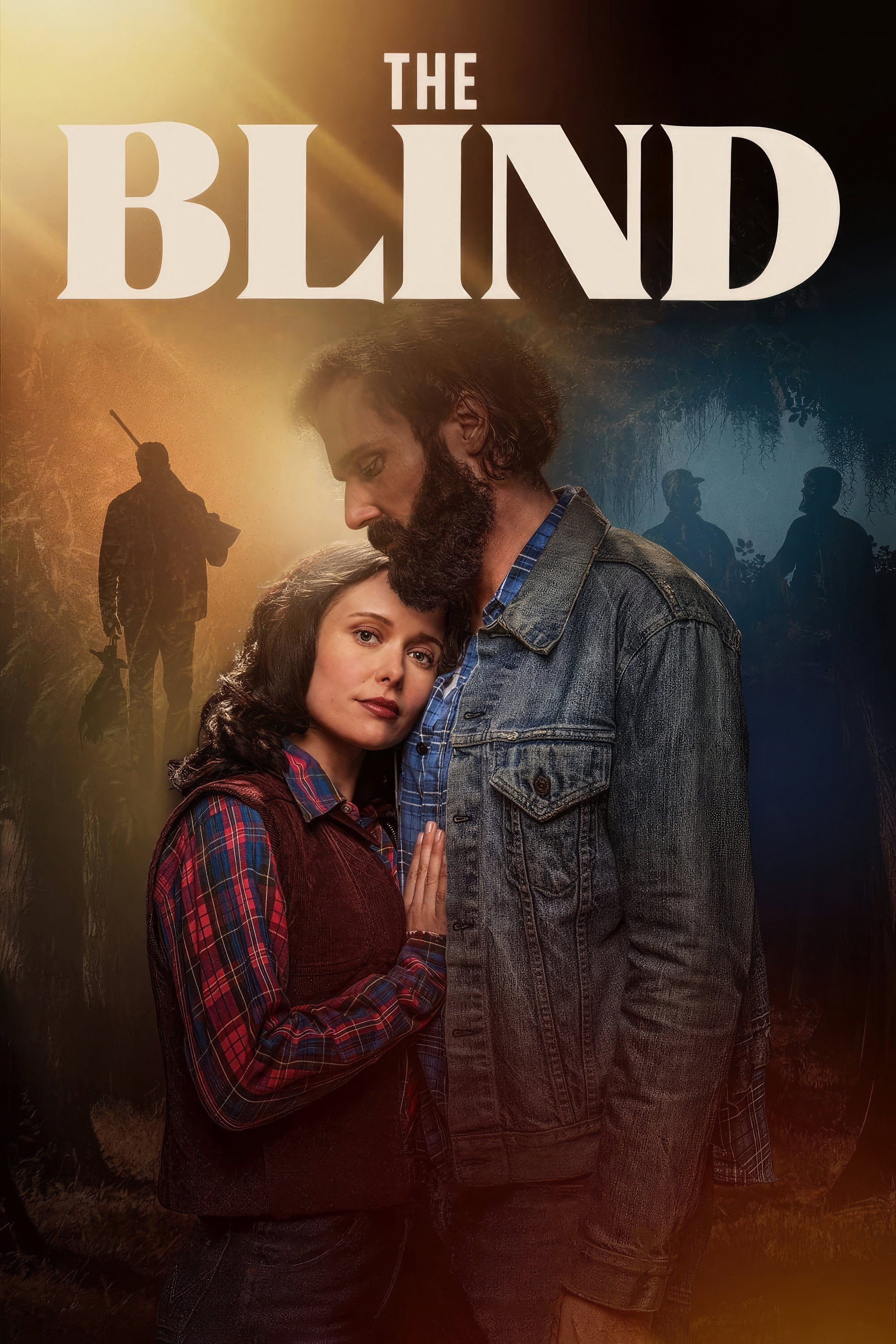



 MOVIE · 2023
The Blind
Long before Phil Robertson was a reality-TV star, he fell in love and started a family, but his demons threatened to tear their lives apart. This is the true story that started a dynasty.
Long before Duck Dynasty's Phil Robertson became a reality-TV star, he fell in love with Miss Kay and started a family, but his demons threatened to tear their lives apart.
Set in the backwoods swamps of 1960s Louisiana, "The Blind" shares never-before-revealed moments in Phil's life as he seeks to conquer the shame of his past, ultimately finding redemption in an unlikely place. This stunning cinematic journey chronicles the love story that launched a dynasty, the turmoil that nearly brought it crashing down, and the hope that rose from the ashes to create a foundation for generations to come.
Oops! Is this show WOKE?
Only an account holder or member can file. Cite a scene, a line, or a pattern. Other account holders +1 or −1 that argument, once each. The show is not WOKE until enough of them have given a +1. Enough −1s remove the write-up, and it is no longer shown.
Sign in to file a woke label. One of each criterion per member.
Comments and reviews
Report a mistake
Same rule as woke labels: one report, a written reason, and the community +1 or −1 it — once per member. A net +5 applies the change. Editors can hold it for review, or apply it immediately.
No mistake reports yet.
Sign in to report a mistake. One report per field, per member.
Member review
Omar Quill Member
Oct 6, 2026
★★★★★★★★★★I put on The Blind mostly because the Duck Dynasty guys have always been background noise in my house and I was curious what the early Phil version looked like before the beards and the TV money. Three stars feels right. It is solid enough that I finished it, but it never grabbed me the way a tight story or a hard boss fight does when everything clicks.
The movie tracks Phil falling hard for Kay, starting a family, and nearly wrecking the whole thing with drinking and that short fuse of his. You watch him hunt, bounce between odd jobs, and keep drifting while Kay holds the center. Kids show up. The distance grows. Faith and stubborn love eventually pull them through the rough years that set up everything later. I already knew the broad outline, so I was watching more for how they handled the ugly middle stretch than for surprises.
What worked for me was how plain the damage feels. Phil is not cartoon evil. He is just a guy who cannot stay steady, and the movie lets that cost show up in the house, in the kids’ faces, in Kay’s quiet exhaustion. There is a stretch where he bottoms out that actually landed. You feel the weight without the film needing to lecture. Kay does not turn into a saint or a punching bag. She stays, she pushes back, she prays, and you believe she means it. That part felt honest.
Where it lost me is the same place a lot of these true-story movies lose me. Once the turn toward faith starts, the movie gets safer and a little flatter. The early mess has grit. The later rebuilding stretches start feeling like checkpoints you already know are coming. I kept wanting sharper scenes between the big moments, the kind of quiet friction that makes a character build feel real instead of inevitable. It is not that I needed more chaos. I just wanted the climb to feel as lived-in as the fall. Some of the dialogue gets a little stiff when people start talking about what the choices mean. You can almost hear the page underneath.
I play a lot of story-heavy games, the ones where your decisions actually change how the party looks at you or how the ending lands. The best ones make the cost stick even after you “win.” The Blind has that cost early on, then softens it. I still respected the choice to show a man wrecking his own home and having to face it. Plenty of stuff these days would rather pretend ordinary manhood is the problem by default. This one does not do that. Phil’s temper and drinking are his, not some stand-in for every guy with a rifle and a job. That kept me from checking out completely.
Visually it is fine. Louisiana looks like Louisiana. Nothing flashy, which fits. The performances are steady more than showy. Nobody is swinging for awards, and that is okay. I never felt like the movie was trying to dunk on anyone or insert modern checklist stuff. It just tells this particular family’s mess and recovery. For a faith-centered story that could have gone preachy or soft, it mostly stays on the rails. I just wish the second half had the same raw edges as the first.
Would I rewatch it? Probably not soon. Would I recommend it if someone already likes the Robertson orbit or wants a straightforward look at how far a person can drift and still come back? Yeah, with the three-star warning attached. It is competent and sincere. It is not gripping. It does the job of showing why that marriage and those kids mattered without turning everything into a sermon or a lecture about what men are supposed to be. I left it thinking more about how hard it is to stay present when your own habits keep pulling you out of the room than about any big message. That is enough for a quiet night, not enough to put it in the rotation with the stories I keep coming back to.
If you go in expecting fireworks or deep mystery, you will bounce off. If you go in ready for a grounded, sometimes uneven portrait of a guy who almost lost everything that mattered and then started putting it back together, it holds up. I rated it three because the good parts are real and the weaker parts never quite sink it. That feels honest to what I watched.