



 TV · 2018
The Alienist
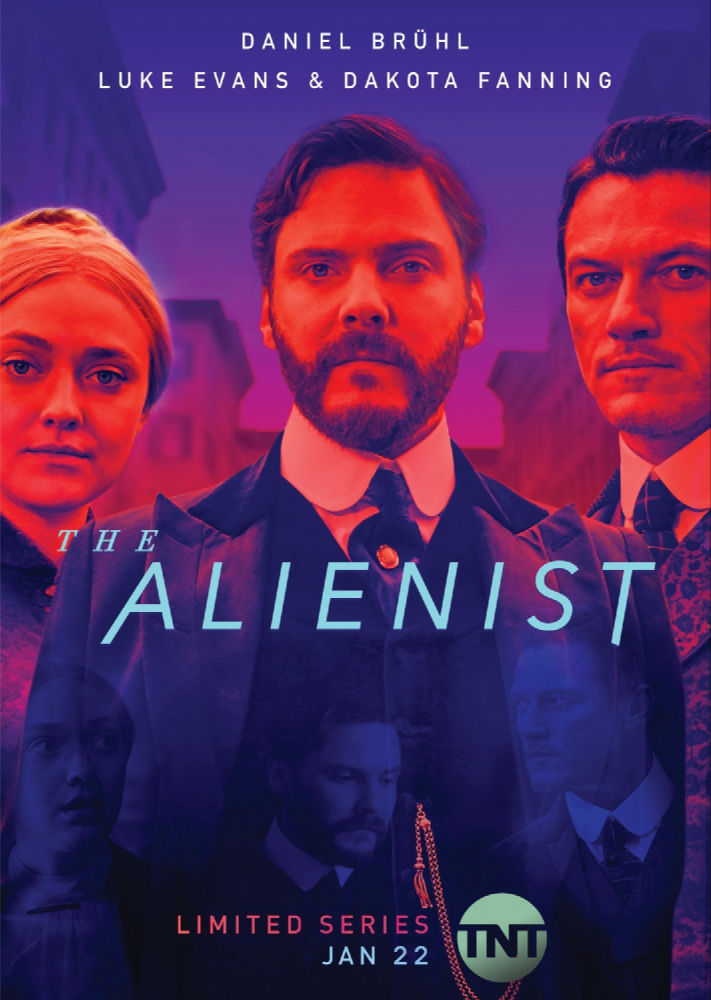
The Alienist follows criminal psychologist Dr. Laszlo Kreizler, newspaper illustrator John Moore, and secretary Sara Howard as they investigate a string of murders targeting young male prostitutes in 1896 New York at the request of Police Commissioner Theodore Roosevelt.
Sevelt authorizes the unofficial inquiry after official channels stall. Kreizler applies emerging psychological methods while Moore sketches crime scenes and gathers street information. Sara Howard manages records and pushes for access to evidence despite institutional barriers. The investigation uncovers connections between the victims and powerful figures in the city.
As the team tracks leads through tenements, brothels, and high society, personal histories and professional rivalries surface among the investigators. Kreizler confronts his own past while Moore balances family expectations with his growing involvement in the case. Howard asserts her role in a male-dominated field and contributes key insights. The inquiry expands to examine the social conditions enabling the crimes and the limits of 19th-century policing and medicine.
Click any of the following icons below to rent or stream it!
Oops! Is this show WOKE?
Only an account holder or member can file. Cite a scene, a line, or a pattern. Other account holders +1 or −1 that argument, once each. The show is not WOKE until enough of them have given a +1. Enough −1s remove the write-up, and it is no longer shown.
Sign in to file a woke label. One of each criterion per member.
Comments and reviews
Report a mistake
Same rule as woke labels: one report, a written reason, and the community +1 or −1 it — once per member. A net +5 applies the change. Editors can hold it for review, or apply it immediately.
No mistake reports yet.
Sign in to report a mistake. One report per field, per member.
Member review
Ray Okonkwo Member
Oct 19, 2026
★★★★★★★★★★The Alienist dropped me into 1896 New York without much throat-clearing, and that suited me fine. I came in sideways rather than from the pilot and still felt the pull of how this unofficial team works a case the official channels have already half-abandoned. Dr. Laszlo Kreizler does not wave a badge or bark orders. He sits with the shape of a mind that could produce the kind of killings that keep turning up, young male prostitutes left in ways that make the room go quiet. John Moore is the one out there with the sketch pad and the street contacts, turning what the cops would rather bury into something you can look at twice. Sara Howard keeps the paper trail alive and keeps pushing for doors that were never meant to open for her. That triangle is the engine, and it runs cleaner than a lot of prestige setups that try the same thing.
What stayed with me were not the big reveals so much as the smaller mechanics. Kreizler applying those early psychological methods feels like watching someone invent the tools while using them. You see him press on a detail of childhood or habit and the people around him shift from skepticism to something closer to wary respect. Moore balancing the family expectations waiting at home against the nights spent in tenements and brothels gives the show a steady undercurrent without turning every dinner into a lecture. Sara’s fight for access to evidence never becomes a speech about how the system is built; it stays practical, files and locked cabinets and men who would rather she stay decorative. The personal histories that surface among them matter because they change how the next interview or crime scene gets handled, not because the script needs a therapy hour.
The subject itself is heavy and stays heavy. Murders aimed at those boys, the ones working the streets and the houses that catered to certain tastes, do not get softened for comfort. The show walks you through the exploitation without winking or turning it into pure atmosphere. It is graphic enough that I would not leave it running with anyone young in the house, and the dim lamp-and-candle look makes the rooms feel closer and meaner than a brightly lit modern procedural ever would. Sometimes that low light serves the mood. Other times the whole stretch sits in a kind of blah haze where you want someone to raise a wick or open a window. The comparison floating in my head was other period mysteries that cover overlapping ground and still find more snap in their police leads. Roosevelt as commissioner is present and useful for green-lighting the inquiry, yet he often lands softer than the historical force you expect, more polite pressure than the tough go-getter energy the real man carried. That choice undercuts a little of the institutional friction the story otherwise handles well.
Still, the investigation’s path through the city’s layers works. Tenements give way to higher parlors, and the connections that start tying the victims to people with real power raise the temperature without turning every scene into a conspiracy checklist. You watch the team gather street information, cross-check records, and test Kreizler’s readings against what the bodies and the witnesses actually show. The rivalries that flare up stay rooted in professional pride and old wounds rather than manufactured drama. Kreizler’s own past does not arrive as a single dump; it colors how he sees the killer and how far he is willing to push the others. Moore’s illustrations become more than set dressing; they are how the group holds onto details the official reports would sand down.
I rated it four stars because the cast stays likeable in a lived-in way, the plot keeps enough forward pull, and the action, when it breaks loose, hits without needing constant escalation. It is not flawless. A few stretches lean too hard into the journey-through-the-past feeling and lose some blood. The lighting can flatten an otherwise sharp exchange. The rage that the exploitation of those boys should generate does not always land with full force; the show stays measured where a colder anger might have served it. But the core holds. You get a crime story that trusts sketches, interviews, and emerging ideas about the mind more than magic forensics or twist overload. If the graphic edge and the period grit sit right with you, it rewards the time. I did not need it to be louder or cleaner than it is. The unofficial inquiry, the three people driving it, and the city that keeps trying to close ranks around its own secrets were enough to keep me in the chair.