
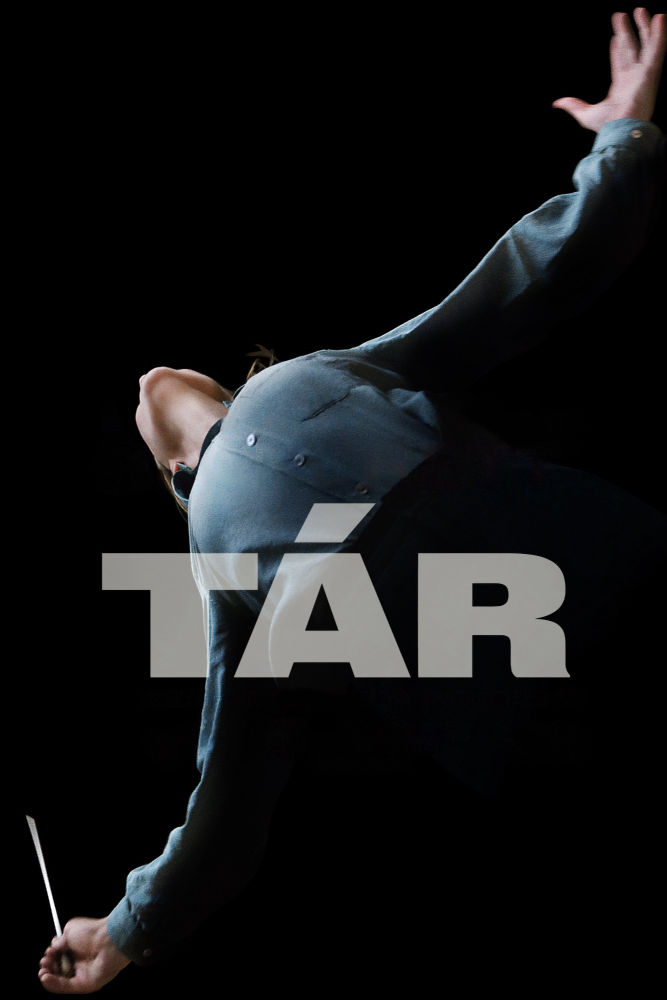




 MOVIE · 2022
TÁR IS WOKE
Renowned conductor Lydia Tár sees her authority, marriage, and public standing disintegrate after accusations of misconduct surface while she prepares a major Mahler performance.
TÁR follows Lydia Tár, a world-famous conductor and composer at the peak of her career as she leads a major European orchestra and prepares Mahler’s Fifth Symphony. She lives in Berlin with her partner Sharon, a skilled violinist, and their young daughter, while managing a tightly controlled professional circle that includes her assistant Francesca and board allies. Lydia gives interviews, teaches, and polishes her public image as an uncompromising artist who demands total commitment from players. Early scenes establish her meticulous rehearsal process, her appetite for control, and the quiet tensions inside her household and staff. A gifted young cellist, Olga, enters her orbit and becomes a focus of Lydia’s attention during casting and private meetings. Small cracks appear as former associates and online whispers begin to question how Lydia has used her power with aspiring musicians.
As the accusations gain force, Lydia’s relationships fray: Francesca grows distant, Sharon confronts the cost of loyalty, and institutional support that once seemed permanent starts to withdraw. Rehearsals and a high-profile New York appearance become battlegrounds where Lydia’s temper and need for dominance undercut her defenses. She attempts to manage the narrative, protect her daughter, and keep the Mahler project on track, yet each maneuver tightens the pressure rather than relieving it. Professional invitations vanish, legal and public-relations consequences mount, and the carefully built persona of the invincible maestro collapses. The final movements leave Lydia stripped of the posts and prestige that defined her, forced into a radically diminished setting where she must still conduct.
Click any of the following icons below to rent or stream it!
WHAT CRITERIA MAKES IT WOKE?



Oops! Is this show WOKE?
Only an account holder or member can file. Cite a scene, a line, or a pattern. Other account holders +1 or −1 that argument, once each. The show is not WOKE until enough of them have given a +1. Enough −1s remove the write-up, and it is no longer shown.
Sign in to file a woke label. One of each criterion per member.
Comments and reviews
Report a mistake
Same rule as woke labels: one report, a written reason, and the community +1 or −1 it — once per member. A net +5 applies the change. Editors can hold it for review, or apply it immediately.
No mistake reports yet.
Sign in to report a mistake. One report per field, per member.
Member review
June Pell Member
Sep 20, 2026
★★★★★★★★★★I sat with Tár longer than I meant to, and I still walked away feeling like I’d been handed a very expensive unfinished sentence. Cate Blanchett is formidable in it—that part is not in dispute. She carries the whole machine on her shoulders, the clipped precision, the private cracks, the way Lydia Tár treats every room as if it owes her the next downbeat. Nina Hoss is excellent opposite her too. The performances are the reason I didn’t turn it off. The rest of the movie kept testing how much patience I had left for atmosphere that refuses to cash its own checks.
What frustrated me most is how the film keeps circling the same kinds of moments without ever quite landing. Rehearsals stretch. Conversations hover. We get long looks at control and status and the quiet machinery of prestige, and then the story pulls back just when you want it to commit. I kept waiting for the allegations and the fallout to take a clearer shape, and instead the movie prefers to let you sit in the ambiguity until the ambiguity itself becomes the point. That can work. Here it mostly felt like withholding. You end up doing a lot of the narrative labor yourself—deciding how much is malice, how much is rumor, how much is simply a powerful person finally meeting resistance she can’t conduct her way out of. In a way the craft is impressive. It just didn’t make me care enough to keep reconstructing the missing pieces.
I wanted to like Tár. The premise is rich: a celebrated conductor at the height of her empire, the private emails, the favoritism questions, the former student, the eroding authority at home and on the podium. On paper that should hold. On screen it felt drawn out and oddly static. Two hours and thirty-eight minutes is a long time to spend watching details accumulate without many of them turning into consequence you can feel. Some scenes are carefully built and then just… sit there. Others feel like texture for texture’s sake. I understand the argument that this is the point, that power is shown through process and micro-behavior rather than big confrontations. Fair. I still found large stretches boring. Not boring in a cute arthouse way. Boring in the way that makes you check how much is left and then check again.
Because this is a film so obsessed with conducting, I also kept getting pulled out by Blanchett’s physical style on the podium. She is brilliant in the role overall, no question, but the conducting itself looked mannered to me in a way that broke the spell. Maybe that’s intentional artifice. Maybe I’m just someone who has watched enough real orchestras to get snagged on the gesture language. Either way, it distracted me. The Mahler 5 excerpts, when they arrive, sound wonderful—those passages have real weight and beauty—and then the movie returns to its preferred mode of slow-burn unease and half-explained friction. I kept thinking the music was doing more dramatic work than a lot of the dialogue.
There is a version of this story that could have been gripping: the collapse of someone who has spent a lifetime treating people and institutions as instruments. Tár gestures at that and then keeps refusing the simpler satisfactions of plot. I don’t need everything spelled out. I do need the film to earn the opacity. Too often it felt like I was watching a masterclass in controlled image-making while the actual human stakes stayed one room over. The partner, the child, the assistant, the young cellist, the board, the media—all of them matter, and yet the movie’s attention is so locked on Lydia’s aura of command that secondary lives blur. When the empire finally fractures, the rupture didn’t hit me as hard as it should have, because the path there had been padded with so much deliberate emptiness.
I can see why people call it meticulously made. The sound design, the framing, the cold precision of the world—those are real achievements. Blanchett gives a performance that will be talked about for years. None of that automatically makes the watch itself satisfying. For me it landed as a decent story idea stretched thin across a runtime that asked for more investment than the film was willing to repay. I left admiring stretches and resenting others, which is a strange combination. The film is often cold on purpose. By the end I mostly felt tired of being asked to admire the coldness.
So I settled at 2.5. That number feels honest. It is not a disaster. It is not something I will revisit. It is a movie with a towering lead turn and a stubborn refusal to meet the audience halfway, and after a certain point the refusal stopped looking like rigor and started looking like emptiness dressed up as difficulty. I respect the ambition. I just didn’t enjoy living inside it for nearly three hours.