



 MOVIE · 2016
Silence
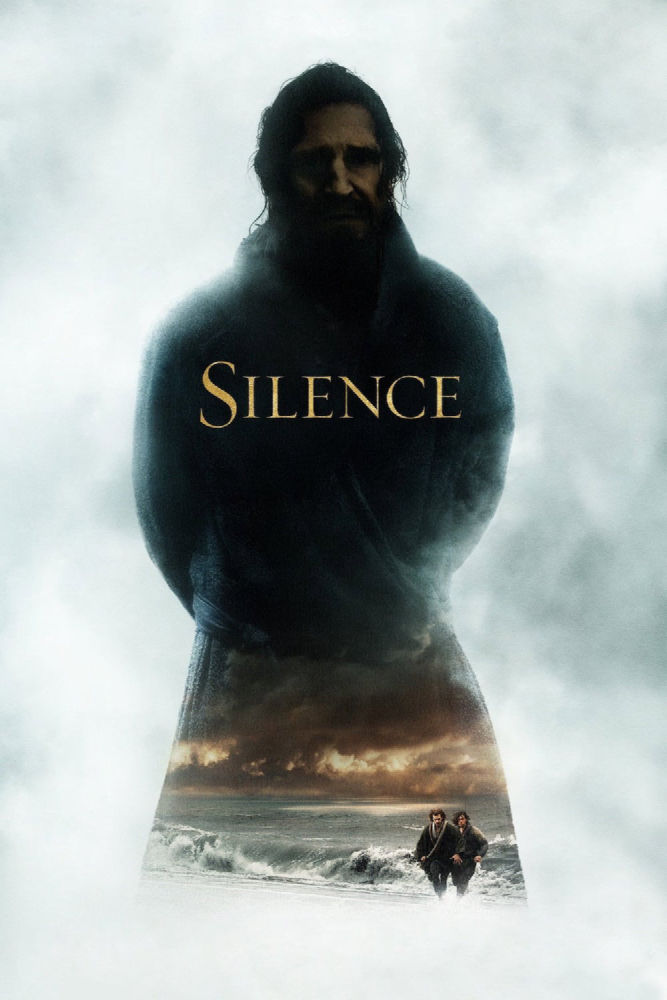
Two Christian missionaries who face the ultimate test of faith, travel to Japan in search of their missing mentor during a time when Christianity was outlawed and their presence forbidden.
Oops! Is this show WOKE?
Only an account holder or member can file. Cite a scene, a line, or a pattern. Other account holders +1 or −1 that argument, once each. The show is not WOKE until enough of them have given a +1. Enough −1s remove the write-up, and it is no longer shown.
Sign in to file a woke label. One of each criterion per member.
Comments and reviews
Report a mistake
Same rule as woke labels: one report, a written reason, and the community +1 or −1 it — once per member. A net +5 applies the change. Editors can hold it for review, or apply it immediately.
No mistake reports yet.
Sign in to report a mistake. One report per field, per member.
Member review
Wes Calder Member
Oct 6, 2026
★★★★★★★★★★Silence is the kind of movie that asks you to sit still longer than most people want to. I watched it on a quiet night when I had nothing else competing for attention, which turned out to be the right way to take it in. Two Portuguese Jesuits head to 17th-century Japan looking for their old teacher and trying to keep a hidden Christian community alive under a system that punishes the faith without much ceremony. That is the setup, and the film never really pretends there will be a clean rescue or a rousing finish.
What stayed with me was the way the silence itself becomes the point. Rodrigues keeps waiting for some sign, some interior confirmation that the suffering around him means something larger, and the movie just lets that waiting hang. It does not fill the gaps with speeches or sudden revelations. Andrew Garfield plays him with a kind of strained sincerity that never tips into pure martyrdom theater. You can see the man calculating the cost even while he insists the cost is worth it. Adam Driver as Garrpe is sparer, more contained, and their different ways of breaking under pressure feel earned rather than schematic.
The Japanese cast carries a lot of the weight. The villagers who risk everything for a baptism or a confession are not painted as simple innocents or noble victims. They are frightened people making impossible daily choices, and the film shows the small bargains they strike without soft lighting. Issei Ogata as the inquisitor is quietly effective; he does not rant. He explains the logic of the state’s demands in a calm voice that somehow makes the trampling of the fumie worse. Those scenes are not graphic in the usual sense, but they sit heavy because the act is so ordinary and so final.
I will admit the middle stretch tested me. Scorsese lets sequences breathe until they almost stop moving, and there were stretches where I checked how much runtime was left. The deliberate pace matches the spiritual drought the story is after, yet it still feels like a choice that costs the film some momentum. Once the priests are separated and the focus narrows on Rodrigues alone, the film tightens again, but by then some viewers will have already drifted. The violence against the Christians is shown with restraint rather than exploitation, which I preferred, though it also means the emotional peaks arrive muted.
What I respected most is that the movie refuses to treat faith as either pure heroism or pure delusion. Rodrigues is not a cartoon crusader, and the Japanese authorities are not cartoon villains. The pressure to apostatize is presented as a genuine philosophical and political problem, not a simple morality play. That restraint keeps the film from sliding into the kind of anti-religious sneer that crops up elsewhere. Christianity here is costly and complicated, not a costume for bigots or a punchline. The silence of God is left unresolved in a way that feels honest to the material rather than clever.
Liam Neeson’s Ferreira appears late and lands with the right kind of weariness. He is not a cartoon turncoat; he is a man who has decided survival and a different kind of service matter more than the old forms. The conversation between him and Rodrigues does not explode. It just sits there, uncomfortable and unfinished. I found that more affecting than a bigger confrontation would have been.
Visually the film is controlled without calling attention to itself. Fog, mud, cramped huts, the gray coast. Nothing feels tourist-Japan. The sound design does a lot of quiet work; the absence of a swelling score in key moments is deliberate and mostly successful. Still, there are passages where the austerity becomes its own kind of mannerism, and I wished for a slightly sharper editorial hand.
I land at 3.5 because the ambition is real and the central question is treated with seriousness, yet the experience remains more admirable than fully absorbing. It is the sort of film you respect for what it refuses to do—easy uplift, easy condemnation, tidy answers—while still noticing that the refusal sometimes leaves the viewer at a distance. I would watch it again, but I would clear the evening first and accept that it will not hurry. Some movies entertain first and linger later. This one mostly lingers, and that is both its strength and the reason it stays just short of something I would push harder on friends. It trusts the audience to sit with doubt, and that trust is rare enough that I am glad the film exists even when my attention wandered.