



 MOVIE · 1998
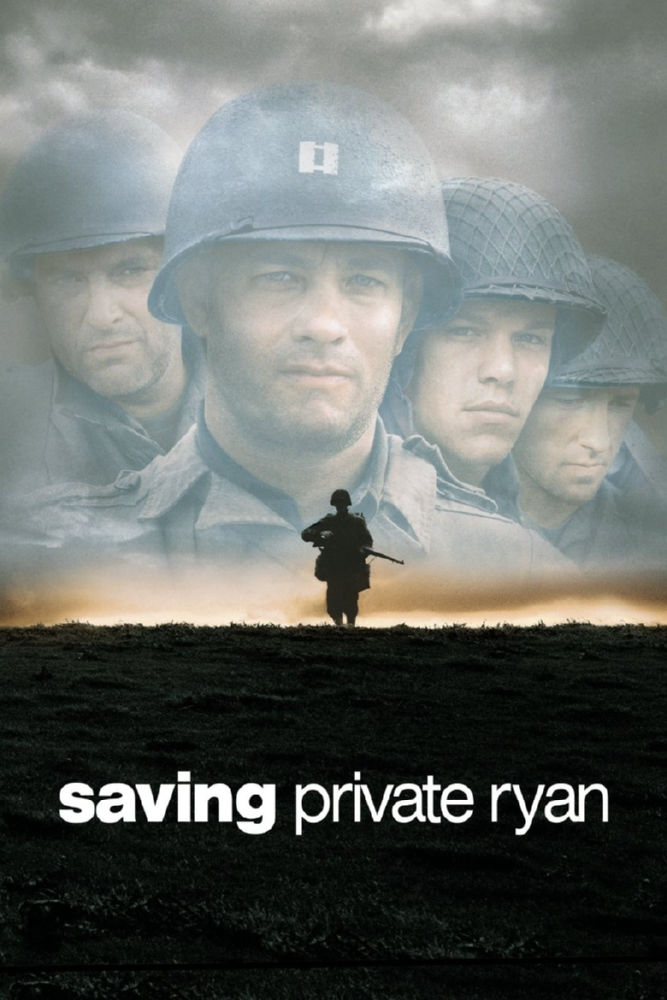
Saving Private Ryan
Captain John Miller takes his men behind enemy lines to find Private James Ryan, whose three brothers have been killed in combat. Surrounded by the brutal realities of war, while searching for Ryan, each man embarks upon a personal journey and discovers their own strength to triumph over an uncertain future with honor, decency and courage.
Oops! Is this show WOKE?
Only an account holder or member can file. Cite a scene, a line, or a pattern. Other account holders +1 or −1 that argument, once each. The show is not WOKE until enough of them have given a +1. Enough −1s remove the write-up, and it is no longer shown.
Sign in to file a woke label. One of each criterion per member.
Comments and reviews
Report a mistake
Same rule as woke labels: one report, a written reason, and the community +1 or −1 it — once per member. A net +5 applies the change. Editors can hold it for review, or apply it immediately.
No mistake reports yet.
Sign in to report a mistake. One report per field, per member.
Member review
Omar Quill Member
Oct 2, 2026
★★★★★★★★★★I put this on a couple weeks ago when I was between long game sessions and figured I’d finally sit through the whole thing instead of just knowing the beach scene from clips. I’m glad I did. That opening stretch is still the part that sticks. It’s loud and messy in a way most war movies tidy up, and you feel how little control anyone has once the ramps drop. Bodies go down without speeches. The water, the wire, the machine guns—it doesn’t play like a level you can cheese. You just watch people try to crawl forward and get cut down, and the score stays out of the way enough that the noise does the work.
After that the story shifts to the mission, and yeah, the premise is kind of strange if you stop and think about it. One private, last brother left, pull him out while the rest of the war keeps eating people by the thousands. On paper it sounds like the kind of escort objective that makes a group chat groan. Why risk a full squad for a guy who doesn’t even know he’s being extracted? The movie doesn’t pretend the men are thrilled about it either. They argue, they complain, they keep walking. That tension is where it gets interesting for me. It’s not “heroism unlocked.” It’s a bunch of tired guys doing a job they don’t fully buy while the countryside keeps throwing ambushes at them.
What carried it for me was the squad itself. You get enough time with them that when someone drops it actually registers. Not every death is a big cinematic moment. Some are quick and ugly and then the survivors just have to keep moving. That sense that anyone can go at any second is stronger here than in a lot of shooters that sell the same idea with respawns. Horvath holding the line, Reiben pushing back on the whole point of the trek, Jackson up in a tower doing his thing, Upham stumbling through situations he’s not built for—they feel like different loadouts and personalities stuck in the same bad run. Miller holding them together while something in him is clearly fraying is the quiet center. Tom Hanks doesn’t oversell it. You just notice the hands, the pauses, the way he tries to keep the mission legible for everyone else.
Combat inland is still sharp. Hedgerows, ruined towns, sudden firefights where the geometry of the map matters. It’s not constant set pieces; there’s walking and talking and then everything flips. I liked that the movie lets the cost sit there instead of resetting the mood every five minutes. You start doing the math with them—how many more guys are we willing to lose before this stops making sense? The film keeps asking that without turning into a lecture. Some of the quieter stretches after a fight are almost as heavy as the shooting because nobody has a clean answer.
I won’t pretend every dramatic beat landed equally for me. A few of the bigger emotional beats feel a little shaped for the room, and there’s a certain clean framing of the American side that you can feel when the camera lingers on mercy or correctness. War movies from big studios often do that, and this one isn’t free of it. Still, the craft in the chaos scenes and the way the unit frays under the weight of a single name kept me locked in. Matt Damon shows up late enough that Ryan isn’t the whole point of the runtime; he’s the reason they’re out there, and the argument around him matters more than his screen time.
I kept thinking about runs in games where you commit to a dumb secondary objective and half the party is gone by the time you finish it. You sit there after and wonder if the loot or the flag was worth the wipe. This movie lives in that feeling for a couple hours, only the stakes don’t reset. The interpersonal stuff—the bickering, the small loyalties, the moments where someone has to decide whether to follow an order that feels wrong—is where it stays human. It doesn’t need to invent extra themes on top of that.
By the end I wasn’t looking for a tidy moral. I just sat with how expensive the whole trip had been and whether any brass spreadsheet could justify it. The beach alone would have made this memorable. Adding the long walk inland and the slow bleed of the squad is what made me rate it this high instead of treating it like a famous set piece with a thin middle. It’s long, it’s heavy, and some of the speechifying is a little polished, but the fear and the friction between the men feel honest enough that I didn’t mind. I’ll probably revisit the opening again when I want that raw intensity. The rest I’ll come back to when I’m in the mood for a story that keeps asking if one life is worth the ones spent trying to save it, and doesn’t hand you an easy yes.