



 MOVIE · 1987
Robocop (1987)
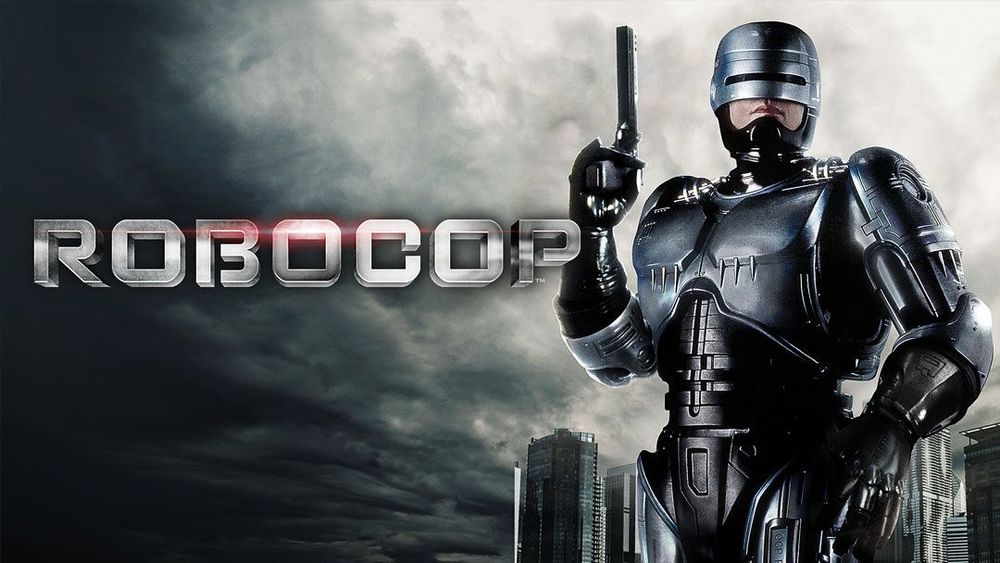
In a dystopic and crime-ridden Detroit, a terminally wounded cop returns to the force as a powerful cyborg haunted by submerged memories.
Oops! Is this show WOKE?
Only an account holder or member can file. Cite a scene, a line, or a pattern. Other account holders +1 or −1 that argument, once each. The show is not WOKE until enough of them have given a +1. Enough −1s remove the write-up, and it is no longer shown.
Sign in to file a woke label. One of each criterion per member.
Comments and reviews
Report a mistake
Same rule as woke labels: one report, a written reason, and the community +1 or −1 it — once per member. A net +5 applies the change. Editors can hold it for review, or apply it immediately.
No mistake reports yet.
Sign in to report a mistake. One report per field, per member.
Member review
Ray Okonkwo Member
Oct 16, 2026
★★★★★★★★★★RoboCop from 1987 still works on me in a way a lot of louder modern action pictures do not. I came back to it last week more for the texture than for the plot beats I already knew, and what stuck were the little machines of the movie: the TV spots, the boardroom grin, the way Murphy’s body becomes a product before it becomes a person again.
The opening stretch in Detroit is pure collapse, and Verhoeven does not soften it. Murphy’s first shift ends the way it does because the city has already decided cops are expendable inventory. When OCP steps in, the satire sharpens instead of turning into a speech. They do not just want a better officer. They want a controllable asset with a face people will trust on the news. That distinction matters. The company talk about “serving the public” while they argue over which prototype will protect their real estate portfolio is funnier and colder than most straight villain monologues. ED-209’s demo still lands as comedy of the cruel kind. The suit freezes, the board freezes, and then the machine does exactly what a machine does when the safety culture is theater. Nobody in that room learns the right lesson. They just reassign the problem to a quieter lab.
Peter Weller sells the half-life of Murphy without begging for it. The helmeted stillness is the joke and the horror at once. He moves like a man who has been told his old life is a software error, then he starts catching ghosts of it anyway. The family memories do not arrive as a soft montage; they interrupt the product. That is the part that holds up for me more than the shootouts, even though the shootouts are still sticky and loud in the old practical way. When he digs into who killed him, the case is personal and corporate at the same time. Clarence Boddicker is a street animal with a corporate leash, and the movie never pretends those two worlds are cleanly separate. Lewis, played by Nancy Allen, is the partner who treats the armor like a colleague instead of a mascot. She does not speechify about humanity. She just keeps showing up and talking to whatever is left of Murphy until the man inside the chassis has somewhere to stand.
I like how the film keeps cutting to those media blips. “I’d buy that for a dollar” is dumb on purpose and still gets under the skin because the whole culture on screen is selling violence and comfort in the same breath. The city idolizes the crooks while the cops get underfunded and overarmed by private money. Big business equips the force the way it equips a military contract, then acts shocked when the streets stay rotten. That read feels less like 1980s kitsch and more like someone sketching a future that arrived early. Verhoeven’s “in your face” direction helps. He gives the suits, the thugs, and the beat cops actual edges instead of one-note targets. You can laugh at the excess and still feel the pressure on the people living under it.
Some of the effects have aged into museum pieces. A couple of the falls and the heavier makeup shots look like what they are: 1987 craft doing its best under lights and blood bags. I do not mind. The clunky armor is part of the point. RoboCop is not sleek immortality. He is industrial hardware bolted onto leftover flesh, and every heavy step sells that idea better than a clean CGI silhouette would. The violence is bloody and often grotesque, which fits a movie that wants you uncomfortable with the product launch as much as with the crime wave. It is action, it is parody, and it is mean about institutions without turning into a pamphlet.
What keeps me at four instead of a clean five is not a missing set piece. It is that a few middle stretches lean on the cop-procedural rhythm a little longer than they need to once the identity hook is clear. The movie knows where it is going, and I occasionally felt myself waiting for the next corporate knife-twist or the next fracture in Murphy’s programming. Even so, the ending still satisfies because it resolves the man and the machine without erasing either one. He does the job. He also remembers the name. That balance is harder than it looks, and the sequels mostly lost it.
I did not grow up with this one on endless tape rotation. I found it later and liked it on the merits: the satire still bites, the lead performance stays strange and specific, and the practical design has a weight modern polish often sandblasts away. It is not delicate cinema. It is a hard, funny, ugly-smart piece of 1980s craft that treats a collapsing city and a corporate takeover of public safety as the same story. For me that is enough to keep it in rotation when I want action that also knows how to sneer at the people selling the future.