



 STAND-UP · 1990
Rob Schneider
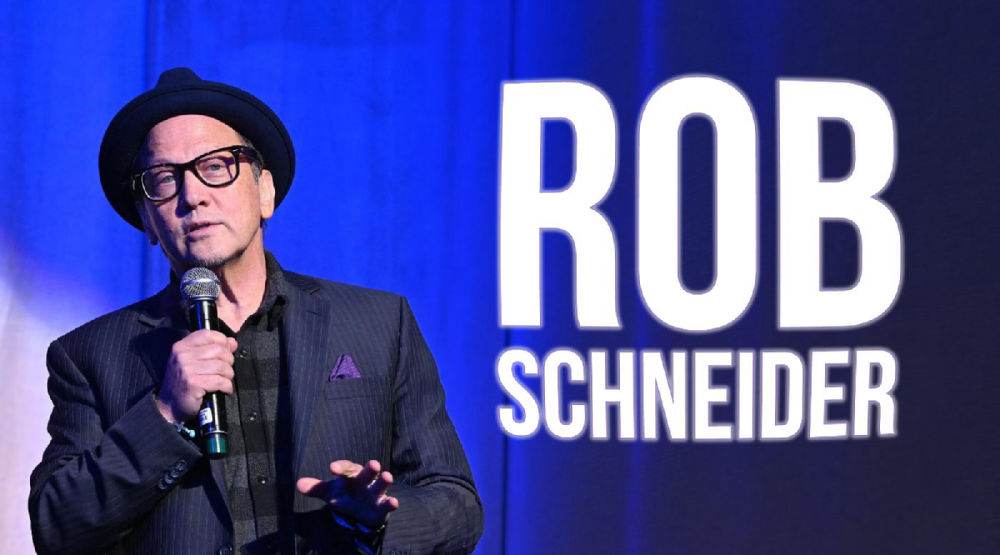
Rob Schneider delivers high-energy stand-up built on elastic character voices, physical timing, and sharp takes on everyday confusion when words and norms keep sliding. Crowds show up for the rapid pivots between goofy personas and pointed observational jabs that keep the room moving.
Rob Schneider works a restless, elastic stage persona that flips between broad physical comedy and tight observational runs. A typical set opens with crowd-aware banter, then slides into quick-change voices and exaggerated reactions that underline how ordinary talk has gotten slippery. He favors punchy setups about daily friction, status games, and the strain of staying sane when meanings keep shifting underfoot. Pacing stays brisk: short premises, big facial and body commits, then a hard turn into the next bit so momentum never stalls. The jokes reward audiences who like classic club energy mixed with contemporary cultural side-eye rather than long confessional monologues.
He keeps circling back to the gap between what people say and what they clearly mean, using that gap for both silly character bits and sharper cultural needling. The room feels like a loud, participatory club night—laughter comes from recognition and from watching him stretch a premise until it snaps. Regulars know the pattern: warm-up ribbing, a run of physical or vocal bits, then denser commentary that still lands as comedy instead of a sermon. The material stays aimed at adults who want release through exaggeration and timing, not ideology checklists. Nothing in the supplied notes frames the act as quota casting, lecture scenes, or identity swaps of established figures; the draw is the comic’s own elastic delivery and the shared sense that language itself has become the punchline.
Creator: Tim Owens
Oops! Is this show WOKE?
Only an account holder or member can file. Cite a scene, a line, or a pattern. Other account holders +1 or −1 that argument, once each. The show is not WOKE until enough of them have given a +1. Enough −1s remove the write-up, and it is no longer shown.
Sign in to file a woke label. One of each criterion per member.
Comments and reviews
Report a mistake
Same rule as woke labels: one report, a written reason, and the community +1 or −1 it — once per member. A net +5 applies the change. Editors can hold it for review, or apply it immediately.
No mistake reports yet.
Sign in to report a mistake. One report per field, per member.
Member review
Stu Kline Member
Oct 9, 2026
★★★★★★★★★★Just got through a string of Rob Schneider clips and the energy holds the whole time. He does not ease in. He hits the stage restless, already bouncing between faces and voices like the mic is barely keeping up. One second he is locking eyes with whoever just coughed too loud, next he is gone into some elastic character that underlines how ordinary talk has turned slippery. The pivots stay quick. Short premise, big physical commit, hard turn into the next one so nothing stalls.
The airport security run stuck with me. He turns the whole shuffle into pure body comedy—shoulders up, eyes darting, that half-whisper of someone who has power for thirty seconds and intends to use every one of them. It slides right into the aging bits without announcement. Knees that complain, pets that outlast your patience, the quiet pile-up of junk you swear you will sort someday. He makes the economy feel like another form of hoarding, just with more paperwork. None of it is precious. He just lives in the friction of daily life long enough for the joke to land, then moves.
What works is the classic club tempo mixed with how he treats meanings that keep sliding underfoot. Words that used to be simple now come with a warning label. He does a stretch on songs you cannot sing anymore without turning it into a lecture. He just demonstrates the new rules in real time, face shifting from earnest crooner to someone waiting for the complaint form. The room in these clips keeps moving with him because he never parks on the outrage. He shows the absurdity, commits fully, then flips again.
There is a bit about boarding an airline that has decided every passenger needs a special category before the seat belt even clicks. He plays the attendant like a man reading from a script that gets longer every week. The bit does not need a speech about agendas. The physical timing does the work—clipboard, forced smile, the slight panic when someone just wants a window seat. It feels like the same everyday confusion he keeps circling: norms that used to be shared now require a glossary. He does not slow down to explain why that is funny. He trusts the audience already lives it.
Hecklers get the short version. Twenty seconds, no buildup, just a clean reality check that leaves the guy standing there with nothing left to say. Schneider does not chase the laugh after that. He absorbs it and keeps the set rolling. Same energy when he brushes against status games or the strain of staying sane when everyone is rewriting the dictionary mid-conversation. The voices do a lot of heavy lifting—broad when they need to be, then suddenly sharp enough to cut.
I kept noticing how little he relies on the old movie-guy goodwill. The stand-up persona is its own machine. Elastic, yes, but also tight when the observation needs it. He will goof on pet ownership one minute and then land a jab about how ordinary talk has gotten so careful that half the room is waiting for permission to react. That rhythm is what carries the clips. You do not get long monologues. You get setups that punch, faces that sell the turn, and then he is already into the next friction point.
The Hollywood stuff floats around the edges of some of these sets without becoming the whole point. He has taken shots and clearly paid for them, yet the stage work still feels like a guy who just wants the room to stay awake. No begging for agreement. He throws the bit, watches it land, and moves. That is rarer than it should be. Most comics either sand everything down or plant a flag and dare you to salve. Schneider just keeps the elastic going—goofy persona, pointed jab, physical commit—until the clip ends and you realize you have been grinning at the same restlessness for twenty minutes straight.
Aging jokes hit different when the body is part of the punchline. He does not pretend the knees still bounce like they did. He uses the stiffness. Same with the economy bits: not a policy paper, just the lived sense that numbers on a screen no longer match what you can actually buy. Pair that with the hoarding observation and it becomes one continuous shrug at how life accumulates whether you planned it or not. The airport security piece ties it together—power, paperwork, the sudden demand that you explain yourself for walking through a metal detector like a normal person.
I walked away from the clips still hearing the voice changes. They are not impressions for their own sake. They underline the gap between what people say and what the new rules require them to mean. When he hits the “automatically racist” turn, it is not a manifesto. It is the same everyday confusion played at full volume: ordinary observation gets reclassified before the sentence finishes. He lets the absurdity hang for a beat, then drops into the next physical bit so the set never turns into a seminar.
That is the draw. High energy that does not burn out, character work that stays in service of the point, and enough observational sting to keep it from floating away into pure silliness. The clips stack cleanly. One after another the same restless engine just keeps finding new ordinary things that have stopped making sense. No need for a curtain speech. He does the work, the faces do the rest, and you end up wanting the next pivot even after the last one already landed.