



 MOVIE · 2019
Richard Jewell
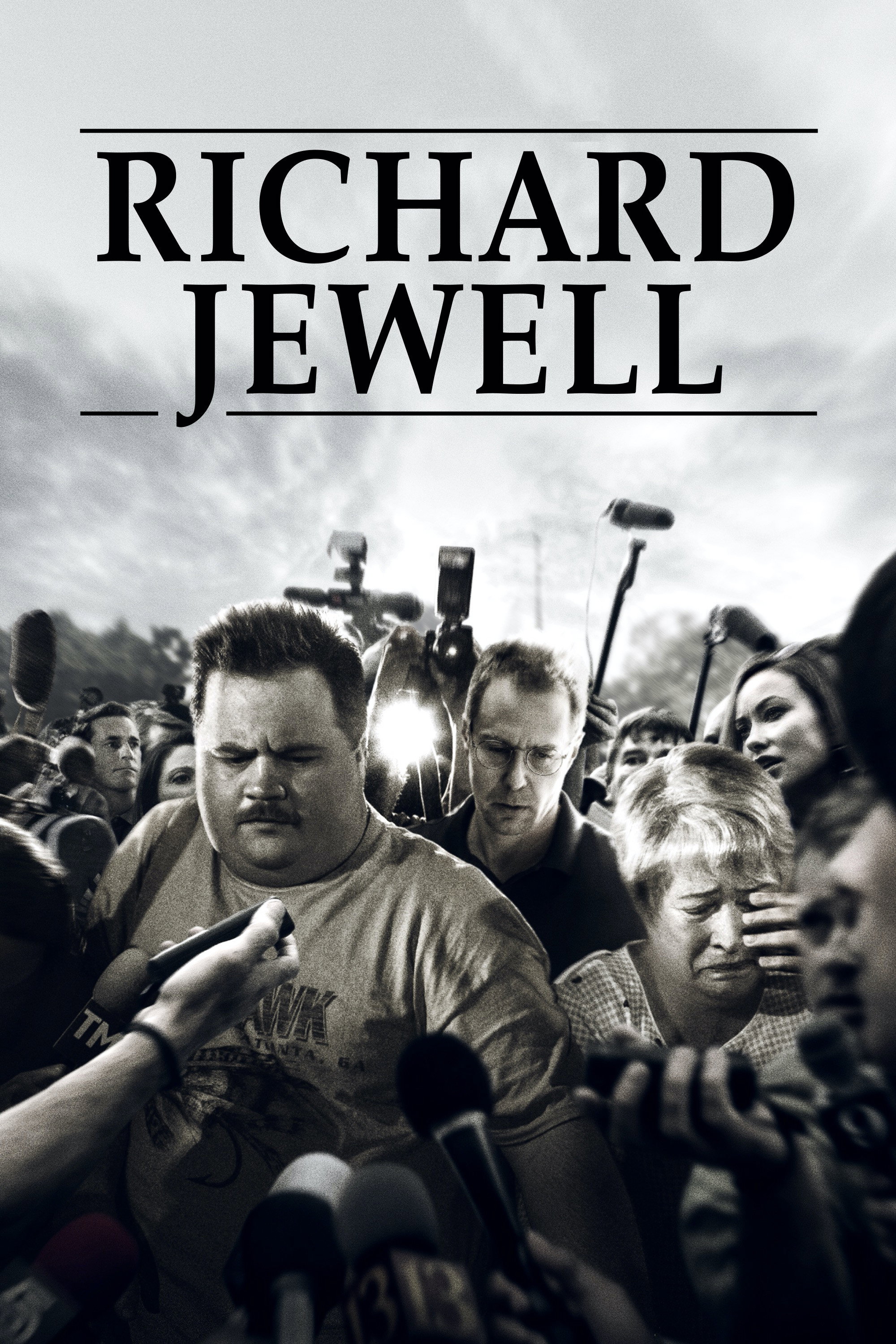
“There is a bomb in Centennial Park. You have thirty minutes.” The world is first introduced to Richard Jewell as the security guard who reports finding the device at the 1996 Atlanta bombing—his report making him a hero whose swift actions save countless lives. But within days, the law enforcement wannabe becomes the FBI’s number one suspect, vilified by press and public alike, his life ripped apart. Reaching out to independent, anti-establishment attorney Watson Bryant, Jewell staunchly professes his innocence. But Bryant finds he is out of his depth as he fights the combined powers of the FBI, GBI and APD to clear his client’s name, while keeping Richard from trusting the very people trying to destroy him.
Oops! Is this show WOKE?
Only an account holder or member can file. Cite a scene, a line, or a pattern. Other account holders +1 or −1 that argument, once each. The show is not WOKE until enough of them have given a +1. Enough −1s remove the write-up, and it is no longer shown.
Sign in to file a woke label. One of each criterion per member.
Comments and reviews
Report a mistake
Same rule as woke labels: one report, a written reason, and the community +1 or −1 it — once per member. A net +5 applies the change. Editors can hold it for review, or apply it immediately.
No mistake reports yet.
Sign in to report a mistake. One report per field, per member.
Member review
Lila Marsh Member
Oct 6, 2026
★★★★★★★★★★I put this on a few nights ago mostly because the story had always sat in the back of my mind as one of those American messes that never quite got a clean ending. Richard Jewell is not a flashy movie. It doesn’t try to dress the whole thing up as a thriller or a big moral lecture. It just stays with this one guy who did his job right and then watched everything around him turn mean.
What got me first was how ordinary he feels. Not in a sad-sack way, just meticulous and a little awkward, the kind of person who takes rules seriously because rules are how you keep people safe. When he spots the backpack and clears the area, you believe it. There’s no swagger. He does what a careful security guard would do. Then the praise hits, and for a short stretch he gets to feel useful and seen. That part lands hard because you already know what’s coming.
The turn is what the movie is really about. Once the FBI starts leaning on a profile and the leaks start, the same newspapers and TV people who called him a hero flip overnight. They park outside his mother’s house. They dig through every detail of his life. The film doesn’t need to invent cartoon villains for this. The pressure is the point. You watch a man who never gets charged still lose his privacy, his job chances, and any sense that the world plays fair. His mother is right there through all of it, stubborn and protective, and their scenes together feel lived-in rather than written for big speeches.
I liked that it doesn’t turn into a pure revenge fantasy. There’s anger, sure, and some sharp moments aimed at the way institutions protect themselves, but the movie mostly stays close to the personal cost. Jewell keeps trying to hold onto dignity while the story about him spins out of control. That restraint worked for me. A lot of films would have gone bigger and louder. This one keeps returning to the small humiliations and the constant noise outside the window.
Paul Walter Hauser carries it without asking for pity. He makes Jewell stubborn and sometimes irritating, which feels honest. You don’t have to love every choice the character makes to feel the unfairness of what happens to him. Kathy Bates as his mother is grounded and fierce in the right proportions. The supporting people—lawyers, agents, reporters—mostly feel like people doing their jobs under different kinds of pressure rather than walking symbols. That helped the whole thing stay believable.
I kept thinking about how fast a public narrative can harden. Once enough people decide you’re the guy, evidence becomes optional and retraction comes late if it comes at all. The film shows that without turning every scene into a soapbox. Some of the media sequences are uncomfortable because they feel familiar even if the technology has changed. The hunger for a simple villain is the same. Jewell just happened to fit a profile someone had already written.
There are stretches that could have been tighter. A couple of courtroom or newsroom beats run long, and once or twice the score underlines a feeling the acting already covered. Still, those are small complaints against a movie that mostly trusts its central situation. It doesn’t pretend the system magically fixed itself. It just shows what it costs one person when suspicion outruns proof.
I rated it four because it stuck with me after it ended. Not in a breathless “best of the year” way, but in the quieter sense that I’d seen something true about how easily a life can be bent out of shape by people who never have to live with the consequences. It left me thinking about the difference between being careful and being suspicious, and how thin that line can get when cameras and careers are involved. I’m glad I watched it. It’s the kind of story that doesn’t need extra decoration to matter, and for the most part the movie understood that.