
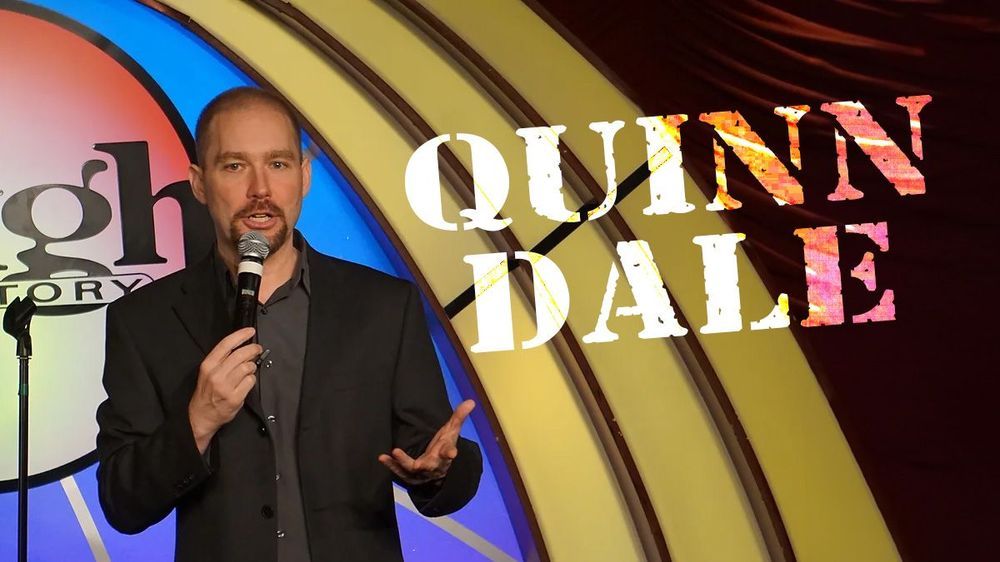



 STAND-UP
Quinn Dale
Quinn Dale works as a stand-up comedian whose sets rely on live timing, crowd work, and conversational punchlines rather than a scripted storyline. Audiences show up for the room energy and the comic’s delivery across a variable-length set.
Quinn Dale takes the stage as a stand-up whose name is the act itself, not a fictional lead in a plot. The persona stays grounded in whatever the comic brings that night: everyday observations, personal asides, and the usual stand-up rhythm of setup and turn. A typical set moves through short bits and callbacks without locking into one continuous narrative. Topics stay flexible because the runtime varies and the material is built for a live room. Pacing depends on laughs and silence more than on scene changes or act breaks. People come for the presence and the jokes as they land in the moment.
What keeps returning is the basic contract of stand-up: a comic talking, testing lines, and adjusting to the crowd. The jokes are for whoever is in the seats that night, not for a fixed demographic checklist or a lecture arc. The room feels like a standard comedy club or theater set—lights, mic, and direct address—rather than a filmed story with character arcs. Without sourced specials or quoted bits in the given notes, the portrait stays at that general level: live comedy, variable length, PG-13-leaning tone, and no invented plot. Nothing in the available material turns the act into ideology-first messaging.
Oops! Is this show WOKE?
Only an account holder or member can file. Cite a scene, a line, or a pattern. Other account holders +1 or −1 that argument, once each. The show is not WOKE until enough of them have given a +1. Enough −1s remove the write-up, and it is no longer shown.
Sign in to file a woke label. One of each criterion per member.
Comments and reviews
Report a mistake
Same rule as woke labels: one report, a written reason, and the community +1 or −1 it — once per member. A net +5 applies the change. Editors can hold it for review, or apply it immediately.
No mistake reports yet.
Sign in to report a mistake. One report per field, per member.
Member review
Dan Reilly Member
Oct 9, 2026
★★★★★★★★★★Quinn Dale's stand-up starts in a place that feels a little too familiar at first. The early bits on relationships and daily surprises land with a conversational setup that doesn't always build fast enough. You can see the structure forming before the turn arrives, and a few of those openings rely on the kind of everyday dating observations that have been around for a while. It takes a minute for the room energy to settle in.
Once the set shifts toward audience interactions, the pace improves. He pulls people in from different backgrounds and works with whatever comes back, turning small details about names or cultural habits into quick exchanges. The humor stays observational rather than forced, which keeps the flow moving even when the material touches on language differences or expectations around race. Those moments avoid the usual trap of explaining the joke afterward.
The parts that take on woke culture cut straighter. They highlight the overreach without turning into a lecture, and the delivery stays light enough that the laughs come from recognition instead of agreement. California oddities get the same treatment, small slices of local behavior that feel specific without needing extra setup. The timing here is tighter, and the callbacks to earlier audience comments help tie loose ends together.
Some of the personal stories, like the one about skipping meetings or dealing with name pronunciation at home, sit in the middle range. They add a grounded note but don't always escalate beyond the initial premise. The set benefits more from the unplanned exchanges than from the prepared material, which can make the longer stretches feel uneven depending on how the crowd responds.
What stands out is the willingness to stay in the moment rather than steer every bit toward a safe landing. The jokes on authority figures or modern sensitivities come through as blunt remarks instead of careful positioning, and that directness fits the raw style. Not every line carries the same weight, but the ones that connect do so because they treat the room as part of the act instead of background noise.
The overall impression is of a performer who gets better as the set stretches out. Early hesitation gives way to sharper exchanges once the audience starts feeding lines back. It isn't the kind of material that rewrites the form, but it holds attention through steady presence and a refusal to soften the edges on topics that usually invite hedging. Later stretches lean harder into that same bluntness when he circles back to workplace habits and the small frictions that build up when people talk past each other. One extended riff on group chats and mismatched expectations starts slow, then picks up once he lets an audience member's half-finished story redirect the punchline. The room stays with him because the turn feels earned rather than engineered.
He keeps returning to the difference between what people say they value and what they actually do when no one is scoring points. Those observations stay concrete—specific habits, specific awkward silences—rather than floating into abstract complaints. The delivery stays conversational even when the content pushes against the polite consensus, which stops the bits from hardening into slogans. A short sequence about regional food rules and the quiet judgment that follows them works the same way: light setup, clean observation, no moral attached. The laughs land because the detail is exact.
There are still stretches where the prepared material feels like it's waiting for the next audience spark. A couple of relationship callbacks that earlier felt thin get a second life when he ties them to something someone just said two rows back, but left alone they sit a little flat. The set never fully resolves that imbalance; the strongest minutes remain the ones where he is reacting in real time. Still, the consistency of tone helps. He doesn't chase bigger swings or sudden shifts in energy just to force a climax. The closer stays in the same register as the middle—observational, a little pointed, willing to leave a silence hanging if the point has already landed.
By the end the early familiarity has mostly burned off. What remains is a performer who trusts the room enough to leave space and trusts his own voice enough not to sand every edge. The material won't travel as a series of airtight bits, but as a live hour it holds because the presence stays steady and the refusals stay clear. You leave with the sense of having watched someone work rather than someone perform a finished product, and that difference ends up being the main reason the set sticks.