



 MOVIE · 1960
Ocean's Eleven (1960)
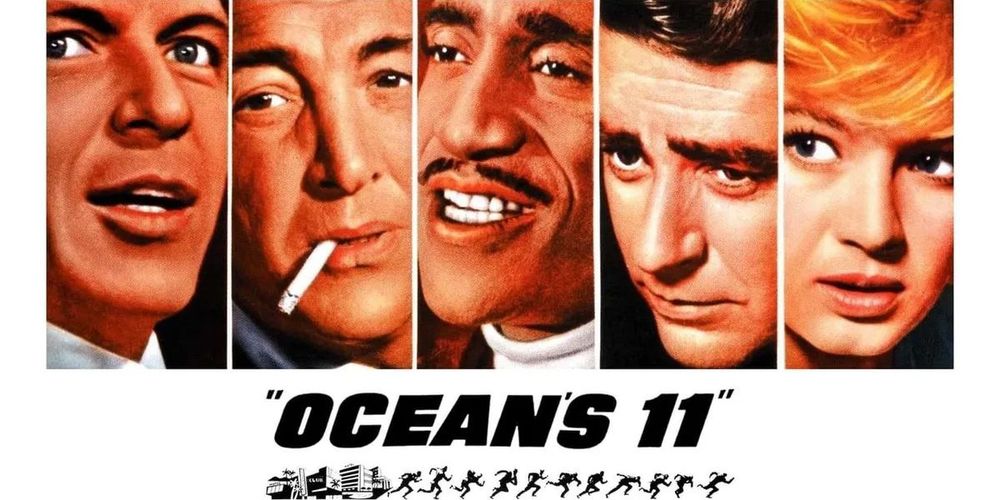
The famous "Rat Pack" is never hipper or funnier than in this, the ultimate Las Vegas movie -- quoted, copied and paid homage to in every movie since that's set in the glamourous desert oasis. Frank Sinatra, Dean Martin, Sammy Davis, Jr., and Peter Lawford star as ex-paratroopers who band together to rob five casinos simultaneously. The caper goes off without a hitch but when one dies of a heart attack, the police seal off the city and the boys must think of a way to get out the loot. Co-starring Angie Dickinson ("Police Woman," "Dressed to Kill").
Oops! Is this show WOKE?
Only an account holder or member can file. Cite a scene, a line, or a pattern. Other account holders +1 or −1 that argument, once each. The show is not IS WOKE until enough of them have given a +1. Enough −1s remove the write-up, and it is no longer shown.
Sign in to file a woke label. One of each criterion per member.
Comments and reviews
Report a mistake
Same rule as woke labels: one report, a written reason, and the community +1 or −1 it — once per member. A net +5 applies the change. Editors can hold it for review, or apply it immediately.
No mistake reports yet.
Sign in to report a mistake. One report per field, per member.
Member review
Dan Reilly Member
Oct 16, 2026
★★★★★★★★★★Ocean’s Eleven from 1960 has that Rat Pack glow that still sells the idea of cool better than most modern attempts, but it never quite shakes the feeling that the movie is more interested in letting Frank, Dean, Sammy, and the rest just be themselves than in tightening the story around them. The setup drags. You get long stretches of the guys reuniting, drinking, flirting, and talking about the job while the actual plan stays fuzzy. I kept waiting for the machinery to click into place and instead got another nightclub number or another casual wisecrack. That loose hang-out energy is part of the charm people remember, yet it left me checking the clock more than once. The heist itself is clever in concept—five casinos at once on New Year’s Eve—but once it starts rolling it feels almost too clean, like the script is more concerned with looking effortless than with building real tension. When the heart attack hits and the city locks down, the scramble to move the money should have been the high point. Instead it turns into a shrug of an ending that undercuts the whole enterprise without earning the bitterness. I wanted more teeth there.
The romance angle with Angie Dickinson doesn’t help much either. It sits on the side of the story rather than feeding it. She has presence, no question, but the scenes feel like they exist because the movie needs a woman in the mix rather than because the character has her own stakes. The rest of the supporting cast drifts in and out the same way. You get flashes of personality, then they’re gone again while the camera stays locked on the core group looking sharp in tuxedos. For a film that wants to feel like a big ensemble job, a lot of the edges stay soft.
Still, the thing works better than it has any right to once you stop expecting a modern thriller. The chemistry between Sinatra and Martin is the real engine. They trade lines like guys who have known each other too long to bother with fake politeness, and Sammy Davis Jr. slides into the gaps with timing that still lands. Peter Lawford holds his own without forcing anything. Watching them bounce off each other in those old Vegas rooms—the smoke, the lights, the sense that the whole town exists just for them—gives the movie a texture you can’t fake. It captures a version of Las Vegas that feels lived-in and slightly dangerous without ever turning into pure nostalgia bait. The clothes, the cars, the casual way they treat the casinos as their playground, all of it still reads as stylish rather than dated costume. That vibe is why the movie keeps getting referenced decades later. Later heist pictures borrow the structure and the swagger, but most of them miss the easy confidence these guys bring just by walking into a room.
I also liked how little the film bothers explaining itself. It assumes you’ll keep up with the military backgrounds and the casual planning sessions. No long monologues about why they need the money or how the system wronged them. They’re ex-paratroopers who see an opening and take it. That straightforwardness feels refreshing when so many newer movies feel obligated to justify every choice with speeches. The score and the editing help too. Scenes cut with a rhythm that matches the late-night energy instead of trying to manufacture suspense with cheap tricks. When the crew finally moves, you buy the competence even if the logistics stay a little foggy. The movie trusts the audience to enjoy the ride more than the spreadsheet.
Where it loses me again is the emotional payoff. After all the buildup and the smooth execution, the final twist lands like a shrug instead of a gut punch. I get what they were going for—the universe deciding the score doesn’t stick—but it feels more like a writer’s neat bow than something that grows out of the characters. A tighter second half or a sharper sense of consequence would have pushed this higher for me. As it stands, I walked away entertained more than invested. The cool factor carries a lot of weight, and the Rat Pack at full strength is still a pleasure to watch, yet the movie never quite becomes more than the sum of its stylish parts. It’s a solid night with old friends who know how to hold a room, not a masterpiece of the genre. I’ll revisit it when I want that particular brand of mid-century ease, but I won’t pretend the gaps aren’t there. Three and a half feels right—enough to recommend with caveats, not enough to call it essential.