



 TV · 1981
Fred Rogers welcomes young children into his television home each day to talk about feelings, try simple activities, and ride the trolley to the Neighborhood of Make-Believe.
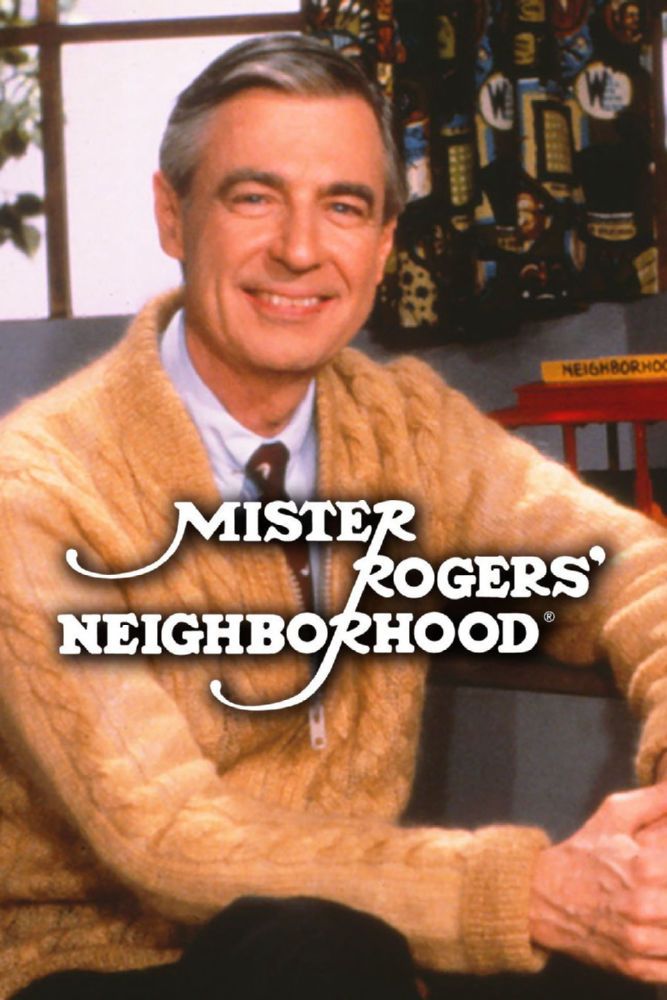
Mister Rogers' Neighborhood follows Fred Rogers, who opens each visit by hanging up his jacket, pulling on a zippered cardigan, and changing into blue sneakers while singing that he has always wanted a neighbor just like the child at home. He sits and speaks directly about ordinary worries such as being angry, starting school, or visiting the doctor, using plain words and small props so the ideas stay clear. Rogers often demonstrates how a familiar object works or welcomes a musician, craftsperson, or neighbor into the living room for a short shared activity. A bright trolley then rolls out and carries viewers to the Neighborhood of Make-Believe, where King Friday XIII, Queen Sara, Daniel Striped Tiger, Henrietta Pussycat, and other puppet residents act out a story that echoes the day's theme. When the trolley returns, Rogers talks over what the puppets discovered and reassures children that their own feelings are acceptable. He ends by changing back into street clothes and singing a quiet goodbye until the next visit.
Across the week Rogers returns to the same living-room set and the same Make-Believe castle so children can count on the routine. He may take a short trip to a crayon factory, a bakery, or a music studio, showing real people at work without turning the outing into a lecture. In Make-Believe, Lady Elaine Fairchilde, X the Owl, and Prince Tuesday keep their own personalities while they solve small problems of sharing, jealousy, or change. Rogers never scolds; he models listening, names emotions out loud, and reminds viewers that growing takes time. Picture Picture sometimes screens a short film that connects to the theme, after which Rogers sits again and invites the child to think along with him. The half-hour closes the same way it began—with a sweater, a song, and the promise that the neighborhood will be waiting tomorrow.
Oops! Is this show WOKE?
Only an account holder or member can file. Cite a scene, a line, or a pattern. Other account holders +1 or −1 that argument, once each. The show is not WOKE until enough of them have given a +1. Enough −1s remove the write-up, and it is no longer shown.
No write-ups to vote down yet; this show is NOT WOKE.
Sign in to file a woke label. One of each criterion per member.
Comments and reviews
Report a mistake
Same rule as woke labels: one report, a written reason, and the community +1 or −1 it — once per member. A net +5 applies the change. Editors can hold it for review, or apply it immediately.
No mistake reports yet.
Sign in to report a mistake. One report per field, per member.
Member review
Toni Briggs Member
Oct 17, 2026
★★★★★★★★★★Mister Rogers’ Neighborhood still works on me the way few children’s shows ever did, and I mean that as an adult who will sit through an episode without irony. Fred Rogers treated kids like people who already had real feelings and real questions. He didn’t shout, he didn’t chase trends, and he sure didn’t act like childhood was a branding opportunity. Watching him in 1981 material feels like sitting with someone who has decided that calm is not the enemy of attention. He comes home, changes into the cardigan and sneakers, and the whole pace of the day shifts. That ritual is half the point. It tells you the visit has started and nothing frantic is required of you.
What I keep noticing is how little he leans on gimmicks. The Neighborhood of Make-Believe is gentle theater, not a spectacle. Puppets argue, get embarrassed, try again. King Friday can be pompous and still get corrected without a moral lecture plastered across the screen. Lady Elaine can be difficult and still belong. Rogers never rushes past the awkward part of a feeling. If a child is scared of the dark or of a new baby or of a parent’s job change, he names it and stays with it. That patience is rare now. A lot of programming for kids treats every emotion like a problem to solve in under ninety seconds so the next song can start. Rogers lets the quiet hang. He sings when it fits, not because a marketing calendar demanded another earworm.
I rated this 4.5 because the show earns the affection people still carry for it. It is not perfect television in the technical sense. Some segments move slowly by modern standards. The model trains and the picture-picture transitions can look modest next to anything made last year. None of that bothers me. The modesty is the method. Rogers is not competing for your dopamine. He is modeling how to talk to another person when the subject is hard. He looks at the camera like he means the conversation, and after a few minutes you stop performing for the screen and just listen. That is harder to fake than people think.
There is also a steadiness about ordinary manhood here that I appreciate. Rogers is soft-spoken without being weak, firm without swagger. He fixes things, keeps promises, apologizes when he needs to, and never turns his own temperament into a punchline. You do not get the sense that kindness is a brand he put on for the cameras. The factory tours and the simple science bits feel the same way. He shows you how crayons are made or how a trombone works because the world is interesting on its own terms. No one is being dunked on. No one is being upgraded into a cartoon hero so the show can feel progressive. Competence and curiosity just sit there, available to whoever is watching.
I have caught myself thinking about how this would be pitched today. Someone would want faster cuts, louder colors, a checklist of identities doing the emotional labor that character used to do. Rogers does the opposite. He assumes the child in front of him already has a full interior life and does not need the program to invent one for marketing reasons. When he talks about anger or divorce or death, he does it without turning the topic into a campaign. Feelings are not props. They are part of the day. That approach aged better than almost anything else aimed at the same age group.
The music helps more than people admit. Those little songs are plain on purpose. They stick because they are honest, not because they were engineered to trend. “It’s You I Like” still lands because it refuses to flatter performance. It likes the person underneath the performance. In a culture that constantly rates kids on display, that message is almost radical in its quietness. I do not need the show to be edgy. I need it to keep its word, and it does.
Some episodes lean harder into Make-Believe than others, and a few land softer for me than the ones that stay closer to the living room and the conversations. That is why it is a 4.5 instead of a clean sweep. The weaker stretches never feel cynical, though. They just feel like a day when the visit was a little thinner. Even then, Rogers does not bail. He finishes the thought. He feeds the fish. He hangs up the sweater. The closing song is a small mercy every time.
I keep coming back to this series when the rest of children’s media feels like it is training kids to be audiences instead of people. Mister Rogers’ Neighborhood treats attention as something you offer, not something you extract. It explores the everyday world without turning every lesson into a slogan. A trusted friend and guide is exactly the right description. You can feel the difference in your shoulders after twenty minutes. The show does not need me to perform enthusiasm. It just needs me to show up the way he did. That is still worth protecting, and it is still worth the high mark.