



 MOVIE · 2022
Minamata
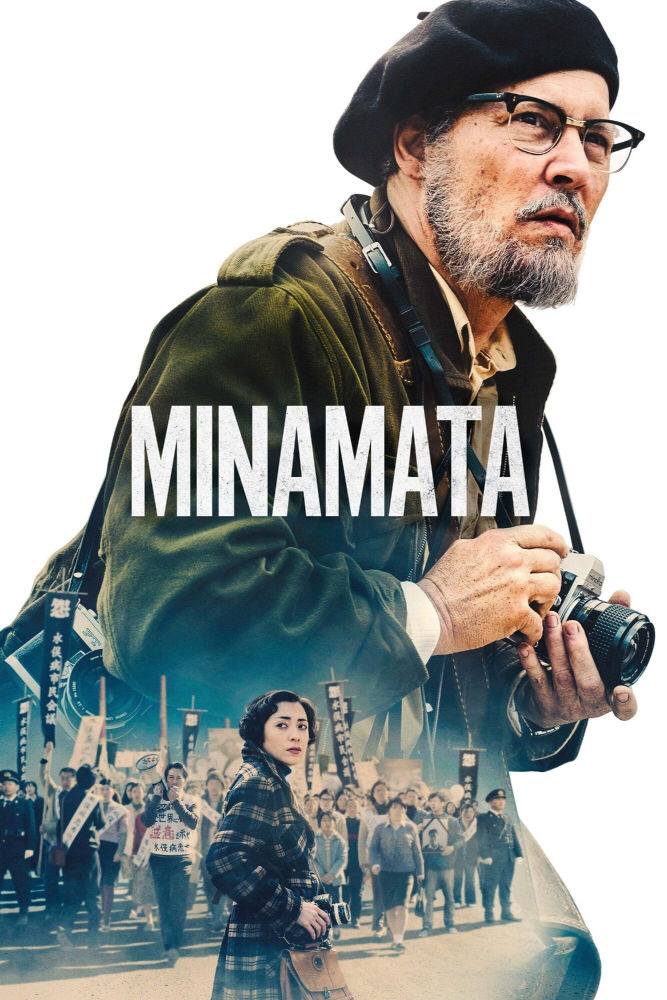
War photographer W. Eugene Smith travels back to Japan where he documents the devastating effect of mercury poisoning in coastal communities.
The film takes place in 1971 when we find celebrated photojournalist Eugene Smith as a recluse and disconnected from the world he once shot. After receiving one final assignment from Life Magazine editor Robert Hayes, Eugene must travel to the Japanese coastal city of Minamata, which has been ravaged by mercury poisoning.
Ushered by an impassioned Japanese translator, Aileen and encouraged by local villagers, Eugene's powerful images expose decades of gross negligence by the country's Chisso Corporation, the government and even the Yakuza.
Oops! Is this show WOKE?
Only an account holder or member can file. Cite a scene, a line, or a pattern. Other account holders +1 or −1 that argument, once each. The show is not WOKE until enough of them have given a +1. Enough −1s remove the write-up, and it is no longer shown.
Sign in to file a woke label. One of each criterion per member.
Comments and reviews
Report a mistake
Same rule as woke labels: one report, a written reason, and the community +1 or −1 it — once per member. A net +5 applies the change. Editors can hold it for review, or apply it immediately.
No mistake reports yet.
Sign in to report a mistake. One report per field, per member.
Member review
Wes Calder Member
Oct 6, 2026
★★★★★★★★★★Minamata sat on my list longer than it should have. I knew the broad outline—Eugene Smith, the mercury, the Japanese fishing towns—and figured I had the measure of it before the first frame. I was half right. The film does what it says on the tin: a broken American photographer gets pulled back into the world by a story that will not leave him alone. Johnny Depp plays Smith with a kind of exhausted gravity that feels earned rather than performed. He looks like a man who has already spent his best years and is now deciding whether the leftover ones are worth the trouble. That decision is the quiet engine of the movie.
The setup is simple enough. Smith is living in a kind of self-imposed exile, nursing old wounds and older habits, when Life Magazine dangles one last assignment. He goes to Minamata. The coastal communities there have been wrecked by industrial mercury dumped by the Chisso Corporation. People are twisted, children are ruined, and the official response is a mixture of denial and quiet pressure. Aileen, his translator and eventual partner, keeps him pointed at the work when he would rather disappear into the bottle or the darkroom. The villagers do the rest. They open their homes and their suffering to a stranger with a camera, and Smith does what he has always done: he makes pictures that force the rest of us to look.
What I respected is how little the film gilds any of that. It does not turn Smith into a pure hero. He is difficult, selfish at times, and not always sure why he is still doing this. The Japanese sequences avoid the usual outsider-savior beats. The camera stays with the people who live there—the mothers holding damaged children, the fishermen who know the water is poison and still have to eat. Bill Nighy’s turn as the magazine editor is pure economy; a few scenes and you understand the whole machinery of deadlines and moral compromise. The Yakuza angle is handled without cartoon swagger. It is just another layer of the same institutional rot.
I have a soft spot for movies that treat photography as work rather than magic. Smith’s process is shown in fragments—the long waits, the chemical stink of the darkroom, the argument with an editor over whether a picture is too harsh for the public stomach. When the famous images finally appear, they land because the film has earned the silence around them. No swelling score, no speech about the power of art. Just the photographs and the faces that made them necessary. That restraint is rare enough that I noticed it.
Depp’s performance will divide people who still keep score on his personal life. I set that aside. On screen he is a man whose body has started to refuse the demands his eye still makes. The physicality is right—the careful way he holds a camera like it might be the last honest thing left to him. Aileen is not written as a saint or a scold; she is a woman who believes the pictures matter and is willing to drag a reluctant genius across an ocean to prove it. Their relationship develops without the usual montage of sudden understanding. It feels like two tired people deciding to share the load for a while.
The film’s politics are straightforward and, for once, not dressed up as something else. A corporation poisoned a community for profit. The government looked the other way. Local muscle kept the peace. Smith’s photographs became evidence that could not be easily filed away. That is the whole argument, and it does not need modern embroidery. I never felt the movie was lecturing me about systems or identity. It was simply showing what happens when power meets indifference and a few stubborn people refuse to look away. If that sounds like an older kind of filmmaking, it is. I did not mind.
Pacing will bother anyone who wants constant forward motion. Large stretches are quiet—Smith walking the shore, waiting for light, sitting with families who have already lost more than most of us will ever understand. I found those stretches more honest than the occasional burst of confrontation. The score stays out of the way. The period detail is solid without becoming a costume parade. You believe you are in 1971 Japan because the rooms feel lived-in and the clothes look worn rather than styled.
I gave it four stars because it does the hard thing well and refuses to do the easy thing at all. It could have turned Smith into a myth or the victims into symbols. It does neither. It leaves you with the pictures and the knowledge that they cost something to make. That is enough. I am not going to pretend it reinvented the form or that every choice was perfect—some of the corporate boardroom scenes lean a little heavy—but the core holds. A damaged man points a camera at a damaged place and forces the rest of us to keep looking after the reel ends. In a year full of louder, shinier projects, that still counts for something. I will watch it again when I need the reminder that documentation, done right, is still a form of stubbornness worth practicing.