




 MOVIE · 1969
Midnight Cowboy IS WOKE
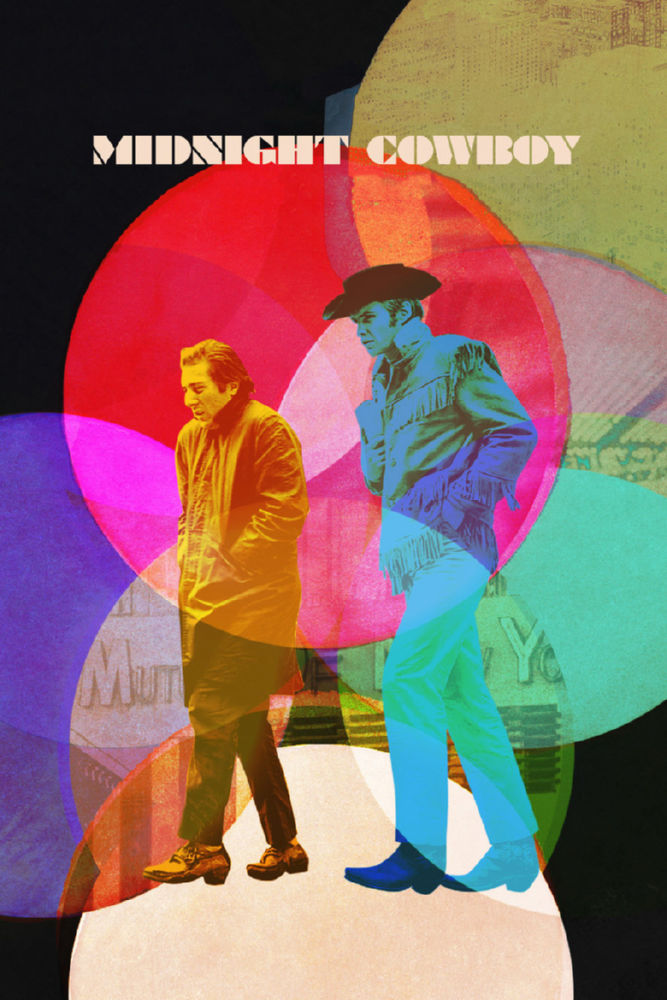
A naive young Texan moves to New York City to become a male prostitute and befriends a sickly con man named Ratso Rizzo, and the two form an unlikely bond as they struggle to survive on the harsh streets of the city.
The movie follows the story of Joe Buck, a naive and optimistic Texan who moves to New York City to become a male prostitute. However, his dreams of becoming a wealthy and successful gigolo quickly fall apart as he struggles to find clients in the seedy world of the city's sex trade. Along the way, he befriends Ratso Rizzo, a sickly and cynical con artist who becomes his unlikely friend and companion.
As the two men navigate the harsh realities of their lives on the streets, they form a deep bond that helps them survive the hardships of poverty, illness, and loneliness. The film is a powerful exploration of the human condition and the struggle for connection and understanding in a world that can often be cold and unforgiving.
Creator: John Schlesinger
WHAT CRITERIA MAKES IT WOKE?

Oops! Is this show WOKE?
Only an account holder or member can file. Cite a scene, a line, or a pattern. Other account holders +1 or −1 that argument, once each. The show is not WOKE until enough of them have given a +1. Enough −1s remove the write-up, and it is no longer shown.
Sign in to file a woke label. One of each criterion per member.
Comments and reviews
Report a mistake
Same rule as woke labels: one report, a written reason, and the community +1 or −1 it — once per member. A net +5 applies the change. Editors can hold it for review, or apply it immediately.
No mistake reports yet.
Sign in to report a mistake. One report per field, per member.
Member review
Ray Okonkwo Member
Sep 19, 2026
★★★★★★★★★★I went into Midnight Cowboy knowing almost nothing except Dustin Hoffman’s name on it. I wasn’t even sure it was Jon Voight as the main guy until that scowl settled in—a distinctive look. Before this the only Voight I really clocked was from Holes in 2003, where he was memorable in a totally different register. So the cowboy arriving in New York felt fresh.
Joe Buck steps off the bus in fringed leather and boots, a Texas dishwasher convinced his looks and swagger will make him rich servicing lonely women. The early stretches land because the movie lets the city cold-shoulder him without rushing the joke. One of the first attempts at hustling ends with him paying the client instead of the other way around. Voight plays that humiliation straight; you watch the tassels and the confidence start coming off in real time. He is the innocent dropped among the scum, and the film never winks to protect him.
Then Ratso Rizzo appears. Hoffman absorbs the character so completely it feels almost physical. The limp, the greasy coat, that deep bronchial cough that sounds like it is tearing something loose inside him—I half wanted to wipe the screen after the apartment scenes. The place they end up sharing is pure squalor: broken windows, stolen food, mattresses that look like they have stories you do not want. Ratso starts by fleecing the gullible cowboy, offering street smarts for a cut of future earnings. Pure opportunism. What makes the movie work is how slowly that arrangement turns into the only real tether either of them has.
I keep coming back to the street crossing. “I’m walking here! I’m walking here!” Hoffman barks it at the cab, more shuffle than stride, half defiance and half desperation. It is funny and ugly at once, the one moment Ratso claims a little space in a city that keeps grinding him down. That cough gets worse in the cold and the damp. You know he is not long for this world, and Joe knows it too even if he will not say it clean. Their schemes stay small-time—petty cons, leftover cash from Joe’s dwindling attempts at the hustle life—and the Florida fantasy Ratso keeps spinning starts to feel less like a con and more like the last story he can still tell himself.
What stays with me is how little the film dresses the bond up. No speeches about found family. Just two isolated men surviving on scraps and half-truths until the opportunism thins out and something closer to care shows through. Watching Voight’s wide-eyed lone ranger lose the jacket fringe piece by piece is quietly moving. The innocence peels away without turning into cheap bitterness. Hoffman’s Ratso is repulsive and impossible to look away from at the same time; the coughing schtick never feels like an actor’s trick, just a body failing in real time.
Some of the party scenes and side encounters feel loose and grainy in a way that belongs to 1969. They drift a little, but the street photography and the sense of New York as a predator do more work than any monologue. The bus ride later on carries a weight the early swagger never had. Joe still trying to hold onto some version of the dream while looking after someone who is clearly slipping is the part that stuck after the credits. It does not tidy the friendship or pretend it can last. Temporary and desperate still feels more honest than most polished connections movies hand you now.
I liked it a lot without needing it to be perfect. The performances carry the rough edges, and the central pairing never turns sentimental. Four stars sits right—heat, grit, and a fragile partnership that earns its hold without asking for applause.