



 STAND-UP
Michael Jr.
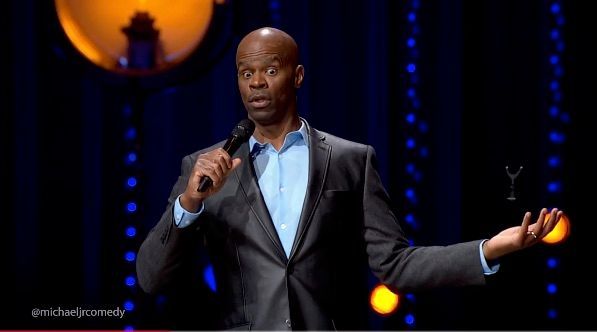
Michael Jr. works clean, high-energy rooms with story-driven bits, quick crowd work, and faith-tinged takes on ordinary life. Sets usually build from personal anecdotes into shared laughs rather than punch-up lectures.
Michael Jr. steps onstage as a warm, animated storyteller who treats the mic like a conversation. He leans on everyday family moments, travel mishaps, and church-adjacent observations, keeping language clean so parents and mixed-age crowds stay comfortable. A typical stretch opens with a relatable setup, then stretches the detail until the room is ahead of the punch line and laughing with him. He shifts pace often—short asides, longer narrative arcs, and direct questions to the audience—so the set feels live rather than recited. Persona stays upbeat and purposeful without turning into a sermon; the jokes land first. People show up for that mix of safety, energy, and recognition.
He returns often to marriage, kids, calling, and the small hypocrisies of daily faith life, always framed as shared human stuff rather than scolding. The material aims at listeners who want comedy they can replay around the dinner table, so edge comes from timing and surprise instead of shock. Rooms tend to feel communal: call-and-response laughter, quick recoveries when a bit stretches, and a steady invitation to lean in. He rarely chases trend topics or identity checklists; the through-line is craft, clarity, and leaving people lighter. What sticks is the sense of a comic who knows exactly who the night is for and keeps the focus on story and release.
Oops! Is this show WOKE?
Only an account holder or member can file. Cite a scene, a line, or a pattern. Other account holders +1 or −1 that argument, once each. The show is not WOKE until enough of them have given a +1. Enough −1s remove the write-up, and it is no longer shown.
Sign in to file a woke label. One of each criterion per member.
Comments and reviews
Report a mistake
Same rule as woke labels: one report, a written reason, and the community +1 or −1 it — once per member. A net +5 applies the change. Editors can hold it for review, or apply it immediately.
No mistake reports yet.
Sign in to report a mistake. One report per field, per member.
Member review
Wes Calder Member
Oct 9, 2026
★★★★★★★★★★Just got through a stretch of Michael Jr. clips back to back. Not a full special sitting there like homework, just the short runs and story pieces that keep turning up if you look for clean sets. He works the room like he is already half friends with it. Warm, animated, talking more than punching down a list. The energy stays high without the usual need to spike every thirty seconds with something crude just to prove the mic is still on.
Most of what lands starts ordinary. Family moments, a traffic stop that goes sideways in the retelling, the kind of dog question that should not be funny and somehow is. He will stretch a small detail until the laugh is already forming before he gets to the line. That is the part that feels different from a lot of current stand-up. He is not chasing the joke so much as letting the story get far enough ahead that the room meets him there. You can feel the timing even in clipped form. Short asides, then a longer arc, then a direct question that pulls whoever is watching into the bit for a second. It keeps the thing from sounding recited.
The clean part is not a gimmick. Language stays in a range where parents and mixed-age crowds do not have to flinch. That alone separates him from half the acts that treat every setup as a runway for the same shock. He will touch church-adjacent observations and the old feeling that laughing in that setting used to feel slightly illegal, but it never turns into a lecture. The jokes still have to work first. Faith shows up the way ordinary life shows up, not as a costume or a target. That is rarer than people admit. A lot of rooms treat belief like the automatic villain or the punch line itself. He does the opposite without making a speech about it.
One stretch that stuck was the nursery-rhyme turn and the funeral story with the seven-year-old. Both are pure story beats. He sets the scene, lets the kid logic or the rhyme logic run, and the laugh arrives because the detail is true enough. Another piece about confusing the white friends in the room lands the same way: observation first, shared recognition second. No identity checklist doing the heavy lifting. Just the gap between how people talk and how they actually move through a day. The dad-joke territory is in there too, the kind his wife has probably heard enough times that the eye-roll is part of the bit. He owns that without apology.
Crowd work in the clips feels quick and light rather than predatory. He asks, listens for half a beat, then folds the answer back into the run. It keeps the set feeling live even when you are watching it later on a phone. Pace shifts often enough that you do not settle into one rhythm and check out. Personal anecdotes open the door, then he widens them until they are shared. That is the pattern. From the car-fixing past into the life-changing present gets mentioned in the softer pieces, but again it rides under the laughs instead of replacing them. He is not selling a testimony; he is telling what happened and letting the room decide where it lands.
What I notice after several clips in a row is how little filler there is. No long throat-clearing about the state of the world or why everyone else is wrong. He trusts the ordinary material. Travel mishaps, the pulled-over story, the dog that makes no sense, the way a kid processes a funeral. All of it stays inside the clean lane and still gets the room ahead of him. That takes real control of the mic. A lot of comics who advertise clean end up soft or safe to the point of vanishing. He does not. The animation and the speed keep the energy up. You walk away from the clips feeling like you sat through a conversation that happened to be funny, not a routine that was trying to corner you.
The persona stays upbeat and purposeful without tipping into sermon. That balance is the whole act. He will talk about how Christ found him or what changed after he stopped drinking to be a better dad in the broader circle of similar voices, but in his own material the focus stays on the laugh and the shared moment. Redemption themes appear when they fit the story, not as a required moral at the end of every bit. That keeps it from feeling like church with a cover charge. People who want edge for its own sake will bounce off this immediately. People who are tired of every set turning into a grievance seminar will find the room comfortable.
After enough clips the pattern is clear. Setup that anyone recognizes, detail that stretches just past comfort, punch that arrives because the room already sees it coming. He does not need the joke to be mean to be sharp. The faith-tinged takes sit inside ordinary life instead of floating above it. That is why the mixed crowds stay with him. You do not have to share every belief to recognize the family mess or the traffic stop or the kid who says the wrong perfect thing at the wrong time. The clips make that obvious in sequence. One after another, the same steady build.
I am not going to pretend this reinvents the form. It does not. It just does the older job of stand-up without the current add-ons that usually kill the timing. Clean, high-energy, story first. The laughs arrive because the details are specific and the delivery stays conversational. That is enough. Most of what I have been watching lately forgets that part. Michael Jr. remembers it and keeps moving. Worth the time if you want sets that do not require a warning label or a political decoder ring just to sit through the first five minutes.