



 MOVIE · 1980
Looney Tunes
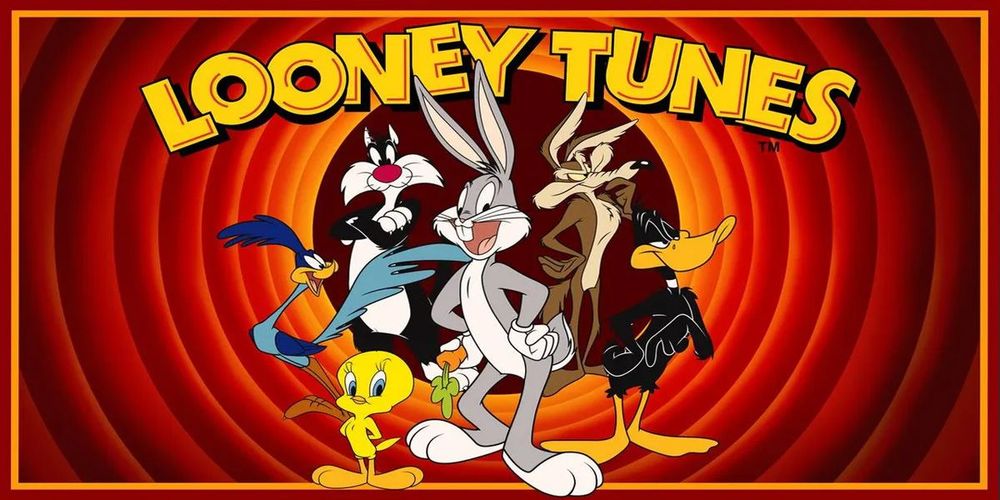
The gang's all here! Every wacky, looney, crazed animated star to ever make theatergoers howl with laughter--from the first time that Bugs Bunny emerges from his rabbit hole to ask "What's Up Doc?" to the insane plots that Wile E. Coyote conceives to capture the Road Runner. There are decades of hilarious hi-jinks in the Warner Cartoons.
Oops! Is this show WOKE?
Only an account holder or member can file. Cite a scene, a line, or a pattern. Other account holders +1 or −1 that argument, once each. The show is not WOKE until enough of them have given a +1. Enough −1s remove the write-up, and it is no longer shown.
Sign in to file a woke label. One of each criterion per member.
Comments and reviews
Report a mistake
Same rule as woke labels: one report, a written reason, and the community +1 or −1 it — once per member. A net +5 applies the change. Editors can hold it for review, or apply it immediately.
No mistake reports yet.
Sign in to report a mistake. One report per field, per member.
Member review
Peg Harlan Member
Oct 17, 2026
★★★★★★★★★★Looney Tunes from around 1980 still sits in that sweet spot where the old Warner cartoons got packaged for TV without anybody feeling the need to sand them down. You get the full run of the gang—Bugs climbing out of the hole with that casual “What’s up, doc?”, Coyote building another ridiculous contraption that is doomed from the first frame, Daffy losing his mind over nothing and everything. They used to make them like this, short and sharp, and the 1980 packaging mostly just let the old stuff breathe instead of rewriting the jokes.
What works is how little the shorts care about explaining themselves. A coyote wants a bird. A rabbit wants to finish his carrot in peace. A duck wants the spotlight. That’s the whole engine. The gags pile up because the timing is tight and the drawings still have bounce. I can sit through a stretch of these and feel the same small lift I got as a kid, not because I’m chasing nostalgia hard, but because the cartoons themselves still move. The anvils land. The dynamite goes off. The scenery gets painted out from under someone’s feet. It is physical comedy done with ink and timing, and it does not need a speech about why the joke is okay.
There is a cleanliness to the older ones that later “updated” packages sometimes lose. No one is stopping the short to check a checklist. The characters are vain, stubborn, greedy, clever, or dumb in ways that belong to the person on screen, not to some external lesson. Bugs is a smart-aleck survivor. Coyote is a hopeless engineer. Foghorn is loud for the sake of being loud. You know who they are after thirty seconds, and the rest is just watching them bounce off each other. That kind of clarity is rarer now than it ought to be.
I rated it a four because it is not perfect television in the modern sense. Some of the 1980-era presentation can feel a little slapped together—bumpers, order of shorts, the usual TV packaging that never quite matches the care that went into the original theatricals. A few of the later entries in the broader Looney library start to thin out, and if you string too many of those together the energy dips. Color can look flat on certain prints. Sound can feel thin. None of that ruins the good ones, but it keeps me from pretending every single minute is golden. Four feels honest: strong, rewatchable, still funny, with the ordinary limits of old material shown on ordinary TV.
What I keep coming back to is the confidence. These cartoons assume you can follow a chase or a rivalry without a narrator holding your hand. They assume a falling piano is funny on its own. They assume a character can be ridiculous without being turned into a sermon. That assumption is why the best of them still play. You do not have to agree with every dated crack or every wild stereotype that sneaks in from the era; you just notice that the core engine—setup, escalation, payoff—still runs. When Coyote lights the fuse one more time, you already know how it ends, and you still lean forward a little.
I have put these on in the background while doing something else and found myself stopping to watch a full short. That is the test that matters to me. If the drawing and the voice work and the timing still pull focus, the package is doing its job. The 1980 set (or whatever mix of packages floated around then) mostly does that job. It does not try to reinvent Bugs as a modern spokesman. It does not swap the whole cast around for a press cycle. It just runs the cartoons. For a lot of evenings, that is exactly enough.
There is also a small pleasure in how disposable the plots are. Nobody is building a twelve-episode arc about Coyote’s trauma. He wants lunch. The bird is faster. End of story, start the next one. That looseness keeps the whole thing light. You can dip in for ten minutes or stay for an hour. Kids still laugh at the same pratfalls. Adults still notice the craft in the better-directed shorts. Cross-generational without trying to lecture anybody is a neat trick, and these pull it off more often than not.
I am not going to pretend every single cartoon in the vault is a masterpiece. Some are filler. Some gags repeat. Some voice work is sharper than others. That is why it is a four and not a perfect score. But the high points are high enough that I keep the discs (or the streams, or whatever copy I have) around. When I want something that does not care about my politics or my identity or the news cycle, this still works. A rabbit outsmarts a hunter. A cat chases a bird and loses. A duck explodes with rage over a simple slight. Simple, mean, funny, done.
If you grew up with these, you already know the rhythm. If you did not, the 1980-era collections are still a decent doorway. Just let them play. Do not overthink the black-and-white ones or the early color. Do not demand they apologize for being products of their time. Watch the timing. Watch how little dialogue some of the best Road Runner bits need. That is the craft. They used to make them like this, and a good package from that period still shows why people howled in theaters and then again in living rooms decades later. Four stars from me, no speech required.