



 MOVIE · 2024
Hunter's Laptop - Requiem for Ukraine
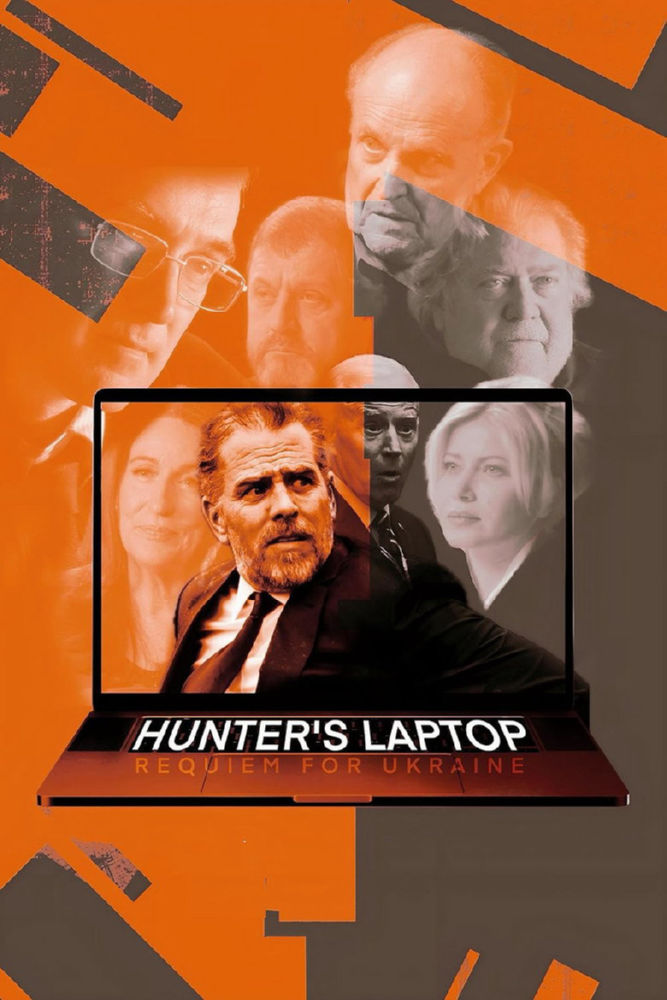
Delves into the scandal surrounding Hunter Biden's infamous laptop, exploring the broader implications of political corruption, media manipulation, and international intrigue.
“Hunter’s Laptop – Requiem for Ukraine” is a hard-hitting documentary that delves into the scandal surrounding Hunter Biden’s infamous laptop, exploring the broader implications of political corruption, media manipulation, and international intrigue. The film begins with the inauguration of President Joe Biden and swiftly shifts focus to the controversial events leading up to and following the discovery of the laptop.
Through interviews with key figures, including whistleblowers, journalists, lawyers, the documentary uncovers a web of corruption involving the Biden family, particularly in relation to Ukraine and Burisma Holdings. The narrative highlights the influence of oligarchs, the deep state, and the manipulation of media and big tech to suppress critical information from the public.
Oops! Is this show WOKE?
Only an account holder or member can file. Cite a scene, a line, or a pattern. Other account holders +1 or −1 that argument, once each. The show is not WOKE until enough of them have given a +1. Enough −1s remove the write-up, and it is no longer shown.
Sign in to file a woke label. One of each criterion per member.
Comments and reviews
Report a mistake
Same rule as woke labels: one report, a written reason, and the community +1 or −1 it — once per member. A net +5 applies the change. Editors can hold it for review, or apply it immediately.
No mistake reports yet.
Sign in to report a mistake. One report per field, per member.
Member review
Stu Kline Member
Oct 7, 2026
★★★★★★★★★★Hunter's Laptop - Requiem for Ukraine sets out to reconstruct what happened after a laptop got left at a Delaware repair shop and then became the story half the country was told not to touch. I rated it three stars. The core material is serious and the film gets the basic sequence right, but the execution stays uneven and sometimes settles for restating what already leaked into public view instead of forcing new clarity.
The device and its files sit at the center. Emails, business records, personal material, and the Burisma connections all surface in the usual order. The documentary shows how those items entered the debate in the run-up to 2020 and how quickly platforms and a roster of former officials moved to brand the whole thing possible foreign disinformation. That stretch works. Archival clips make the speed of the blackout hard to dismiss. You watch the story get throttled in real time and it still lands as an institutional reflex more than a careful verification process.
I never needed a full forensic tour of every attachment. What holds attention is the chain-of-custody argument and the way legitimate questions about influence and family business got treated as radioactive. The Ukraine thread in the title is not window dressing. The film keeps circling the energy firm, the board seat, and the overlap with policy decisions that were already sensitive. Those links have been argued for years. Here they are laid out again with enough context that a casual viewer can follow the money and the names without a prior briefing.
Where the movie loses altitude is in the middle stretch. Some sections feel assembled from headlines rather than from fresh pressure on the documents or the people who handled them. Interviews and news footage carry a lot of weight, yet you can sense the places where a sharper edit or a more stubborn line of questioning would have helped. It is not a glossy production. For this subject that can be a virtue, but here the rough edges sometimes let the argument drift into repetition. You get the suppression story twice when once, done harder, would have been enough.
The media and platform response remains the strongest passage. Outlets that would not touch the reporting, the throttling of the early Post story, the coordinated language about disinformation—those choices still look worse in hindsight. The film shows them without turning every frame into a sermon. That restraint is useful. Plenty of documentaries on this beat tip straight into rage content. This one stays closer to the public record and lets the timeline do most of the work. I respect that choice even when the pacing sags.
Personal material from the laptop is acknowledged without becoming the main event. Hunter Biden’s private life was a mess; some of it was on the drive. The movie uses enough of it to illustrate the character of the business arrangements and the casual way the family name appears to have been monetized. It does not linger for cheap shock. That is the right call. Corruption questions stop being abstract once the emails show how access and branding were treated as inventory.
The international angle—Ukraine policy, influence concerns, the larger web of energy and consulting deals—gets gestured at more than fully dissected. The “requiem” framing suggests a lament for stories that were buried and for foreign-policy questions that polite coverage preferred to leave alone. Fair. The film insists the old dots deserved connection when they first appeared. It does not invent brand-new smoking guns so much as refuse to let the earlier ones stay ignored. That is valuable as far as it goes. I still wanted tighter follow-through on who benefited, how the money moved, and what the delayed scrutiny cost in terms of public understanding.
Three stars matches the experience. The subject matters. The reconstruction of the blackout and the basic document trail is serviceable. The craft is patchy, the new ground limited, and the runtime longer than the fresh insight. If you tracked the laptop story as it broke, large parts will feel familiar. If you did not, the film supplies the outline without becoming the definitive deep dive the title sometimes promises. Better that it exists than another round of pretending the files were fabricated. The resistance to the story was real. The film gets that across even when it does not always land the harder punches it reaches for.
I walked away neither converted nor dismissed. The documentary does competent work assembling a contested public record and reminding viewers how fast certain questions were ruled out of bounds. It simply does not stay sharp for the full distance or push far enough past the already-circulated facts. That middle rating feels honest for a movie that is necessary in outline and only partly successful in delivery.