



 MOVIE · 2021
House Of Gucci
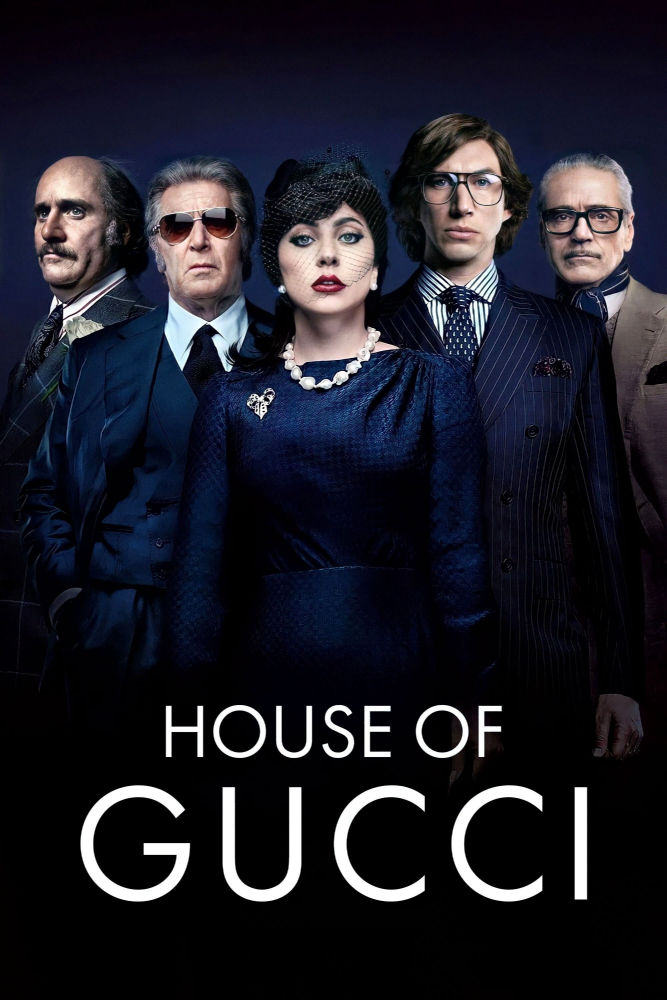
When Patrizia Reggiani, an outsider from humble beginnings, marries into the Gucci family, her unbridled ambition begins to unravel the family legacy and triggers a reckless spiral of betrayal, decadence, revenge, and ultimately…murder.
Oops! Is this show WOKE?
Only an account holder or member can file. Cite a scene, a line, or a pattern. Other account holders +1 or −1 that argument, once each. The show is not WOKE until enough of them have given a +1. Enough −1s remove the write-up, and it is no longer shown.
Sign in to file a woke label. One of each criterion per member.
Comments and reviews
Report a mistake
Same rule as woke labels: one report, a written reason, and the community +1 or −1 it — once per member. A net +5 applies the change. Editors can hold it for review, or apply it immediately.
No mistake reports yet.
Sign in to report a mistake. One report per field, per member.
Member review
Peg Harlan Member
Oct 6, 2026
★★★★★★★★★★House of Gucci sat on my list for a while before I finally put it on. I knew the broad outline going in—outsider marries into the famous Italian fashion family, the romance sours, and the fight over the company turns ugly—but I hadn’t sat with the whole thing. It’s a long movie, and it feels long in places, yet I stayed with it. That counts for something.
Lady Gaga plays Patrizia like she’s been waiting her whole life for the part. She leans hard into the accent and the hunger, and most of the time it works. You believe this woman spotted Maurizio at a party and decided he was the ticket. Adam Driver keeps Maurizio quieter, almost soft at first, which makes the contrast interesting. He starts out looking like he might actually prefer a simpler life, and you watch that get worn down. Their early scenes together have a real charge. She pursues, he folds, and for a stretch you can see why the marriage happened.
Then the family machinery kicks in. Rodolfo and Aldo and the rest of the Gucci men circling the brand, arguing over who owns the name and who gets to steer it. Patrizia studies the books and the image and refuses to sit quietly at dinner. That part felt true to me. I’ve known people who marry into something bigger than themselves and can’t help trying to rearrange the furniture. Sometimes it works. Usually it doesn’t. Here it hardens her, and you see the shift without a lot of speechifying.
The production throws money at the screen—clothes, parties, offices, the whole period look. It doesn’t feel cheap. Al Pacino and Jeremy Irons show up and chew on their roles like they paid for the privilege. Pacino especially goes broad as Aldo, and there are stretches where I just let him run. That kind of larger-than-life turn used to be more common in these family-empire pictures. They don’t always make them this unapologetic anymore. Sometimes the movie tips into camp and you can feel the actors enjoying themselves a little too much. Other times the boardroom tension lands clean and you remember there’s a real company and real money at stake.
What kept me from going higher is the uneven rhythm. It drifts in the middle. Scenes of glamour and sniping pile up without always tightening the screw. Maurizio’s growing unease with her methods is clear enough, but the film circles the same fights longer than it needs to. I never got bored exactly, yet I checked the clock more than once. The ending everyone knows is coming still carries weight when it arrives, because the performances have earned it by then. Betrayal and murder don’t feel pasted on; they feel like the logical cold end of people who mistook the brand for a bloodline that would protect them.
I liked that it mostly stayed inside the personal mess instead of turning into a lecture about fashion or capitalism or whatever. Ambition, jealousy, the way money and status change the temperature in a marriage—that’s the engine. Patrizia’s drive is the main current, and Gaga never softens it to make her more likable. You can admire the will and still see the damage. Driver’s quieter register helps; he doesn’t try to match her volume, so the friction stays interesting.
Some of the supporting turns land better than others. A few accents wander, and a couple of the later confrontations play like the actors know they’re in a big glossy movie. Still, the central pair holds it together. I never felt the story was being rewritten to flatter anyone. It just follows this particular climb and fall inside a famous house.
Would I call it great? No. It’s solid, sometimes sharp, sometimes overcooked, and worth the sit if you’re in the mood for that kind of high-stakes family wreckage. The clothes and the sets do their job without becoming the whole point. I walked away thinking about how quickly a partnership can turn into opposing camps once the company becomes the third person in the marriage. That stuck with me more than any single monologue.
Three and a half stars feels right. It’s better than average, not special enough to revisit soon, and honest enough about its characters that I didn’t feel talked down to. They don’t make every one of these with this much commitment to the mess. I’ll take that.