
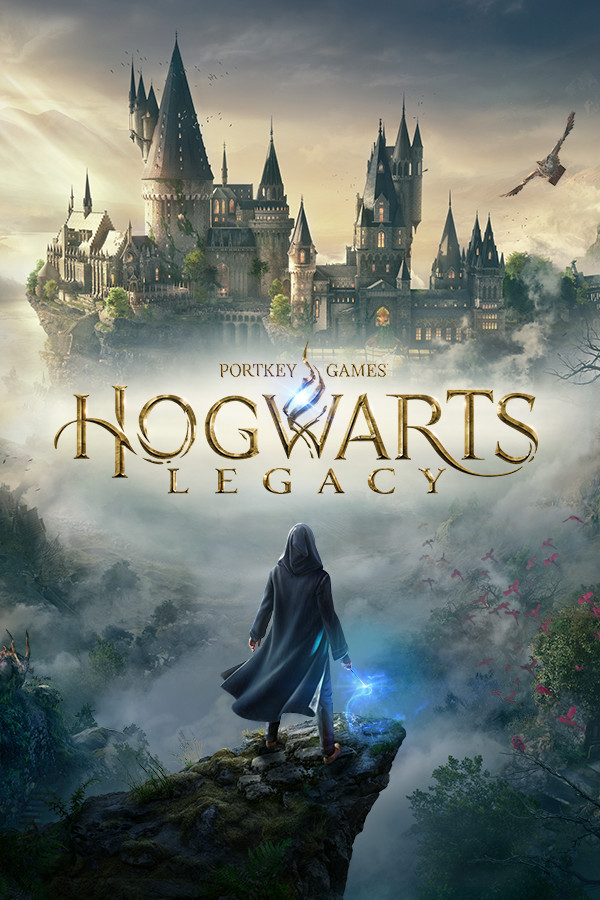




 VIDEO GAME · 2023
Hogwarts Legacy IS WOKE
This open-world action role-playing game immerses players in the wizarding world of Harry Potter in the late 1800s, offering vast exploration and customization options.
Hogwarts Legacy is an upcoming open-world action role-playing game developed by Avalanche Software and published by Warner Bros. Interactive Entertainment. Set in the wizarding world of Harry Potter in the late 1800s, players take on the role of a new student at Hogwarts School of Witchcraft and Wizardry. The game's story revolves around an ancient wizarding artifact hidden somewhere in the castle that the player must find and uncover the mystery behind it.
Players can explore the vast open world at their own pace, customize their character's magical abilities, brew potions, encounter mythical creatures, and battle dark wizards. The game's attention to detail and immersion, including a dynamic weather system, sets it apart from previous Harry Potter games. While the game has a few minor flaws, Hogwarts Legacy is shaping up to be one of the most anticipated releases of the year for Harry Potter fans and open-world action role-playing game enthusiasts.
Developer: Avalanche Software · IMDb
WHAT CRITERIA MAKES IT WOKE?





Oops! Is this show WOKE?
Only an account holder or member can file. Cite a scene, a line, or a pattern. Other account holders +1 or −1 that argument, once each. The show is not WOKE until enough of them have given a +1. Enough −1s remove the write-up, and it is no longer shown.
Sign in to file a woke label. One of each criterion per member.
Comments and reviews
Report a mistake
Same rule as woke labels: one report, a written reason, and the community +1 or −1 it — once per member. A net +5 applies the change. Editors can hold it for review, or apply it immediately.
No mistake reports yet.
Sign in to report a mistake. One report per field, per member.
Member review
Stu Kline Member
Oct 16, 2026
★★★★★★★★★★Hogwarts Legacy came out in 2023 and I spent more evenings with it than I planned. You play a fifth-year student arriving late to Hogwarts, learning spells in class, wandering the castle, and digging into some ancient magic problem that has been sitting under everyone’s nose for centuries. That setup is enough. It does not need the old trio or a greatest-hits parade of book moments, and I was glad it skipped that.
The castle is what keeps you playing. Stairs move, portraits talk, corridors hide rooms you only find because you were looking at the wrong thing. I got lost more than once on purpose. The grounds stretch out far enough that broom flight actually feels useful instead of decorative. Forbidden Forest runs, beast dens, little hamlets—you can burn hours just poking around without opening the quest log. That freedom is the real draw. Classes give you the spell toolkit in a way that feels earned rather than unlocked from a menu, and once you have a decent rotation the combat clicks. Lock-on works, the timing windows are fair, and choosing the darker options does not lock you out of anything important. I went that route early and never regretted it.
Story stays serviceable. Ancient magic, goblin unrest, a few professors who know more than they say. It never tries to reinvent the whole wizarding world, which is smart. Side characters fill the gaps without demanding you love them. Some quests are pure filler—talk to X, retrieve Y—but you can skip most of the fluff and still feel like you saw the place. The map markers are there if you want the checklist experience; I turned a bunch off and the game did not punish me for it. That choice matters more than people admit.
Presentation holds up. Interiors look lived-in. Hogsmeade at night has the right glow. Creatures have weight when they move. My machine ran it clean enough that I stopped thinking about frame rates after the first hour. Sound design does the quiet work—footsteps on stone, distant charms practice, the odd squawk from a nest. Nothing flashy, just consistent.
I gave it 4 stars because the core fantasy lands. You feel like a student who can actually do magic and go where the story has not already been. The blank-slate protagonist is a double-edged sword: you project what you want, but the dialogue stays a little stiff and the personal stakes never cut deep. Late-game padding shows up once the map is full of icons you feel obligated to clear. A tighter main path and fewer collectible chases would have pushed it higher. Still, the good outweighs that. House choice changes enough flavor that a second run does not feel identical. Relationships with classmates and teachers stay light but functional. You are not forced into speeches about anything outside the plot.
What surprised me most was how little it needed to lean on nostalgia. A few familiar names appear, the rules of the world are the same, yet the new corners feel like they belong. Exploring a cave or a ruined tower because you spotted it from the air beats waiting for the next cutscene. Combat stays fresh longer than expected once you start chaining the better spells and using the environment. I never felt the game was talking down to me or padding runtime with lectures. It just lets you be a wizard with a job to do and a big castle to live in.
Replay value sits in the different houses and the moral shortcuts you can take. I finished the main thread, cleaned up the stronger side stories, and still had spots on the map I never touched. That is the right kind of leftover. Not everything needs to be completed for the experience to count. If you ever wanted more time inside that school without the later-book baggage hanging over every scene, this gets you most of the way there. It is not flawless and it is not trying to be cinema. It is a big, playable version of the place, and on most nights that was exactly what I wanted after work. Four stars feels honest. I would boot it up again.