



 TV · 2023
Hello Tomorrow!
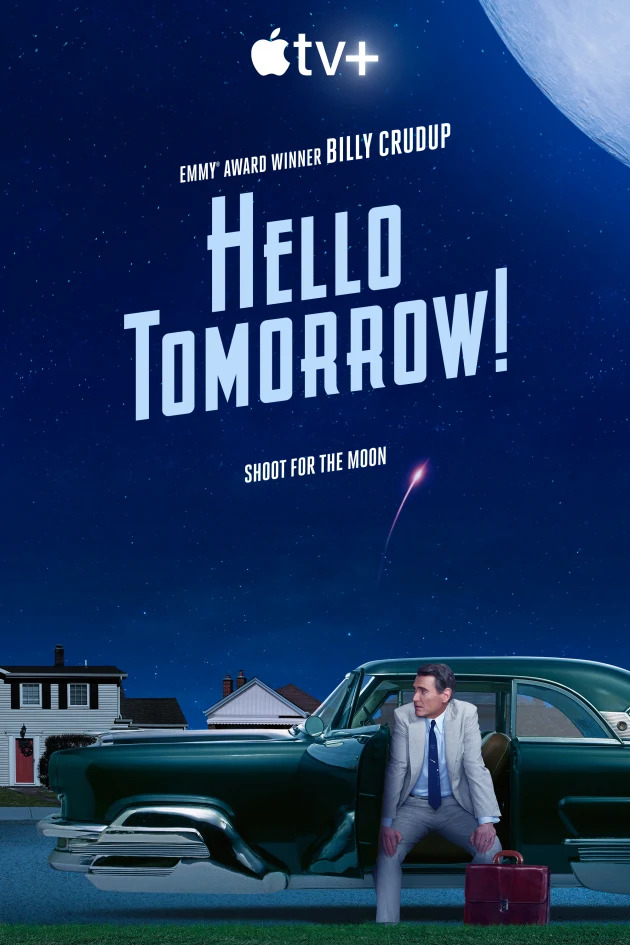
In a retro-futuristic world, charismatic salesman Jack Billings leads a team of fellow sales associates determined to revitalize their customers’ lives by hawking timeshares on the moon.
A science fiction comedy-drama presenting a retro-futuristic world in which a Brightside sales team led by Jack pushes fantasies of affordable luxuries on the moon, but the realities are not as good as promised.
It touches on themes such as hope, delusion, and a mis-characterized "American dream" in a way that feels relatable. The series offers a unique and entertaining sci-fi concept.
Oops! Is this show WOKE?
Only an account holder or member can file. Cite a scene, a line, or a pattern. Other account holders +1 or −1 that argument, once each. The show is not WOKE until enough of them have given a +1. Enough −1s remove the write-up, and it is no longer shown.
Sign in to file a woke label. One of each criterion per member.
Comments and reviews
Report a mistake
Same rule as woke labels: one report, a written reason, and the community +1 or −1 it — once per member. A net +5 applies the change. Editors can hold it for review, or apply it immediately.
No mistake reports yet.
Sign in to report a mistake. One report per field, per member.
Member review
Stu Kline Member
Oct 19, 2026
★★★★★★★★★★Hello Tomorrow! has a premise that should have been more fun than it turned out. Jack Billings and his Brightside crew sell timeshares on the moon in a world that looks like the 1950s never ended, just added rockets and brighter chrome. The sales pitch is pure fantasy sold with a smile, and the show knows the product is empty. That gap between the glossy promise and the actual grind is the whole engine.
I liked the look right away. The clothes, the cars, the office floors all feel deliberately clean and optimistic in a way that starts to curdle. Jack walks into every room like he already owns the deal. Billy Crudup makes that charisma feel lived-in instead of cartoonish. You can see why people sign the papers. He believes enough of his own line that the team and the customers get pulled along. When the cracks show, the performance still holds. Without him the series would sag hard.
The rest of the sales associates orbit him with their own quiet desperation. They need the moon dream to be real more than the buyers do. That part works in short stretches. You get the sense that everyone is performing hope because the alternative is admitting the whole setup is a hustle with no finish line. The show keeps returning to that idea without turning it into a lecture. Hope, delusion, and a warped version of the old climb-the-ladder story sit right on the surface. It feels familiar even with the lunar backdrop.
Where it loses me is the pacing and the side stories. Some episodes circle the same emotional beat too many times. Jack’s personal life and the team’s private messes take up space that does not always earn it. I found myself waiting for the next pitch scene because those carried more energy than the domestic stretches. The comedy is dry and scattered rather than sharp. You get a few solid absurd moments from the act of peddling real estate on a dead rock, but the laughs thin out once the novelty fades. It leans drama more than the trailer energy suggested.
The world stays a little thin. We stay mostly on the sales floor and in the customers’ living rooms. The larger society is sketched just enough to support the con. That choice keeps the focus tight on the hustle, yet after a while I wanted more texture or a clearer sense of how this retro-future actually runs day to day. The moon itself remains a distant postcard, which fits the theme of never-arriving luxury, but it also means the show never really escalates beyond the office politics and the soft betrayals.
Still, the central trick lands often enough. Watching people buy a better life they will never see has a quiet sting. Jack is good at reading what each customer lacks and filling the blank with lunar real estate. The series is strongest when it stays close to that transaction and the small ways people protect their own illusions. When it drifts into broader statements about dreams and disappointment it gets softer and less specific. I never felt preached at, which helped. It just sometimes forgot to keep the story moving.
Production design does real work here. The sets and costumes sell the bright surface so the hollowness underneath registers. Sound and score stay in the same lane—upbeat enough to match the sales smiles, slightly off once you notice. None of it feels cheap. That consistency props up the stretches where the writing idles.
I landed at three stars because the concept is distinct and Crudup keeps it watchable even when the scripts meander. It never became something I needed to finish in a rush, but I also did not quit. The mix of sci-fi surface and ordinary human self-deception has enough bite to stick with you in pieces. A tighter run of episodes or a sharper comic edge would have pushed it higher. As it stands, it is a solid mid-tier watch if the moon-salesman hook grabs you. You see the point early, enjoy the better scenes, and accept that not every thread pays off cleanly. That felt honest enough for the rating I gave it.
The show understands that people will keep buying the next shiny thing if it lets them feel hopeful for an afternoon. Jack is simply better at packaging that feeling than most. That single insight carries more weight than any of the secondary plots. I kept coming back to it even in the slower hours. Not every series needs to reinvent the form. This one just needed to stay a little hungrier and a little funnier. It got close enough that I finished it without regret, which is more than I can say for a lot of high-concept television that burns out after the first few hours.