



 VIDEO GAME · 2023
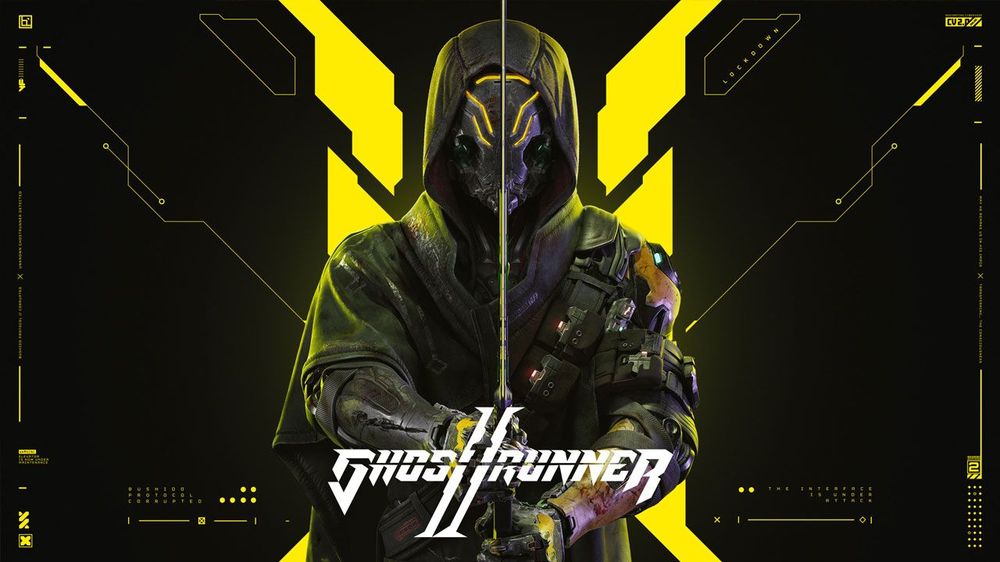
Ghostrunner II - Blood Will Run
One year after the events of the first game. The people of Dharma Tower are rebuilding, and there is hope for the future. However, with the Keymaster dead, a power vacuum develops with deadlier enemies looking to conquer Dharma tower.
Ghostrunner 2 is a fast-paced cyberpunk action game set one year after the fall of the tyrannical Keymaster inside Dharma Tower, humanity's final refuge. The story follows Jack, a cybernetic ninja who now works as an enforcer for a resistance group known as the Climbers. With the dictator gone, a massive power vacuum shatters the peace within the mega-city, allowing a violent, AI-worshiping cult to take root. This group includes a rogue faction of first-generation cybernetic warriors called Asura—led by Mitra, Madhu, and Rahu—who view Jack and his allies as tools of ongoing oppression and vie for absolute control over humanity's remaining shelter.
To stop this new threat, Jack must venture far beyond the vertical confines of Dharma Tower into the hazardous, post-apocalyptic wastelands of the outside world. Navigating dangerous new terrain on foot and aboard a high-speed motorcycle, Jack fights through fierce opposition from the rogue Asura faction. Ultimately, he confronts and defeats the cult's leader, Mitra, dismantling the rogue faction's plans. Through his victory, Jack saves Dharma Tower from total collapse and secures a fragile new future for the remnants of mankind.
Developer: One More Level
Oops! Is this show WOKE?
Only an account holder or member can file. Cite a scene, a line, or a pattern. Other account holders +1 or −1 that argument, once each. The show is not WOKE until enough of them have given a +1. Enough −1s remove the write-up, and it is no longer shown.
Sign in to file a woke label. One of each criterion per member.
Comments and reviews
Report a mistake
Same rule as woke labels: one report, a written reason, and the community +1 or −1 it — once per member. A net +5 applies the change. Editors can hold it for review, or apply it immediately.
No mistake reports yet.
Sign in to report a mistake. One report per field, per member.
Member review
Omar Quill Member
Oct 7, 2026
★★★★★★★★★★Ghostrunner 2 clicked with me in a way a lot of flashy action games don’t. I put about thirty-five hours into it across a couple of weeks, mostly evening sessions after school, and the movement still feels sharp even after the campaign and some free roam grinding. You play as Jack again, the cyber ninja, and the core loop is the same idea as the first game but stretched out: sprint, wall-run, dash through bullets, slice enemies before they can touch you. One hit and you’re done, which sounds punishing until the controls lock in and suddenly you’re chaining jumps and kills like the whole level is a race track you already memorized.
What sold me early was how the parkour and combat stay glued together. You’re never just fighting or just running. Every arena is built so you can keep momentum, bounce off walls, use the grapple, and cut through a pack without stopping. I messed with the upgrade paths a fair bit. There are skill trees and cyberware that let you lean into different styles—more aggressive dashes, better deflection windows, tools that open up crowd control. I ended up on a build that favored quick resets and air time because it matched how I play. Once that clicked, clearing rooms felt less like surviving and more like flowing. Bosses are where it peaks. A few of them force you to learn patterns hard, and the better ones mix vertical space with timed attacks so you can’t just spam the same trick. I died a lot on the first serious one, then came back the next night and finally read the tells. That loop of fail, tweak, clear is still satisfying.
The setting is Dharma Tower a year after the last game’s mess. People are trying to rebuild, but new groups are filling the power hole, including this cult side with the Asura types. The game doesn’t drown you in cutscenes, which I appreciate. Story beats show up between levels and in short moments, enough to give you a reason to keep pushing without turning into a movie you sit through. The cyberpunk look is clean and neon-heavy, industrial layers stacked on top of each other, and the soundtrack keeps the pace up without getting annoying on repeat. Visually it runs smooth on my setup; I didn’t fight frame drops even when things got crowded with enemies and particle effects.
Difficulty is honest. Early areas teach the systems, then it ramps. There are moments where the enemy placement and environmental hazards stack and you have to think three moves ahead while still moving at full speed. That’s the fun part for me. I like games that respect the time you put in learning them. Side content and some optional challenges stretch the playtime if you want more of the same feeling. I chased a few of those just to experiment with different loadouts and see how far I could push a pure movement run. Not everything lands perfectly. A couple of levels felt longer than they needed to be, and the story threads with the cult and the power vacuum sometimes stay surface-level. You get the idea of who’s after control and why Jack is still fighting, but it doesn’t dig deep into character beyond the job. For a game this focused on feel, that’s fine with me. I came for the speed and the precision, not a novel.
Compared to the first game, this one opens the map a bit more and gives you more toys to play with. The bike sections are a change of pace that mostly work—fast traversal with shooting and ramming—and they break up the pure on-foot levels without feeling tacked on. Combat against the bigger enemy types and the Asura fighters forces you out of autopilot. You can’t just dash and slash forever; you have to time blocks, use the environment, and sometimes disengage to reset. That variety kept me from getting bored even late into the run. I redid a few boss fights just for cleaner clears once I knew the patterns, the same way I replay tough sections in other action games when the controls feel that good.
If you bounced off the first Ghostrunner because of the difficulty or the narrow focus, this might still feel demanding, but the tools are clearer and the levels give you more room to breathe between intense stretches. If you liked the first one, the upgrades and the larger set pieces are the main reasons to jump back in. I finished the main path, cleaned up some side stuff, and still hop in sometimes just to run a favorite stretch at full speed. It’s the kind of game where after a good session your hands feel a little buzzed from the constant inputs, in a good way. Not every system is deep forever, and the narrative stays functional rather than heavy, but the hour-to-hour play is strong. Movement, combat, and the satisfaction of nailing a hard sequence carry it. Four stars feels right for how much time I actually spent enjoying the systems instead of just finishing them.