



 TV · 2020
Gangs of London
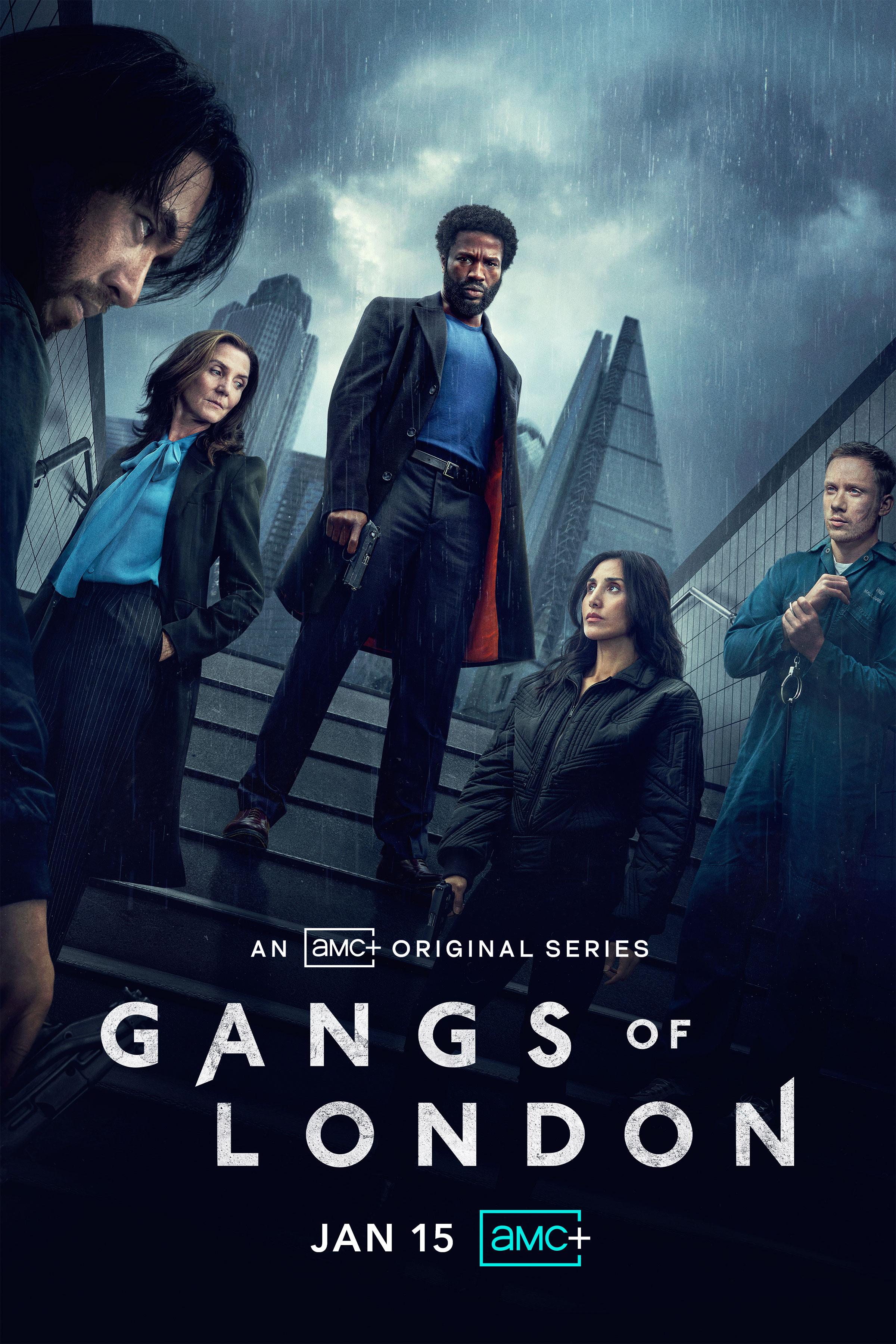
Gangs of London tracks the bloody scramble for control among London's criminal gangs after the assassination of kingpin Finn Wallace. His son Sean must contain the chaos and identify the killers before the entire underworld collapses.
Gangs of London follows Sean Wallace, the volatile heir to slain crime lord Finn Wallace, as he fights to keep rival gangs from tearing the city apart. With Finn's death shattering a long-standing truce, Sean confronts betrayals inside his own organization and threats from outside factions. An undercover detective named Elliot Finch embeds himself in the Wallace crew to expose the killers. Sean’s impulsive decisions escalate street-level violence while he hunts for answers.
As the body count rises, Sean forms uneasy alliances with international players and surviving lieutenants to reassert dominance. Elliot’s investigation reveals layers of corruption that reach beyond the original hit. The series follows the shifting loyalties and brutal reprisals that define the new power structure on London’s streets.
Oops! Is this show WOKE?
Only an account holder or member can file. Cite a scene, a line, or a pattern. Other account holders +1 or −1 that argument, once each. The show is not WOKE until enough of them have given a +1. Enough −1s remove the write-up, and it is no longer shown.
Sign in to file a woke label. One of each criterion per member.
Comments and reviews
Report a mistake
Same rule as woke labels: one report, a written reason, and the community +1 or −1 it — once per member. A net +5 applies the change. Editors can hold it for review, or apply it immediately.
No mistake reports yet.
Sign in to report a mistake. One report per field, per member.
Member review
Ray Okonkwo Member
Oct 20, 2026
★★★★★★★★★★Gangs of London hit me harder than I expected for a show that opens with a kingpin getting taken out and his son scrambling to hold the pieces together. Sean Wallace is not some polished operator; he is volatile, half-trained, and constantly making the kind of call that turns a street problem into a body count. That impulsiveness is the engine. You watch him try to contain the chaos after Finn’s assassination and realize half the damage comes from inside his own circle. The undercover detective Elliot Finch sliding into the crew adds this steady pressure without turning the whole thing into a pure cops-and-robbers setup. He is there to find the killers, but the show keeps him tangled in the same loyalties and lies everyone else is drowning in.
What stuck with me were the mechanics of the power scramble more than any single set piece. The long-standing truce shatters and suddenly you have Albanian crews, Kurdish factions, and leftover Wallace lieutenants all testing the new order. Sean forms these uneasy alliances with international players who clearly see him as temporary. One stretch where he has to sit across from people who want him dead tomorrow and still cut a deal today felt more tense than the gunfights. The fights themselves are brutal and physical in a way that does not feel choreographed for cool points. People get hurt messily. Rooms get wrecked. It sells the idea that control of London’s underworld is not a chessboard; it is a series of ugly, short-term wins that leave everyone bleeding.
I kept coming back to how the show handles betrayal inside the family structure. Sean is hunting for answers about who ordered the hit while his own people are already shopping for the next boss. That double bind makes his decisions worse, not better. You see him escalate street-level violence because he cannot tell friend from opportunist, and the show does not let him off the hook for it. Elliot’s investigation peels back layers of corruption that reach past the gangs into the people who are supposed to be chasing them. It never turns into a lecture. It just keeps showing how the scramble for control feeds on itself.
There is a stretch midway where the body count climbs and Sean has to reassert dominance with the surviving pieces of the old organization. The way those scenes play out—short, sharp conversations followed by sudden violence—felt right for the material. No long speeches about legacy. Just men who know the old truce is gone and are deciding whether to rebuild it or burn the rest down. The international players arriving with their own agendas keep the map from feeling local. London becomes a temporary stage for bigger money and older grudges.
I rated it four because the core hold is strong and the performances sell the volatility without tipping into cartoon toughness. Sean’s version of manhood is messy and costly; the show does not frame ordinary strength as the root of every problem, it just shows what happens when the person holding the center is still half-formed. Elliot’s double life never gets cute. He pays for every step deeper into the Wallace crew. The series trusts the audience to track the shifting alliances without constant reminders, which is rarer than it should be.
Some nights the violence piles up so fast you need a second to remember who is still standing. That is not a flaw here; it matches the premise. The underworld is collapsing in real time and nobody has a clean plan. I sat with the moments where Sean realizes the killers might be closer than the rival gangs and the show lets that paranoia breathe. No big musical cues telling you how to feel. Just the quiet after a meeting that went wrong and the knowledge that the next move will probably make it worse.
By the time the later episodes lock in the uneasy new order, you have watched enough bad decisions and short-lived deals to believe the whole structure is held together by force of will and leftover fear. That is the part that stayed with me. Gangs of London does not pretend the scramble ends clean. It just shows what it costs to keep the city from tearing itself apart while the people doing the keeping are already compromised. Four stars feels honest for something this committed to the mess without losing the thread.