
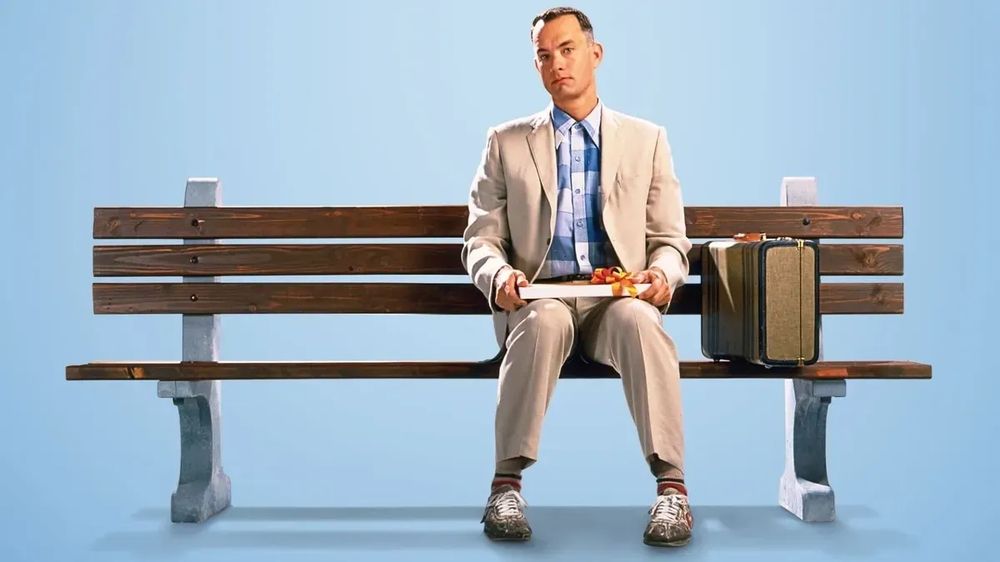



 MOVIE · 1994
Forest Gump
Forest Gump examines the production of Robert Zemeckis' 1994 Oscar-winning film through behind-the-scenes details.
Forest Gump explores the making of the 1994 movie directed by Robert Zemeckis. The production followed the story of Forrest Gump as he encounters major events in American history while navigating personal challenges with his distinctive outlook.
Filmmakers employed practical effects and period recreations to depict key historical moments. Tom Hanks led the cast in bringing the central character to life alongside supporting performances that captured the era's social changes.
Creator: Peyton Reed · IMDb
Oops! Is this show WOKE?
Only an account holder or member can file. Cite a scene, a line, or a pattern. Other account holders +1 or −1 that argument, once each. The show is not WOKE until enough of them have given a +1. Enough −1s remove the write-up, and it is no longer shown.
Sign in to file a woke label. One of each criterion per member.
Comments and reviews
Report a mistake
Same rule as woke labels: one report, a written reason, and the community +1 or −1 it — once per member. A net +5 applies the change. Editors can hold it for review, or apply it immediately.
No mistake reports yet.
Sign in to report a mistake. One report per field, per member.
Member review
Lila Marsh Member
Oct 2, 2026
★★★★★★★★★★I rewatched Forrest Gump last weekend because it had been years, and I wanted to see if it still sat the same way. It does. Tom Hanks plays a man who is not the sharpest tool in the box, yet he carries this steady heart of gold and a plain sense of decency that never feels fake. That comes straight from the way his mother raises him. Sally Field makes those early scenes matter without turning them into a speech. She just keeps telling him he is no different from anybody else, and he believes her, so he moves through the world that way.
The whole thing is framed around him sitting at a bus stop talking to whoever happens to be there. A nurse at first, then other people waiting. He tells his life the way you would tell it to a stranger if you had the time and no reason to dress it up. That choice keeps the movie from getting precious. He talks about leg braces, about discovering he can run faster than most kids, about football, the Army, Vietnam, Bubba, Lieutenant Dan. None of it arrives as a history lesson. It arrives as the things that happened to him while he was trying to stay loyal to the people he cared about.
Jenny is the constant. He has loved her since they were children, and that love does not get rewritten into something more modern or complicated for the sake of the audience. It just is. She drifts in and out, chasing whatever version of freedom she thinks she needs, and he keeps the door open. Some people find her frustrating. I find her human. The movie never asks you to cheer every choice she makes. It just shows what it costs both of them.
Lieutenant Dan is the other relationship that stuck with me this time. Gary Sinise plays a man who expected a certain kind of death and instead gets a life he did not plan for. Forrest does not fix him with clever talk. He just stays. That simplicity works because the film trusts it. Same with Bubba and the shrimp business that comes later. Forrest takes a promise seriously, and that seriousness turns into something larger than he ever aimed for. The comedy in those stretches is gentle rather than mean. He is not the punchline. The world around him sometimes is, but he keeps walking forward.
I like how little the movie lectures. Decades of American events pass through the frame—college football, the war, the ping-pong tours, the running across the country—and Forrest meets them with the same face. He does what is in front of him. When he does not understand something, he says so. When he loves someone, he says that too. There is no second layer of irony telling you what to think about the era. You get the eras because he lived through them, not because the film needs to score points.
The technical side still holds up. The way they drop him into real footage looks clean even now. The score knows when to stay quiet. Robert Zemeckis keeps the camera from fussing. Scenes are allowed to breathe. That bus-stop bench becomes a real place you return to between chapters of his life, and by the end you feel like you have been sitting there with him for a long stretch of time.
I am not giving it a perfect mark only because a couple of the later stretches run a little long for me, and Jenny’s path sometimes feels like it is carrying more symbolic weight than it needs. Those are small things. They do not break the movie. Most of the time I am just glad to be in Forrest’s company. He is decent without being soft, stubborn without being cruel, and he never pretends to be smarter than he is. That combination is rarer on screen than it should be.
What stays with me is the mother’s line about life being like a box of chocolates, not because it is clever, but because Forrest treats it as practical advice. He opens whatever comes next and deals with it. He runs when he needs to run. He stays when staying is the only honest thing left. He builds a life out of loyalty and work and the handful of people who matter to him. The film lets that be enough.
I rated it 4.5 because it earns the affection without demanding it. It is warm, funny in the right places, sad in the right places, and it trusts a simple man to carry a big story. I finished it feeling the way you feel after a long talk with someone who never tried to impress you. That is harder to pull off than it looks, and this one still does it.