
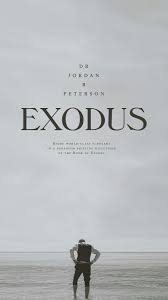



 TV · 2022
Exodus
This multi-part documentary talk show series features an in-depth, analytical roundtable discussion between prominent theological, literary, and historical scholars as they deconstruct the second book of the Bible
The program brings together a panel of authors, artists, and academic thinkers to unpack the foundational texts of the Book of Exodus. Moving chapter by chapter, the episodes explore the profound narrative themes of liberation, divine order emerging from chaos, and the psychological burdens of moving from absolute tyranny to freedom. The discussions place heavy emphasis on the philosophical underpinnings of the biblical text, analyzing how its historical storylines mirror modern societal structures and the universal human struggle against oppression.
Rather than utilizing dramatic adaptations or special effects, the show functions entirely as an intellectual debate on faith, transcendence, and human nature. The participants engage in meticulous semantic breakdowns of specific verses, addressing complex theological concepts such as the nature of divine unity, the moral necessity of sacrifice, and the symbolic significance of historical events like the parting of the Red Sea. By contrasting ancient text with centuries of literary tradition, the series presents a dense, academic exploration of the enduring spiritual and cultural impact of the mosaic law.
Click any of the following icons below to rent or stream it!
Oops! Is this show WOKE?
Only an account holder or member can file. Cite a scene, a line, or a pattern. Other account holders +1 or −1 that argument, once each. The show is not WOKE until enough of them have given a +1. Enough −1s remove the write-up, and it is no longer shown.
Sign in to file a woke label. One of each criterion per member.
Comments and reviews
Report a mistake
Same rule as woke labels: one report, a written reason, and the community +1 or −1 it — once per member. A net +5 applies the change. Editors can hold it for review, or apply it immediately.
No mistake reports yet.
Sign in to report a mistake. One report per field, per member.
Member review
Dan Reilly Member
Oct 19, 2026
★★★★★★★★★★The setup for Exodus looked better on paper than it plays out. A multi-part roundtable of theologians, literary people, and historians sitting down to work through the second book of the Bible chapter by chapter should have real weight. Instead the series settles into a long, low-energy seminar that rarely catches fire. You get faces in chairs, careful sentences, and a lot of circling around the same big words—liberation, order out of chaos, the psychological cost of leaving tyranny. The talk stays abstract for stretches that feel longer than they are. I kept waiting for someone to grab the concrete strangeness of the plagues or the terror of the wilderness and make it land. Too often it just floats.
The decision to strip away every visual aid does not help. No maps, no artifacts, no reenactment footage, nothing to break the monotony. They clearly wanted pure intellectual debate, and that purity becomes the problem. Exodus is a book full of blood, water, dust, and hard marching. When the only thing on screen is a panel talking about “foundational texts” and “philosophical underpinnings,” the drama leaks out. I found myself glancing at the clock more than once, and that should not happen with material this charged. The format treats seriousness as the same thing as stillness, and stillness wears thin across multiple episodes.
Credit where it is actually due. When the group stays close to the wording and structure of the book, the conversation improves. There are solid stretches on the covenant language, on how law is given as an answer to chaos, and on the sheer psychological shock of a people who have only known absolute control suddenly being told they are free. A couple of the participants push past the easy slogans and admit that freedom after slavery is frightening, that divine order is not a soft comfort but a demand. Those moments feel like real work. You catch a flash of why this story still matters and why it keeps being read. The literary and historical angles sometimes click into place without needing to sell you anything extra.
The slide into modern mirroring is where it loses me again. Almost every theme gets pressed into service as a template for today’s power structures and the universal struggle against oppression. Liberation talk starts doing the heavy lifting that patient reading of the text itself should do. The ancient story gets flattened so it can reflect whatever current arrangement the panel wants to critique. I am not against drawing parallels—good books invite them—but here the parallels arrive early and often, and they begin to feel predictable. You can sense the next connection coming before it is spoken. That habit undercuts the claim of deep analysis. If Exodus mainly matters because it sounds like a commentary on present-day systems, then the book itself is being used rather than studied.
The panel is also too polite. Disagreements stay mild and academic. Nobody really forces a hard theological or historical fight. For a show that advertises analytical roundtable discussion, the temperature stays comfortable. A little more friction would have made the hours feel shorter. I wanted someone to press on the harder edges—the violence, the demands, the particularity of the God who speaks in this book—instead of letting every point dissolve into broad human themes. The consensus tone makes the whole enterprise feel safer than the source material ever was.
I still finished more episodes than I expected. The book is inexhaustible, and even a dry treatment cannot erase every insight. When they slow down on the law sections or the building of the tabernacle, the series briefly earns its length. You remember that this is not only psychology or politics; it is a claim about how a people is formed. The panel does not always honor that claim, but they do not erase it either. That is something.
In the end the series is more respectable than alive. It treats the Bible as worth serious hours, which is rarer than it should be, yet the lifeless format and the quick turn toward modern templates keep it from mattering as much as it could. Casual viewers will check out fast. People who already care about the text and can tolerate long stretches of talking heads might pull a few useful observations. I walked away knowing a couple of things I had not framed that way before, but I did not walk away changed. For a project built on one of the central stories of the West, that is a smaller result than the ambition deserved.