



 MOVIE · 2022
Elvis
IN REVIEW · the community verdict is still open
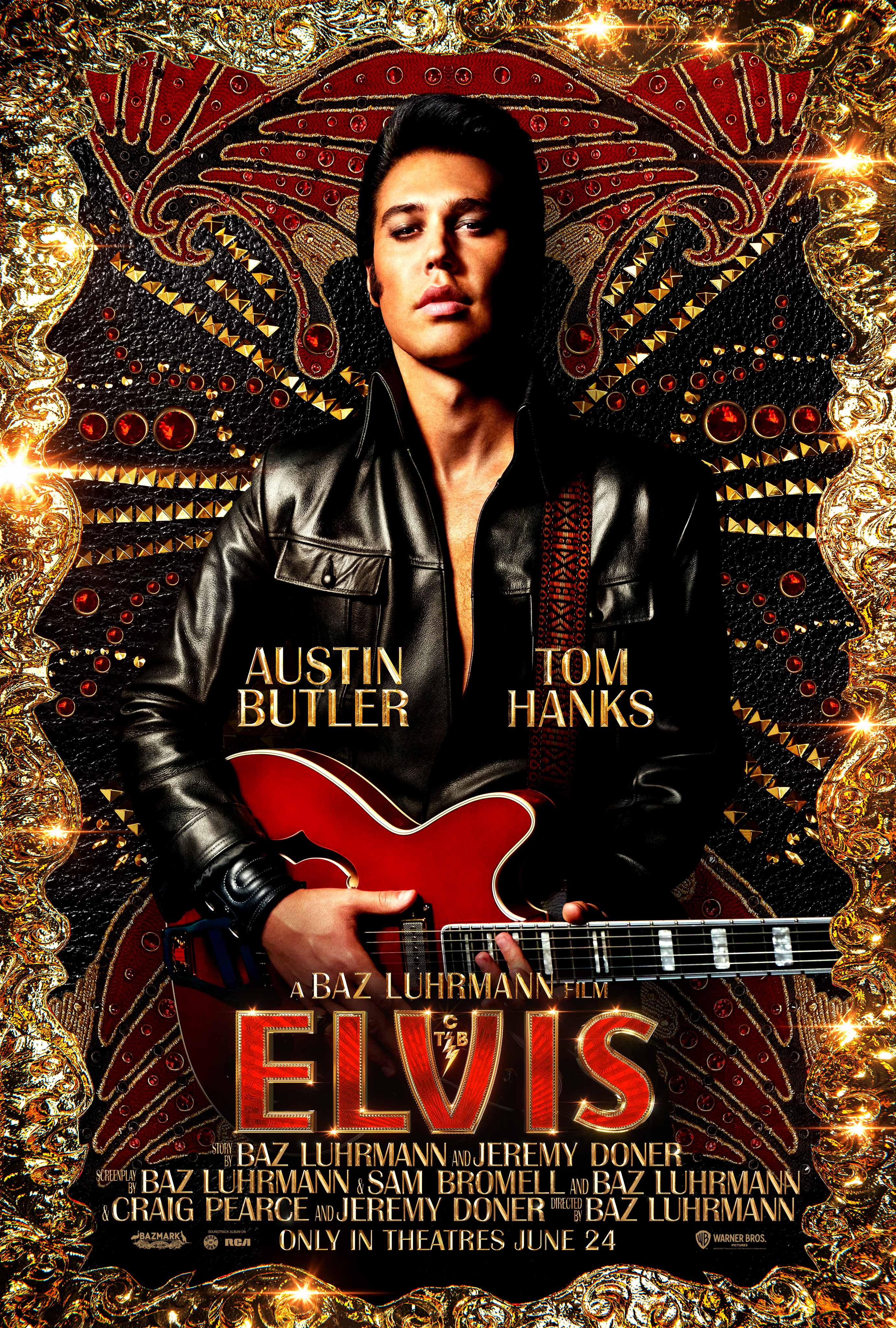
The life story of Elvis Presley as seen through the complicated relationship with his enigmatic manager, Colonel Tom Parker.
Oops! Is this show WOKE?
Only an account holder or member can file. Cite a scene, a line, or a pattern. Other account holders +1 or −1 that argument, once each. The show is not WOKE until enough of them have given a +1. Enough −1s remove the write-up, and it is no longer shown.
Sign in to file a woke label. One of each criterion per member.
Comments and reviews
Report a mistake
Same rule as woke labels: one report, a written reason, and the community +1 or −1 it — once per member. A net +5 applies the change. Editors can hold it for review, or apply it immediately.
No mistake reports yet.
Sign in to report a mistake. One report per field, per member.
Member review
Wes Calder Member
Sep 20, 2026
★★★★★★★★★★Elvis is the kind of big swing that mostly lands because one person refuses to let it tip over. I went in knowing the broad shape of the life the way most people do: the poor kid from the South, the sudden heat of the 1950s, the jumpsuits, the early exit. I had no deep attachment to the catalog and no soft spot for rock-and-roll mythology. The movie still made the personality feel specific rather than legendary, which is harder than it sounds.
Austin Butler carries the whole thing. He gets the voice, the loose hips, the shy grin that turns into something dangerous under lights, and he does it without turning the role into a wax figure. Early on you buy the spark; later you buy the exhaustion. I am usually wary of impersonation as the main event in a biopic, but he holds the center when the film around him starts cutting everything into confetti. That performance is the reason the three hours do not collapse.
Baz Luhrmann does what he always does. The opening stretches are dense with color and movement, gospel bleeding into blues, the young man absorbing everything around him. Then the editing never quite settles. Songs get interrupted before they can sit with you. There are flashes of real brilliance in the staging and the production design, the costumes and sets looking lived-in rather than displayed, but the scissor-happy approach means the music is rarely allowed to breathe. At that runtime the restlessness becomes a tax. Good moments keep getting weighed down by length and by the story’s decision to keep Colonel Tom Parker as the dark weather system over every frame.
The Parker material is the spine, and it is the part that stayed with me. I had heard the outlines before, the writing-credit shakedowns, the Vegas lock-in, the way a manager can smile about partnership while hollowing out a career. Seeing it played out still lands. Tom Hanks under the accent and the padding puts a layer of distance between you and the man, which may be intentional. You watch a con artist attach himself to talent and slowly claim ownership of it. The film is fairly clear-eyed about how much damage an unscrupulous handler can do when the talent is young, grateful, and surrounded by people who need the money to keep coming. That relationship both made Elvis and kept him from moving when the ground under popular music shifted. While other acts were changing the map, he was stuck in a run of thin movie projects. The movie does not invent that trap; it just makes you sit inside it.
The shape is still the familiar biopic arc. Humble start, explosion, excess, decline. Drugs shorten the runway, fame exacts its usual fees, family and fans pull in opposite directions. None of that is new. What keeps it from feeling pure formula is Butler’s hold on the role and the sheer density of the world around him. Luhrmann’s style theoretically fits the energy of the early years, and for stretches it does. Then the frenetic cutting and restless camera start to read as messy rather than electric. After the first burst you brace for more of the same, and the film does calm in places, enough to let the Southern context and the racial lines of the era sit without turning into a lecture. I treated a fair amount of it as speculative drama more than sworn history. Historians will argue the details either way.
Around the two-hour mark the momentum thins. The last stretch feels longer than it is and finishes more unsatisfying than tragic, as if the film itself has run out of ways to surprise you about a life that already feels inevitable. A tighter cut would have helped the songs and the man both. I still had a decent time with it. The highs and lows of the career come through, and sitting with that rise-and-trap pattern feels intimate even when you know the story has been shaped to fit a feature. Butler is the reason it works as well as it does. Everything else is either in service of him or quietly competing with him for oxygen.
I am not racing back for a second viewing. The length and the choppy rhythm keep it from becoming something I would recommend without caveats. But the central performance and the clear-eyed look at how a manager can own a life are enough to make the sit worthwhile once. 3.5 feels right: solid where it counts, overextended where it does not, and honest enough about the cost of the partnership that built the legend and then boxed it in.