
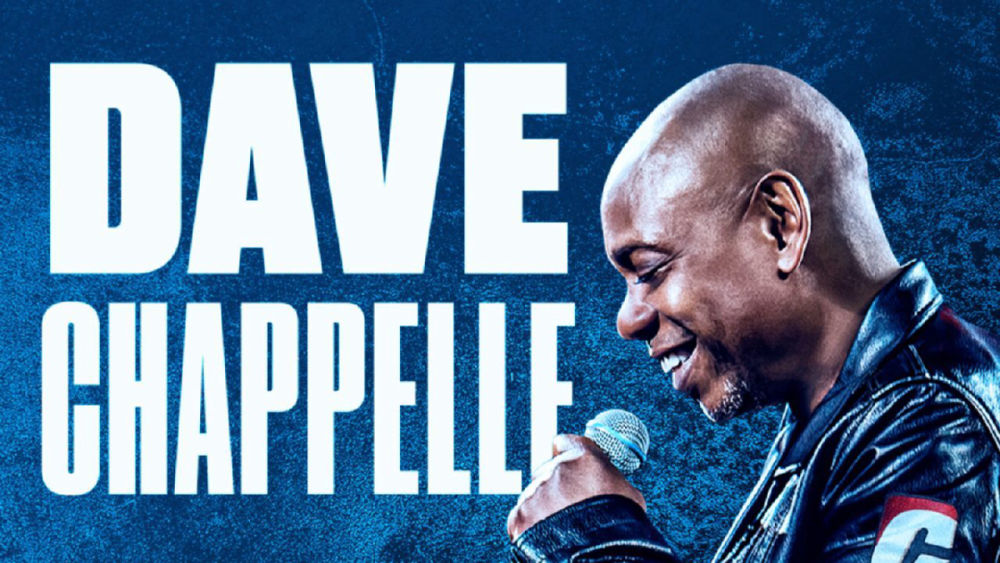



 STAND-UP · 1998
Dave Chappelle
Dave Chappelle delivers calm, conversational stand-up that turns personal stories and cultural double standards into sharp, unfiltered punchlines. Rooms show up for the deadpan pacing, racial candor, and the sense that nothing is off-limits.
Dave Chappelle works a stage with low-key presence and precise timing, letting long setups breathe before the twist lands. His early material draws on family, street life, and the gap between public manners and private reality, told in a voice that stays almost casual until the laugh detonates. He sketches characters in a few lines, then circles back with a sharper angle rather than racing through one-liners. Race and class appear as lived experience, not slogans; the jokes test what an audience will admit out loud. Silence and a raised eyebrow do as much work as the words. Crowds come for that controlled danger—the feeling of hanging with someone who will say the quiet part and still make it funny.
He returns again and again to contradictions people live with, using his own perspective as the filter instead of a moral checklist. The material rewards listeners who prefer honesty over comfort and who laugh when a setup finally pays off after a slow burn. A typical room feels intimate and slightly conspiratorial, energy held tight until a big release, then reset for the next story. What keeps people coming is the craft: clean structure, fearless edges, and punchlines that stick after the lights come up. No lecture tone, no checklist diversity beats—just a comic testing how far a truth can go before it becomes a joke.
Creator: Rikki Hughes
Oops! Is this show WOKE?
Only an account holder or member can file. Cite a scene, a line, or a pattern. Other account holders +1 or −1 that argument, once each. The show is not WOKE until enough of them have given a +1. Enough −1s remove the write-up, and it is no longer shown.
Sign in to file a woke label. One of each criterion per member.
Comments and reviews
Report a mistake
Same rule as woke labels: one report, a written reason, and the community +1 or −1 it — once per member. A net +5 applies the change. Editors can hold it for review, or apply it immediately.
No mistake reports yet.
Sign in to report a mistake. One report per field, per member.
Member review
Wes Calder Member
Oct 9, 2026
★★★★★★★★★★I spent an evening bouncing through early Chappelle clips from around ’98, the kind where the stage lights are flat and the mic cord still matters. No big production, just him standing there in that quiet way he has, talking like the joke might or might not show up. It does, usually a beat later than you expect, which is half the point. The deadpan is already fully formed. He will sketch a relative or some guy from the block in three lines, let the room sit with it, then come back at the same story from a sharper angle instead of racing to the next one-liner. That circling is what I keep coming back to. A lot of comics in that era were machine-gunning premises; he was content to hang around one idea until it got uncomfortable and then funny again.
The material leans on family, street life, and the gap between what people say in public and what they actually do. Race shows up as lived detail rather than a speech. He will describe a double standard, pause, raise an eyebrow, and the laugh does the rest of the work. Silence is part of the act. I noticed that more than once—clips where the room goes quiet for a second longer than feels polite, and he just waits it out. That controlled danger is already there. You feel like you are hanging with someone who might say the thing everyone else is carefully not saying, and he knows it.
Not every bit holds the same weight now. A few premises feel locked to the late ’90s in a way that makes the punchline land softer than it probably did then. I am not talking about the racial candor; that still cuts clean. I mean the occasional setup that assumes a shared cultural reference or a certain nightclub energy that has thinned out. When the material is purely observational and personal, it ages better. When it leans on a specific cultural flashpoint of the moment, you can feel the years. That is part of why I land at 3.5 instead of reaching higher. The craft is obvious. The hit rate is high but not automatic across every clip I watched in sequence.
What works consistently is the low-key presence. He does not bounce around the stage or beg for the laugh. He talks, almost conversational, and trusts the twist. Long setups that could collapse under a lesser comic stay afloat because the voice never gets frantic. You can hear the difference between someone performing “edgy” and someone who has simply decided nothing is off-limits and will live with the consequences. Early on he is already testing what an audience will admit out loud. Class and race sit in the same sentences without turning into slogans. That still feels rare.
I kept noticing how little he needs to do with his face. A slight shift, a look past the lights, and the room fills in the rest. Clips of him doing character work in miniature—someone’s uncle, a hustler, a cop with a certain tone—show how fast he can build a person and then dismantle the polite version of that person. The best stretches are the ones where he starts in anecdote and ends in a cultural observation you did not see coming, delivered like he is still just telling the story. That is the Chappelle rhythm in miniature. It is not one-liners strung together. It is a long breath and then the detonation.
Some of the online noise around him now is about later specials, Saudi gigs, who weaponized which joke, who he likes or does not like in the current scene. None of that is in these ’98 clips, and I am glad I stayed with the older material instead of chasing the latest argument. Watching the early stuff back-to-back makes the continuity clearer: the calm delivery, the willingness to sit in the tension, the sense that the joke is a test of the room as much as entertainment. You can also see the roots of the longer storytelling he would lean into later. Even then he preferred a full circuit around a story over a quick hit.
I do not need him to be the greatest of all time for the set to work. Plenty of people will put him there without blinking. For me the pleasure is more specific—the timing, the refusal to oversell, the way personal mess turns into a clean punch without apology. A few bits left me colder than they probably should have; a few made me laugh harder than I expected from something that old. That mix is honest enough. The persona is already locked in: unhurried, precise, slightly dangerous in the best sense. If you only know the later, longer monologues, these shorter early pieces are worth the time just to watch the same engine running at a smaller scale. He lets the setup breathe. The twist arrives when it is ready. The eyebrow does as much work as the sentence. That is still the whole trick, and it was already working.