



 TV · 2018
Corner Gas
In the fictional prairie town of Dog River, gas-station owner Brent LeRoy and a cast of locals keep busy doing almost nothing of consequence. Everyday errands, petty rivalries, and roadside diner chatter fill the days.
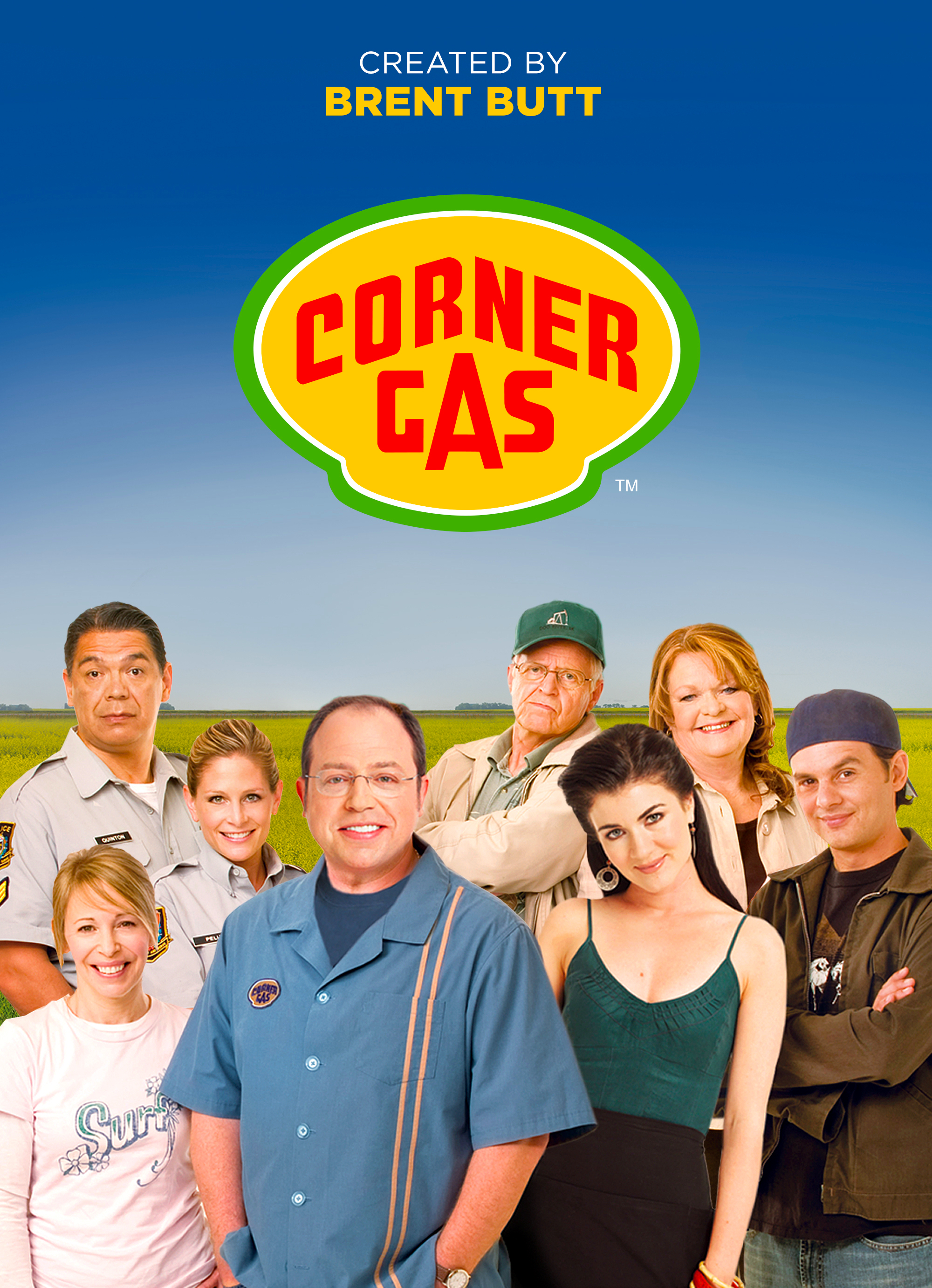
Corner Gas follows Brent LeRoy, proprietor of the only gas station for miles in Dog River, Saskatchewan, as he drifts through quiet days with family and regulars. His parents Oscar and Emma drop by with opinions and errands, while employee Wanda handles the till and the gossip. Across the lot, Lacey runs the competing diner and trades barbs with Brent over customers and coffee. Hank wanders in seeking company or a scheme, and local cops Davis and Karen stop by between uneventful patrols. Episodes turn on small mix-ups, town quirks, and the slow rhythm of prairie life rather than big plots.
Brent and Lacey keep their friendly rivalry going while the Leroy family dynamics supply running jokes about chores and stubborn habits. Wanda, Hank, and the officers cycle through the station and diner with new petty problems each week. The animated series keeps the same core group navigating road trips that go nowhere, community events that fizzle, and conversations that loop back on themselves. Relationships stay rooted in long familiarity, and the town itself remains the constant backdrop for low-stakes comedy.
Click any of the following icons below to rent or stream it!
Oops! Is this show WOKE?
Only an account holder or member can file. Cite a scene, a line, or a pattern. Other account holders +1 or −1 that argument, once each. The show is not WOKE until enough of them have given a +1. Enough −1s remove the write-up, and it is no longer shown.
Sign in to file a woke label. One of each criterion per member.
Comments and reviews
Report a mistake
Same rule as woke labels: one report, a written reason, and the community +1 or −1 it — once per member. A net +5 applies the change. Editors can hold it for review, or apply it immediately.
No mistake reports yet.
Sign in to report a mistake. One report per field, per member.
Member review
Dan Reilly Member
Oct 19, 2026
★★★★★★★★★★Corner Gas never quite convinced me the writing was firing on all cylinders. Some episodes land with a soft thud, the kind where you can see the punchline forming three minutes early and the mix-up feels recycled from the week before. Compared to tighter American sitcoms that keep every scene sharp, this one sometimes lets the prairie pace become an excuse for thin plotting. A clunker here and there is hard to ignore when you’re waiting for the next spark.
That said, the show earns its keep through the people rather than the machinery. Brent LeRoy running the only gas station for miles feels right in a way that bigger productions often miss. He isn’t trying to be clever or deep; he just exists in that half-bored, half-amused way that matches the town. Oscar and Emma dropping by with their opinions and errands never turn into broad caricatures the way rural parents sometimes do on television. Wanda at the till, Lacey across the lot with the diner, Hank drifting in looking for company or a half-baked idea—these are the kinds of regulars you actually meet in small places, not the ones written to represent something larger.
I first ran into it years back on Canadian satellite and kept watching because it refused to pretend life in Dog River needed stakes. Everyday errands, petty rivalries, roadside chatter: that is the whole engine. The friendly back-and-forth between Brent and Lacey over customers and coffee never escalates into forced romance or moral lessons. The local cops, Davis and Karen, stop by between patrols that amount to almost nothing, and that emptiness is treated as normal rather than a setup for slapstick crisis. Most sitcoms would stuff a car chase or a big misunderstanding into those empty hours. This one lets the quiet sit there and still find jokes in it.
The silliness can tip into predictability, no question. Once you know Hank will wander in with some scheme that goes sideways, or that Oscar will dig in on some pointless principle, the rhythm becomes familiar. Yet the offbeat texture of the cast kept me from minding too much. These characters stay consistent without turning into catchphrase machines. Brent’s dry reactions, Lacey’s practical edge, the way the whole town circles the same few blocks and the same few conversations—it adds up to something that feels lived-in instead of manufactured. You don’t get the sense anyone behind the camera is chasing awards or relevance. They’re just filling the days the way people in a place like that actually do.
What works best is the refusal to inflate small things. A rivalry over who gets the customers, a family errand that goes slightly wrong, gossip at the till—these stay small. The show trusts that the audience can find the humor without a laugh track screaming at every beat or a subplot about larger social issues. In that sense it really does play like a Canadian take on the nothing-much sitcom form, only the nothing happens under a wide sky instead of in a city apartment. The prairie setting isn’t window dressing; it shapes how slowly everything moves and how little anyone expects the day to deliver.
I rated it a solid four because the weak episodes never quite erase the pleasure of the stronger ones. When the writing clicks, the banter feels natural and the petty squabbles land cleanly. When it doesn’t, you still have the company of people who seem like they might actually live there. That balance is rarer than it should be. Plenty of shows aim for quirky small-town charm and end up straining for it. Corner Gas mostly just sits in the charm without announcing it.
The slow rhythm will lose some viewers who need bigger swings. Fair enough. If you want escalating plots or characters who transform over a season, this isn’t built for that. It is built for the quiet satisfaction of watching the same handful of locals trade the same kinds of barbs week after week and still find new angles on nothing much. Hank’s need for company, Wanda’s handle on the gossip, the constant low-level friction between the gas station and the diner—these loops become comfortable rather than stale once you settle into them.
I keep coming back to how little consequence everything carries and how that becomes the point. No one is saving the town or discovering hidden depths. They are filling tanks, pouring coffee, arguing about whose turn it is to deal with some minor annoyance. That honesty about the scale of prairie life is what separates it from louder comedies that pretend every day needs a crisis. The cast sells the ordinary without winking too hard at the camera. You believe Brent would rather lean on the counter than chase adventure. You believe Lacey would rather win the small customer wars than stage a grand confrontation.
In the end the show’s limitations and its strengths come from the same place. The writing isn’t always as consistent as the best of the form, and a few episodes feel like they were assembled from leftover bits. Yet the offbeat regulars and the commitment to small stakes make those dips easier to forgive. It never pretends Dog River is more exciting than it is, and that restraint turns out to be its real comic engine. Four stars feels right: not perfect, not trying to be, just steadily good company for anyone who can sit with quiet days and petty rivalries without needing them dressed up as something else.