



 TV · 2021
Clarkson's Farm
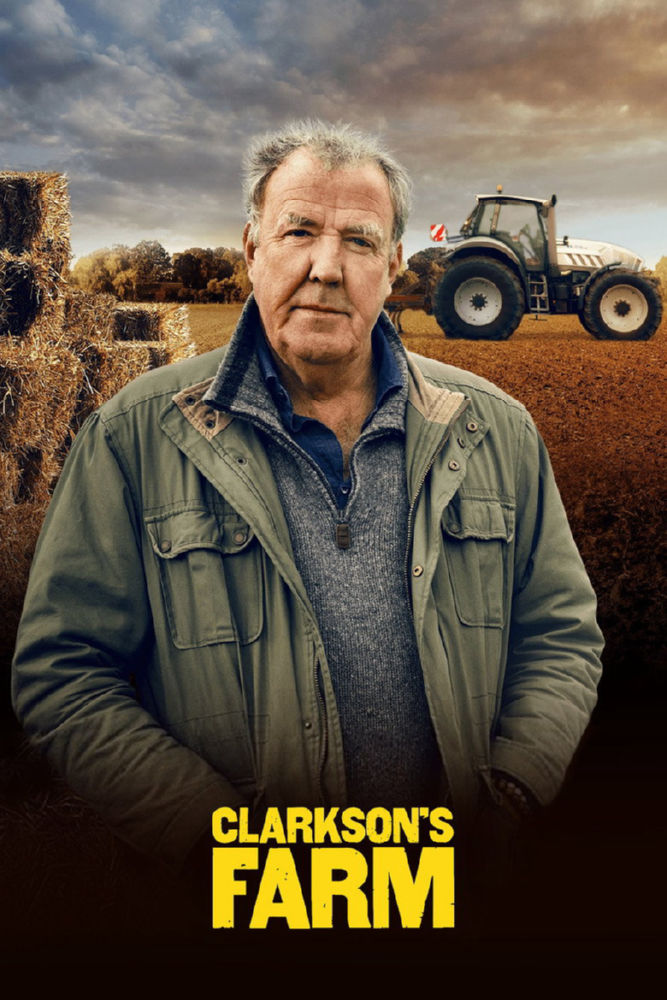
Jeremy Clarkson takes over a Cotswolds farm and discovers that sheep, crops, and paperwork are far harder than presenting Top Gear. The series tracks his chaotic, often hilarious attempts to make the land pay while leaning on experienced locals.
Clarkson's Farm follows Jeremy Clarkson as he buys and tries to operate Diddly Squat Farm in the English countryside. Used to studio work and fast cars, he quickly collides with the realities of lambing, harvesting, and keeping animals alive through bad weather. Local farmhand Kaleb Cooper becomes his indispensable, frequently exasperated guide, correcting Clarkson's shortcuts and explaining why certain jobs cannot be skipped. Land agent Charlie Ireland and partner Lisa Hogan appear as Clarkson navigates planning rules, market prices, and the sheer physical grind of the seasons. Early episodes show him struggling with everything from fencing to tractor work while the camera captures both the failures and the occasional small victories.
Later stretches of the series push Clarkson deeper into livestock decisions, crop rotations, and side ventures meant to keep the farm solvent. He deals with veterinary crises, unpredictable yields, and the constant need to hire or rely on people who actually know the land. Relationships with Kaleb, Charlie, and other regulars drive much of the day-to-day friction and humour as Clarkson learns which of his big ideas survive contact with real farming. The show stays rooted in the concrete problems of one working farm rather than abstract messaging, ending seasons on the practical outcomes of each year's gambles with animals, machinery, and the weather.
Oops! Is this show WOKE?
Only an account holder or member can file. Cite a scene, a line, or a pattern. Other account holders +1 or −1 that argument, once each. The show is not WOKE until enough of them have given a +1. Enough −1s remove the write-up, and it is no longer shown.
Sign in to file a woke label. One of each criterion per member.
Comments and reviews
Report a mistake
Same rule as woke labels: one report, a written reason, and the community +1 or −1 it — once per member. A net +5 applies the change. Editors can hold it for review, or apply it immediately.
No mistake reports yet.
Sign in to report a mistake. One report per field, per member.
Member review
Toni Briggs Member
Oct 20, 2026
★★★★★★★★★★Clarkson’s Farm works because it never pretends farming is glamorous or that Jeremy Clarkson is secretly competent at it. He buys a chunk of Cotswolds land, calls it Diddly Squat, and immediately collides with weather, livestock, and rules that do not care about his television past. That collision is the entire engine of the show, and it runs clean for most of the run.
What lands hardest is how little the series lets him off the hook. He wants shortcuts. He wants big machinery to solve small problems. He wants the farm to behave like a studio set. It refuses. Sheep die. Crops fail. Paperwork multiplies. The camera stays with him through the failures instead of cutting away to a witty one-liner that erases them. That honesty is rarer than it should be. You watch a man who is used to controlling the frame suddenly lose control of almost everything that matters on the ground, and the show is content to let the discomfort sit.
Kaleb Cooper is the necessary counterweight. He is not there to be colorful sidekick material. He is there because he knows the work and will not let Clarkson skip steps that keep animals alive or fields productive. Their arguments feel earned rather than staged. Kaleb’s exasperation is practical, not performative. When he corrects a fence line or refuses to rubber-stamp a bad idea, you understand why. Charlie Ireland brings the cold water of numbers and regulations, and Lisa Hogan’s presence keeps the whole operation from turning into pure chaos theater. The supporting cast never feels like window dressing; they are the reason anything gets done.
I came to this after years of watching Clarkson do the loud, fast version of himself. Here the volume is lower and the stakes are smaller in scale but heavier in consequence. A bad harvest is not a punchline you drive away from. A sick animal is not a bit. The series understands that difference and mostly respects it. There are still jokes, plenty of them, and some of the set pieces with tractors or temporary shops are openly comic. But the comedy sits on top of real friction instead of replacing it. That balance is why I rated it as high as I did.
The farming detail is specific without becoming a lecture. You learn why certain jobs cannot wait, why weather windows matter, why local knowledge beats a celebrity budget. Clarkson’s ignorance is the entry point for the audience, and the show uses it cleanly. He asks the dumb questions so the experienced people can answer them in plain language. It never feels like the production is trying to make you feel superior to him or to farmers in general. It just shows the gap between assuming you can wing it and discovering you cannot.
Pacing across the seasons holds up better than most reality-adjacent television. Early episodes establish the baseline of incompetence and stubbornness. Later ones layer on market pressures, planning boards, and the slow grind of trying to turn a loss-making patch of land into something that pays. The show does not resolve every conflict neatly. Some ventures flop. Some animals do not make it. That refusal to tidy everything up keeps it from sliding into feel-good countryside fantasy. You finish an episode aware that the next season will bring another set of problems that money alone will not fix.
I do not need every television show to teach me a lesson, but this one accidentally does something useful. It makes the physical and administrative weight of food production visible without turning farmers into saints or Clarkson into a reformed hero. He remains abrasive, impatient, and frequently wrong. The land remains indifferent. The combination is funnier and more interesting than either element would be alone. There are stretches where the celebrity frame still peeks through—moments that feel a little too aware of the audience—but they are outnumbered by scenes that simply watch a difficult job being done badly and then slightly less badly.
The series also sidesteps the usual traps of this kind of project. It does not flatten the locals into rustic stereotypes. It does not treat the countryside as a lifestyle brand. It does not insist that every setback is secretly a blessing. When something goes wrong, it usually stays wrong long enough for you to feel the cost. That restraint is part of why the funny parts actually land. You have been given enough real texture that the absurdity has something to bounce off.
Four and a half stars feels right. It is not perfect television. Some episodes lean harder on Clarkson’s persona than on the farm itself, and a few running gags wear thin. But the core proposition—put a famous amateur into a serious, unforgiving trade and keep the cameras rolling while he flails—holds up across multiple seasons without collapsing into pure stunt. I keep coming back to the simple pleasure of watching someone who is used to winning on personality discover that personality does not move sheep or fill out the right forms. The show never gets tired of that discovery, and neither do I. It is one of the few recent series that treats competence as something you earn in dirt and weather rather than something you declare. That alone makes it worth the time.