
 MOVIES
 TV
 VIDEO GAMES
 PODCASTS
 VIDCASTS
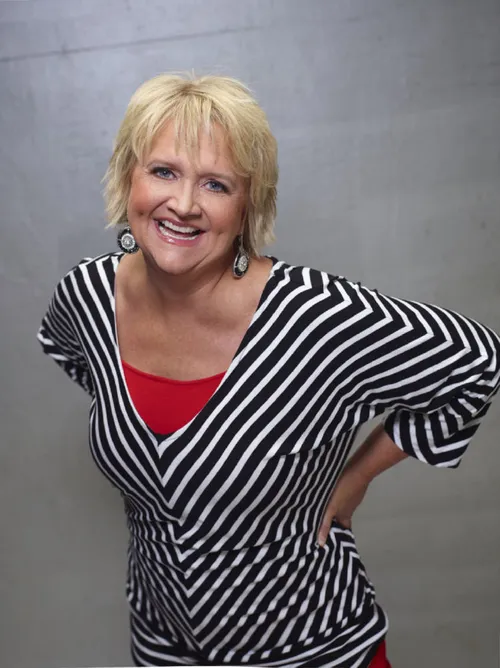


 STAND-UP
Chonda Pierce
Chonda Pierce delivers clean, faith-rooted stand-up built on personal stories, family chaos, and Southern observational humor. Crowds come for warm, rapid-fire anecdotes that stay PG and grounded in everyday Christian life.
Chonda Pierce works a warm, confessional stage persona that mixes Southern storytelling with quick punch lines about marriage, motherhood, church life, and the absurdities of growing older. A typical set moves from a chatty setup into cascading personal anecdotes, often circling back to her own mishaps and the people closest to her. She keeps the language clean and the pacing conversational, letting recognition and timing carry the laughs rather than shock. Topics stay close to home: family dynamics, faith communities, travel on the road, and the gap between public polish and private mess. Rooms that book her generally expect upbeat, relatable material that never turns mean-spirited or explicit.
She returns often to the tension between trying to live well and the comic failures that follow, using those moments to keep the audience on her side. The jokes are aimed at people who want comedy they can share across generations and who enjoy hearing faith treated as ordinary life rather than a punch line target. The room usually feels friendly and participatory, with laughter coming in waves of recognition rather than edge. Sets tend to close on an affirming note without turning into a sermon, leaving the crowd with the sense of having spent time with a sharp, self-deprecating friend.
Oops! Is this show WOKE?
Only an account holder or member can file. Cite a scene, a line, or a pattern. Other account holders +1 or −1 that argument, once each. The show is not IS WOKE until enough of them have given a +1. Enough −1s remove the write-up, and it is no longer shown.
Sign in to file a woke label. One of each criterion per member.
Comments and reviews
Report a mistake
Same rule as woke labels: one report, a written reason, and the community +1 or −1 it — once per member. A net +5 applies the change. Editors can hold it for review, or apply it immediately.
No mistake reports yet.
Sign in to report a mistake. One report per field, per member.
Member review
Becky Soto
Oct 9, 2026
7/10I spent a stretch of the evening bouncing through Chonda Pierce clips, one after another, and walked away with that familiar mix of smiles and the sense that I had sat with somebody who talks the way people actually talk at the kitchen table. She does clean, faith-rooted stand-up built on personal stories, family chaos, and Southern observational humor, and the clips make that plain without needing a big introduction. You get warm, rapid-fire anecdotes that stay PG and grounded in everyday Christian life, and the persona stays confessional without turning brittle. What stuck with me first was the Spanx material. She puts on the shapewear and the whole bit becomes a wrestling match with fabric and gravity. There is a moment where she describes the fat just oozing out in a way that made me laugh out loud in an empty room, partly because it is physical comedy told through words and partly because she refuses to make it mean or crude. It is the kind of joke that works because almost everyone has fought a garment that promised miracles and delivered a hostage situation. She does not linger on body shame; she rides the absurdity and keeps moving. That same stretch circles through travel stories, including bits from bringing comedy overseas, and the Spanx trouble shows up again in a setting where polish is supposed to matter. The contrast is funny without needing a lecture. Another beat that landed cleanly was the loquacious story. She was voted most loquacious in school and, in her telling, treated the word like it might need antibiotics. I liked how she let the misunderstanding sit there long enough for the room in the clip to catch up, then stacked smaller observations on top of it. That is her rhythm. Chatty setup, then cascading personal anecdotes that circle back to her own mishaps and the people closest to her. Marriage, motherhood, church life, the gap between looking put together and feeling like a mess behind the scenes. She keeps the language clean and the pacing conversational, so recognition and timing do most of the work instead of shock. I am not usually drawn to comedy that lives entirely inside church culture, but she does not weaponize faith against the audience. It is the water she swims in, and the jokes come from ordinary friction inside that world rather than from dunking on outsiders. I also caught pieces where she gets quieter and talks around loss and the seasons when life stops feeling funny. She does not turn those stretches into a TED talk. She names the weight, then finds a way back to a punch line that still feels honest. That balance is why her sets hold together across several clips instead of collapsing into one long rant. There is a pep-talk bit aimed at someone on staff that works a little too well, and the payoff is pure Chonda: encouragement that accidentally creates a new problem. Small, specific, and easy to picture. The tattoo story and the suit that cost a ridiculous amount of money land in the same family of jokes. She is good at letting a detail look ordinary until the price tag or the permanence of the choice snaps into focus. At the same time, a 3.5 feels right to me because the material can start to rhyme with itself. After a handful of clips, you know the contour of the next anecdote before she finishes the setup. Family dynamics, road life, the public polish versus private mess. It is comforting more than surprising, and on a night when I wanted sharper turns, I felt the sameness. The clean approach is a real choice and I respect it, especially when so much stand-up treats meanness as proof of courage. Still, clean does not automatically equal tight. A few bits stretch past the laugh and into friendly storytelling that could have used one more edit. Southern observational humor thrives on specificity, and when she is locked in on a concrete mess-up, she is strong. When she drifts into general church-life chatter, the energy softens and I found myself waiting for the next concrete object, the next stubborn piece of clothing, the next word she misread as a medical condition. Her stage presence in the clips is warm without being sticky. She sounds like someone who has told these stories on a lot of stages and still enjoys the tell. Crowds in the background sound like they came expecting upbeat, relatable material and got it. I never felt talked down to, and I never felt she was auditioning for edge she does not have. That matters. There is a whole lane of comedy that treats faith, especially the Christian kind I grew up around, as a costume for the bigot. She simply does not play that game. She talks about conservative church childhood, family, and the oddities of getting older as if those are normal human subjects, because for her they are. The humor stays rooted in recognition. You either have fought shapewear on a work trip or you know someone who has. You either have been the chatty kid or you have sat next to one in a pew. I would watch more of her without hesitation on a night when I want laughter that does not leave a film of cynicism behind. The Spanx fight, the loquacious diagnosis, the road stories, and the quieter turns about hard seasons are the pieces I will remember. The rest sits in that solid middle where the comic is clearly good at her craft and the set is pleasant company, even if it does not rearrange how I think about stand-up. That is a fair place to land. She does not miss as often as some cleaner comics do, and she rarely forces a point. For me that earns the three and a half without needing to pretend every clip was a highlight. If you like personal, faith-adjacent storytelling with quick punch lines and no nastiness, these clips will feel like time well spent. If you need constant invention or a harder edge, you may drift the way I did in the softer stretches. Either way, she sounds like herself, and that is rarer than it should be.