




 MOVIE · 2016
Captain Fantastic IS WOKE
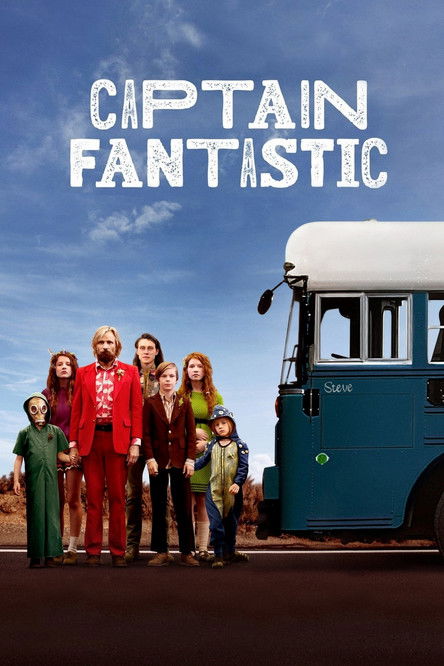
A father who is raising his children off the grid and in the woods is forced to bring them into modern society after an unexpected turn of events.
In the forests of the Pacific Northwest, a father devoted to raising his six kids with a rigorous physical and intellectual education is forced to leave his paradise and enter the world, challenging his idea of what it means to be a parent.
WHAT CRITERIA MAKES IT WOKE?

Oops! Is this show WOKE?
Only an account holder or member can file. Cite a scene, a line, or a pattern. Other account holders +1 or −1 that argument, once each. The show is not WOKE until enough of them have given a +1. Enough −1s remove the write-up, and it is no longer shown.
Sign in to file a woke label. One of each criterion per member.
Comments and reviews
Report a mistake
Same rule as woke labels: one report, a written reason, and the community +1 or −1 it — once per member. A net +5 applies the change. Editors can hold it for review, or apply it immediately.
No mistake reports yet.
Sign in to report a mistake. One report per field, per member.
Member review
Wes Calder Member
Sep 24, 2026
★★★★★★★★★★Captain Fantastic sat on my list for a long time before I finally watched it. Viggo Mortensen plays a father who has pulled his six kids out of ordinary life and into the woods of the Pacific Northwest, training them hard in body and mind while keeping the rest of the world at arm’s length. An unexpected event forces the family back toward civilization, and the movie spends its time watching what that collision does to everyone involved.
I gave it a 4. It earns that without needing to shout about it. Mortensen keeps Ben Cash grounded; you never catch him winking at the camera or softening the character into a lovable eccentric. The man genuinely believes the system out there will hollow his children out, so he builds something else. The kids match him in seriousness more often than not. Their knowledge is real, their physical competence is real, and their social awkwardness is also real. That last part matters. The film lets you see the cost of the experiment without turning the father into a cartoon villain or a pure hero.
What works is the refusal to pick a clean winner. The forest life looks free until you notice how much it depends on one man’s will and how little practice the children have with ordinary friction. The relatives they encounter live softer lives full of rules, medications, and small talk that feels dead on arrival. Neither side is allowed to claim the moral high ground for long. Parenting ideals always look better in theory than in the messy middle, and the movie understands that. Ben’s certainty starts to fray once the older kids begin asking whether the isolation was protection or just another kind of control. That tension feels honest.
I am not raising anyone in a teepee, but the pull toward sheltering kids from noise and screens is familiar enough. Most people who have looked at modern childhood feel some version of it. The film catches that impulse without turning it into a lecture or a recruitment pitch. It also catches the arrogance that can hide inside good intentions. Ben can recite political theory and field-dress a deer, yet he still has to learn that other adults are not automatically the enemy. Those lessons arrive sideways rather than through tidy speeches.
A few stretches lean a little heavy on the family’s superiority. Encounters with outsiders sometimes stack the deck so the Cash kids look sharper by default. The dialogue can tip into essay mode when they start correcting the world around them. Still, the movie usually pulls back before it becomes pure advocacy. It trusts the audience to notice when Ben is right and when he is simply unwilling to admit limits. That balance is rarer than it should be.
The Northwest locations do quiet work. Trees, dirt roads, and cold water feel like places a person could actually disappear into, not postcard scenery. The camera stays patient. There is no frantic cutting to manufacture energy the story has not earned. The score stays out of the way most of the time, which helps. Runtime sits in a reasonable place; it does not stretch the central idea past the point of usefulness.
Performances hold it together. The younger actors feel like siblings who have spent years inside the same intense curriculum rather than a cast assembled for charm. One or two of the older kids carry the real emotional weight when doubt creeps in, and those scenes land without big monologues. Mortensen’s restraint helps everyone else. He plays a man who would rather be right than liked, then slowly discovers that being right is not always the same as being useful to the people he loves.
I have seen films that romanticize off-grid living until it becomes pure fantasy, and others that treat any rejection of mainstream life as pathology. This one sits in the uncomfortable middle longer than most. It lets you admire the discipline and still wince at the blind spots. The ending smooths a few edges that real life would leave jagged, but that is the usual bargain with narrative. Even so, the questions it raises about freedom, education, and what children actually need stick around after the credits.
Four stars feels right. It is not perfect and it does not pretend to solve the problems it raises. It simply watches a committed father run into the limits of his own design and refuses to look away. That is enough to make it worth sitting with. I may not agree with Ben Cash on much, but I recognized the stubbornness. Most of us have met some version of it, or carried a quieter one ourselves.