



 MOVIE · 1985
Brazil
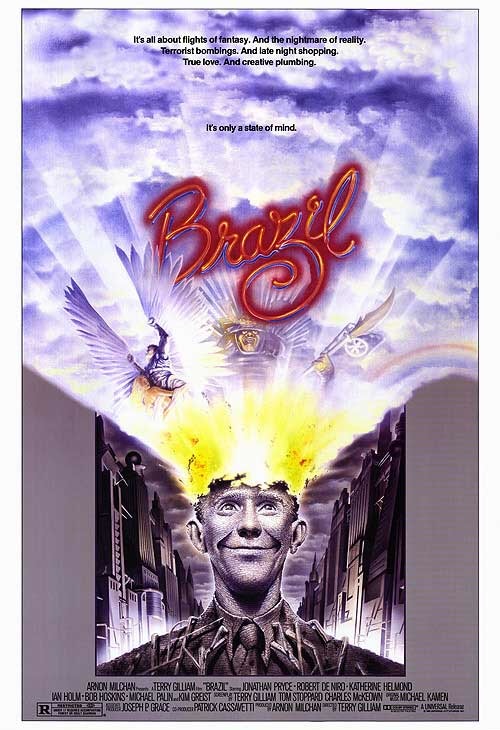
Jonathan Pryce, Robert De Niro and Michael Palin star in this landmark cult classic about a government clerk in a future world who gets caught up in a case of mistaken identity.
Oops! Is this show WOKE?
Only an account holder or member can file. Cite a scene, a line, or a pattern. Other account holders +1 or −1 that argument, once each. The show is not WOKE until enough of them have given a +1. Enough −1s remove the write-up, and it is no longer shown.
Sign in to file a woke label. One of each criterion per member.
Comments and reviews
Report a mistake
Same rule as woke labels: one report, a written reason, and the community +1 or −1 it — once per member. A net +5 applies the change. Editors can hold it for review, or apply it immediately.
No mistake reports yet.
Sign in to report a mistake. One report per field, per member.
Member review
Toni Briggs Member
Oct 2, 2026
★★★★★★★★★★Brazil sits in that rare pocket of science fiction that still feels like it was built out of somebody’s actual nightmares rather than a studio checklist. I came back to it again last week, Director’s Cut only, and it hit with the same force it did the first time I saw it years ago. Terry Gilliam’s imagination really is otherworldly; there is no clean template for the way he stacks whimsical gadgets on top of grinding state terror and somehow makes both feel inevitable. The ducts alone could star in their own film. Everything wheezes and clanks and leaks while the paperwork multiplies like a living thing. You leave the movie feeling slightly short of breath yourself.
Sam Lowry is not a hero in the usual mold. He is a timid clerk who wants nothing more than to keep his head down and dream about a woman who may or may not exist. That quiet desperation is what sells the whole thing. When a single misprinted form starts the machinery of the Ministry rolling in the wrong direction, the cruelty that follows is bureaucratic rather than theatrical. Nobody needs to twirl a mustache. The system simply grinds. I have always liked that the film never winks at you to say the satire is temporary. It treats the endless forms and the broken heating and the plastic surgery obsession as ordinary facts of life, which makes the terror land harder.
People sometimes rank this beside Blade Runner, and I understand why. Both movies set a benchmark for what modern sci-fi could look like when it stopped chasing clean futures and started staring at the mess we already live in. Great acting across the board helps. Jonathan Pryce carries Sam’s small rebellions with a kind of exhausted dignity, and the supporting faces never feel like they wandered in from a comedy sketch even when the machines are doing slapstick. The soundtrack does quiet work too; it never announces itself, it just settles into the same dream-and-nightmare rhythm the pictures are using. This is one of my all-time favourite sci-fi movies for exactly that reason. It is not trying to be cool. It is trying to be true to a certain kind of institutional madness, and it succeeds.
What keeps me at four stars instead of the full five is a personal quibble more than a failure of the film. Gilliam’s visual invention is so relentless that every now and then I feel the frame getting crowded just for the pleasure of crowding it. A duct repair that turns into a wrestling match with technology is funny and horrifying at once, but a couple of those set pieces go on a beat longer than they need to. The same density that makes the world feel lived-in can also make a viewer check his watch. I would not cut much, and I would never touch the ending, but I notice the length when I am not completely lost in it. That is my only real reservation, and it is minor next to what the movie gets right.
The dream sequences still work. They are not pure escape; they are the only place Sam can still move freely, and watching those flights of fancy get infected by the same Ministry logic is quietly devastating. Reality and utopia and nightmare keep trading places until you stop trying to sort them. That is the film’s real achievement. It does not lecture you about totalitarianism. It drops you inside a city that has already lost the argument and then asks how much of yourself you are willing to feed the paperwork to stay safe. Sam’s small acts of decency feel expensive precisely because the world charges so much for them.
I keep thinking about the way ordinary manhood is allowed to stay ordinary here. Sam is not framed as the root of the harm; the system is. He is simply a man trying to correct a file and protect someone he has only half met, and the movie respects that without turning it into a sermon. No identity checklist is doing the storytelling. Character and plot carry the load. In an era when a lot of science fiction feels obligated to announce its virtues before it shows you anything, Brazil just builds its world and lets the dread accumulate. That restraint is part of why it still feels fresh.
If you have only seen the studio cut, do yourself the favor and switch. The longer version is the one that earns the reputation. It is funny in the blackest register, heartbreaking without begging for tears, and visually so complete that half the images lodge behind your eyes for days. I do not hand out perfect scores lightly, and I will not pretend this is flawless, but it comes close enough that I keep returning to it the way some people return to old novels. It rewards another look. The city still wheezes. The forms still multiply. Sam still reaches for something cleaner than the air he is given. That combination of invention and despair is rare, and Gilliam stuck the landing more often than not. Four stars feels honest. I would watch it again tomorrow.