



 STAND-UP · 1996
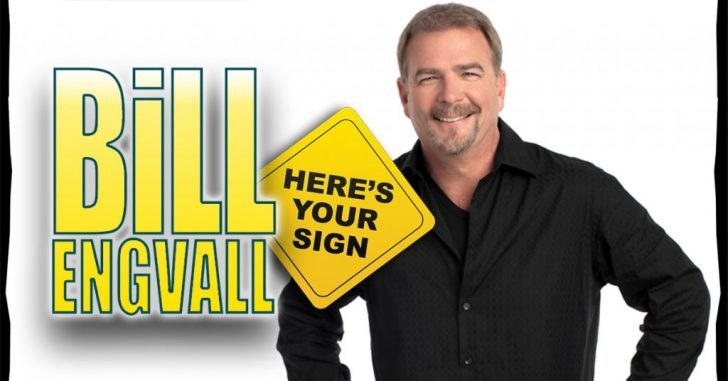
Bill Engvall Here's Your Sign
Bill Engvall works warm, exasperated everyman stand-up that pokes at everyday denseness with his signature “here’s your sign” tag. Sets run on folksy pacing, family and small-town stories, and punchlines the room can shout along with.
Bill Engvall steps onstage as a friendly, slightly put-upon Southern everyman who treats the audience like neighbors at a cookout. His material circles ordinary life—shopping, driving, marriage, kids, and the strangers who ask obvious questions—then lands on the “here’s your sign” payoff that labels the moment as pure denseness. Delivery stays conversational and unhurried: he sets a scene, lets the absurdity build, and hits the tag with a grin rather than a snarl. Crowds show up for the shared recognition of dumb daily encounters and the clean, repeatable catchphrase. A typical stretch moves from a quick personal anecdote into a longer story that invites call-and-response laughter. The tone stays PG-13 friendly, light on edge and heavy on relatability.
He keeps returning to the same well: people who should know better, domestic friction told without venom, and the pleasure of a simple, well-timed label for stupidity. Jokes are aimed at anyone who has stood in a checkout line or answered a ridiculous question, not at scoring cultural points. The room feels communal and low-pressure—people lean in for the next sign rather than brace for a lecture. Pacing favors clear setups and crowd-pleasing tags over rapid-fire one-liners or shock. Even when he tours with the broader blue-collar crew energy, his own lane stays the smiling dad who notices what everyone else notices and just says it out loud. Listeners leave humming the catchphrase more than any agenda.
Creator: Michael Drumm
Oops! Is this show WOKE?
Only an account holder or member can file. Cite a scene, a line, or a pattern. Other account holders +1 or −1 that argument, once each. The show is not WOKE until enough of them have given a +1. Enough −1s remove the write-up, and it is no longer shown.
Sign in to file a woke label. One of each criterion per member.
Comments and reviews
Report a mistake
Same rule as woke labels: one report, a written reason, and the community +1 or −1 it — once per member. A net +5 applies the change. Editors can hold it for review, or apply it immediately.
No mistake reports yet.
Sign in to report a mistake. One report per field, per member.
Member review
Wes Calder Member
Oct 9, 2026
★★★★★★★★★★I spent an evening going through a handful of Bill Engvall clips from the Here's Your Sign era, the ones that keep circulating with the same tag and the same patient grin. It is not complicated material. He walks out looking like the guy who just finished mowing the lawn and still has to explain something simple to the neighbor who asked the dumbest possible question about it. That is the whole engine. Everyday denseness. Shopping. Driving. Marriage. Kids. A hunting trip where someone proves they have never been outside. Walmart. Travel. The setup is almost always ordinary life, told at a pace that never hurries, and then he lands the “here’s your sign” label so the room can finish it with him.
What struck me watching one bit after another is how little he needs to raise his voice. He sets the scene like he is talking across a picnic table, lets the other person in the story ask the obvious question, and then hands them the imaginary sign. The facial work does half the selling. A slight head tilt, a half-smile that says he has already accepted that people will keep doing this forever. Crowds know the tag is coming and still laugh when it arrives because the stories feel borrowed from their own week. You hear the same recognition in the way he describes family life and small-town logic. Nothing abstract. Just the guy who asks if the deer is dead after it has been shot, or the person in the store who needs directions to something right in front of them.
I watched the hunting and Walmart stretch back-to-back with a couple of the shorter sign bits, and the rhythm stays consistent. He builds the personal anecdote first, expands it just enough that you see the stranger’s face, then drops the tag without snarling. It is clean and repeatable. That is the point. You could tell the same story at work the next day and get a laugh because everyone has met that person. Later clips that wander into aging or long-term marriage keep the same tone. He treats the absurdity of trying to keep up with ordinary change the way he treats the guy who asks if the closed store is open. Mild exasperation. No lecture. The pandemic and technology bits that show up in newer material still land on the same everyman footing: here is what happened, here is the dense part, here is your sign.
There is a stretch about travel and the questions people ask when the answer is already written on the door or the ticket that works the same way. He does not dress it up. He just lets the stupidity sit there long enough for you to feel it, then labels it. The facial expressions carry more weight than any big punch. You catch yourself nodding because you have stood in that exact line. The dispensary story that floats around in reaction clips is a later version of the same move. He walks through the staff impressions and the chaos of trying something new for sleep, and the comedy stays in the gap between what a normal person expects and what actually happens. No edge. Just the put-upon neighbor telling you what went wrong.
I like that he never pretends the material is deeper than it is. Family stories, a memorable hunting trip, the daily encounters that make you want to hand someone a cardboard sign. That is the set. The pacing is folksy without becoming molasses. He gives the absurdity room to breathe, then hits the tag with a grin rather than a snarl. Watching several of these in a row, you notice how the room energy in the recordings stays warm. People shout the phrase with him because it has become shared shorthand for the dumb moment everyone has lived. It is not clever wordplay. It is recognition comedy. You leave the clips feeling like you spent time with someone who has the same complaints you do and found a clean way to package them.
The longer anecdotes work better than the pure one-liners for me. When he stays with a single story long enough to let the stranger keep digging the hole, the payoff feels earned. The short sign drops are fun, but the hunting trip and the family stretches give the persona more room. He remains the friendly Southern everyman the whole time, slightly put-upon, never mean. That consistency is why the bits still travel. You can watch three or four in a row and the tone does not break. Ordinary life keeps supplying the denseness, and he keeps labeling it. I walked away from the stack of clips thinking it does exactly what it sets out to do. No more, no less. The sign still works.